

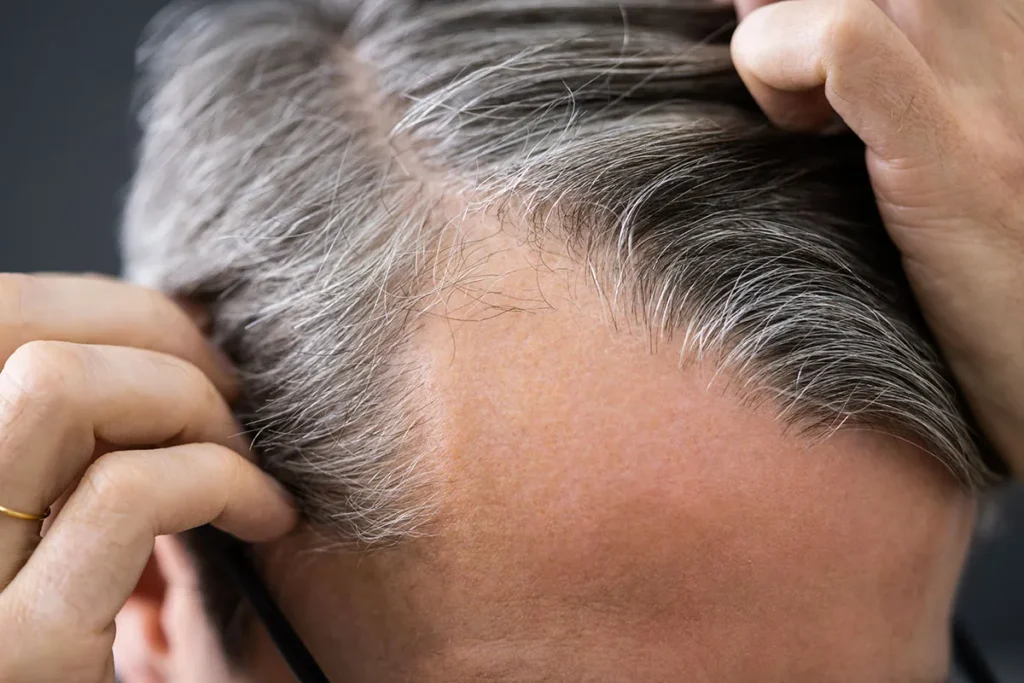
Knowing the different men’s hairline types is key. It helps spot natural changes and hair loss issues. Recent studies have grouped male hairlines into specific shapes and positions.
The look and place of a man’s hairline are shaped by hormones and genes. By understanding these, people can grasp their hairline better. They can also take steps to keep it looking good.
Key Takeaways
There are 7 common types of men’s hairline shapes.
Understanding your hairline type is essential for identifying possible hair loss.
Hormonal levels and genetics greatly influence hairline shape.
GoldCity Center‘s patient-centered approach combines cutting-edge dermatological expertise with personalized assessment.
Recognizing your hairline type is the first step toward maintaining or improving it.
The Science Behind Men’s Hairline Formation

Learning about the science of men’s hairline formation can help tackle hair issues. The shape and where a man’s hairline is set are shaped by many things. Genetics and hormones are key players.
Hormonal and Genetic Factors
Dihydrotestosterone (DHT) is a hormone that greatly affects male pattern baldness. It impacts about 85% of men by age 50. Genetics also shape the natural look of a hairline. Studies show that genes can lead to different hairline shapes, like receding or uneven ones.
Psychological Impact of Hairline Appearance
The way a hairline looks has a big impact on one’s mind. Around 55% of younger adults worry about losing their hair. A clear hairline can make someone look better and feel more confident. But, an uneven or receding hairline can make a person feel self-conscious and less confident.
Knowing what affects hairline formation helps people take action. Whether it’s through styling or professional treatments, being informed is the first step. It leads to a more confident and radiant look.
The 7 Common Men’s Hairline Types

Recent studies have found seven main types of men’s hairlines. This helps people understand their hairline better and find the right style. Each type has its own look and is more common than others.
Linear (Straight) Hairline
The linear or straight hairline is the most common, found in 45.9% of men. It has a straight edge across the forehead, giving a clean and balanced look.
M-Shaped (Widow’s Peak) Hairline
The M-shaped or widow’s peak hairline is seen in 42.6% of men. It has a unique “M” shape, with the hairline receding at the temples and a peak in the middle.
The M-shaped hairline adds character to a man’s look.
It often makes a man look mature and distinguished.
Round Hairline
The round hairline is less common, found in 10.7% of men. It curves with the forehead, giving a soft and rounded look.
A round hairline looks great on men with round or oval faces.
Triangular Hairline
The triangular hairline is rare, found in 0.82% of men. It has an angular and pointed shape, forming a triangular silhouette.
The triangular hairline makes a man’s appearance stand out.
Best Hairstyles for Each Hairline Type
Find the perfect hairstyle to match your hairline and boost your confidence. Different hairline types need special styling to look their best. Knowing the best hairstyles for your hairline can greatly change how you look and feel.
Complementary Cuts for Linear and Round Hairlines
Men with linear hairlines can try many styles, from sleek to textured. A linear hairline is very flexible, allowing for different lengths and textures. For round hairlines, styles that make your face look longer or more angular are flattering.
For linear hairlines, a fade haircut or a pompadour can add height and texture.
Round hairlines look great with layered cuts or angled bangs to create a defined look.
Styling Strategies for M-Shaped and Triangular Hairlines
M-shaped hairlines, also known as widow’s peaks, can look distinguished with the right styling. Textured cuts and messy textures can add volume and draw attention away from the hairline’s shape. Triangular hairlines benefit from styles that soften the angularity, such as curly or wavy textures.
For M-shaped hairlines, try a quiff or a side part to balance the look.
Triangular hairlines can be complemented with fringes or layered styles to soften the features.
Flattering Options for Receding and Uneven Hairlines
For those with receding hairlines, certain styling techniques can create a more balanced appearance. Keeping the hair short and neat or using styling products to add volume can be effective. Uneven hairlines may benefit from styles that distract from the hairline, such as messy, textured looks or fringes.
Receding hairlines can be styled with a clean fade or a comb-over for a sleek look.
Uneven hairlines can be balanced with asymmetrical styles or layered cuts.
Professional Treatments and Solutions
Beyond styling, there are professional treatments for hair loss and to enhance hairline appearance. Treatments like minoxidil and hair transplants can offer effective solutions for those experiencing hair loss.
Consulting with a professional stylist or dermatologist can provide personalized advice tailored to your hairline type and needs.
Conclusion
Knowing about men’s hairline types is key for looks and health. It helps in choosing the right hairstyle and treatments. Understanding your hairline is the first step to a healthy and attractive look.
Men’s hairlines come in many shapes, like linear, M-shaped, round, and triangular. Knowing these types helps you find the best fit for your face. It also lets you spot early signs of hair loss.
Recognizing your hairline type can boost your confidence and look. Embracing your unique hairline is the first step to a more polished you. It’s all about finding your natural beauty.
FAQ
What are the different types of men’s hairlines?
Men’s hairlines come in several types. These include linear or straight, M-shaped or widow’s peak, round, and triangular. Each type has its own look and is more common in some men than others.
What determines the shape and position of a man’s hairline?
Hormones, genetics, and how healthy hair follicles are play a big role. These factors shape and place a man’s hairline.
How common are different hairline types among men?
About 45.9% of men have a linear or straight hairline. Around 42.6% have an M-shaped or widow’s peak. Round and triangular hairlines are less common.
Can the right hairstyle enhance a man’s appearance and address hair loss concerns?
Yes, the right hairstyle can greatly improve a man’s look. It can also help with hair loss. Each hairline type needs a special styling approach.
What are some styling options for men with receding or uneven hairlines?
Men with receding or uneven hairlines have many styling options. Textured cuts and other styles can make a big difference.
How do hormonal factors, such as DHT, affect men’s hairlines?
Hormones, like DHT, play a big role in male pattern baldness. This condition affects many men as they get older.
What is the psychological impact of hairline appearance on men?
Hairline appearance has a big psychological impact. Many young adults worry about losing their hair.
Are there professional treatments available for men’s hairline concerns?
Yes, there are professional treatments for men’s hairline worries. These include options for receding or uneven hairlines.
References
National Center for Biotechnology Information. Evidence-Based Medical Insight. Retrieved from https://pubmed.ncbi.nlm.nih.gov/27830323/


