

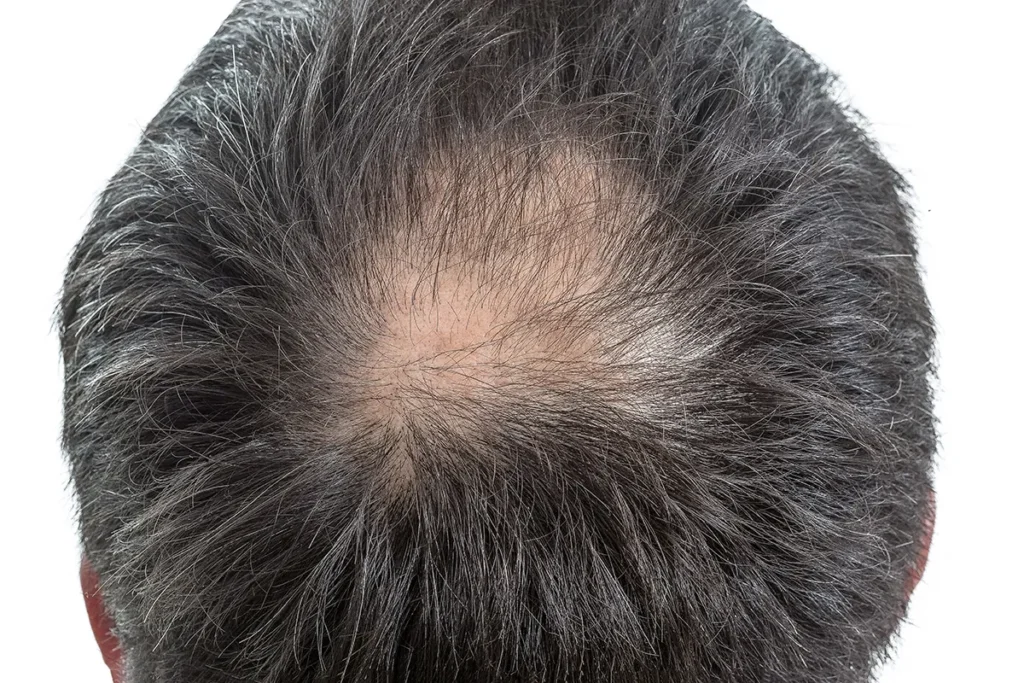
Alopecia areata is an autoimmune condition that causes hair loss. Many people are looking for effective treatments. Rogaine, a minoxidil-based treatment, has emerged as a promising solution. Recent studies show it works well, with an 82% response rate for terminal hair regrowth in patients using 5% topical minoxidil.
Experienced dermatologists recommend Rogaine for managing alopecia areata. This FDA-approved medication has decades of clinical evidence backing its effectiveness. By using Rogaine, individuals can take a big step towards regaining their hair and confidence.
Key Takeaways
Rogaine has shown an 82% response rate for terminal hair regrowth in alopecia areata patients.
5% topical minoxidil is a clinically proven treatment for alopecia areata.
Rogaine is an FDA-approved medication for hair regrowth.
Dermatologist guidance is key for effective treatment with Rogaine.
Decades of clinical evidence support Rogaine’s effectiveness.
Understanding Alopecia Areata and Treatment Options

Alopecia areata is a condition where hair falls out because of an autoimmune response. This happens when the body’s immune system attacks the hair follicles by mistake.
What is Alopecia Areata?
Alopecia areata is an autoimmune disorder that causes hair loss on the scalp, face, or body. The exact cause is not known, but it’s thought to be a mix of genetics and environment. It can show up in different ways, from small patches of hair loss to complete baldness.
Key characteristics of alopecia areata include:
Unpredictable hair loss patterns
Autoimmune response targeting hair follicles
Potential for spontaneous regrowth or relapse
Conventional Treatment Approaches
Conventional treatments for alopecia areata try to stop the immune system from attacking hair follicles. They also aim to help hair grow back. These treatments include:
The Role of Minoxidil in Hair Loss Treatment
Minoxidil, known by the brand name Rogaine, is a topical treatment for the scalp to stimulate hair growth. It’s commonly used for androgenetic alopecia but is also considered for alopecia areata.
The effectiveness of minoxidil for alopecia areata is a topic of interest, with various studies examining its benefits.
By understanding alopecia areata and exploring treatments like minoxidil, people with the condition can make informed decisions about their care.
Minoxidil for Alopecia: Clinical Evidence and Effectiveness

Research shows minoxidil can help with alopecia areata. It’s known for treating hair loss. Studies have tested its effectiveness in treating alopecia areata.
Systematic Review and Meta-Analysis Results
A study looked at many clinical trials. It found strong evidence that minoxidil works for alopecia areata. The results were impressive:
Minoxidil helped a lot of people with a lot of hair loss.
The 5% topical minoxidil solution worked for 81% of those with severe hair loss.
Most people didn’t have serious side effects, showing it’s safe.
Response Rates Based on Hair Loss Severity
How well minoxidil works depends on how much hair you’ve lost. Here’s what studies found:
People with mild to moderate hair loss saw a big improvement.
Those with severe hair loss also saw results, but not as much.
Minoxidil vs. Placebo: Statistical Comparisons
Studies compared minoxidil to a placebo. They found minoxidil is much better. Here’s why:
Minoxidil groups had a much higher rate of hair growth.
The difference between minoxidil and placebo was very clear, showing minoxidil’s success.
In summary, the research clearly shows minoxidil is effective for alopecia areata. It offers hope for those dealing with this condition.
Rogaine Application Methods and Formulations for Alopecia Areata
Rogaine offers different ways to treat alopecia areata. You can choose the best option for your hair loss. This makes it easy to find what works for you.
Comparing Topical Minoxidil Concentrations
Rogaine comes in 1% and 5% concentrations. The 5% concentration is more effective for growing hair in alopecia areata. But, the 1% might be better for sensitive scalps or as a maintenance dose.
A study showed the 5% concentration works better for hair growth. But, always talk to a doctor to find the right concentration for you.
Oral Minoxidil at Lower Doses
Oral minoxidil is also a treatment for alopecia areata. Lower doses, like 1-2.5mg daily, are being tested for safety and effectiveness.
Studies suggest oral minoxidil at lower doses can help grow hair. But, always talk to a doctor before starting it. It might interact with other medicines.
Application Frequency and Treatment Duration
The frequency and length of treatment with Rogaine vary. Consistency is key for it to work well.
Topical minoxidil is applied twice a day.
Treatment can last 3-6 months or more, based on how you respond.
Oral minoxidil’s dosing schedule may differ, but daily use is recommended.
Potential Side Effects and Considerations
Rogaine is usually safe, but side effects can happen. Common side effects include scalp irritation, itching, and dryness. Rarely, severe reactions or unwanted hair growth can occur.
Always consider the benefits and risks of Rogaine with a doctor’s advice. People with heart conditions or other health issues should be careful with minoxidil.
Conclusion: The Effectiveness of Rogaine for Alopecia Areata
The studies show that Rogaine, with minoxidil, works well for alopecia areata. Many patients saw good results, making it a solid choice.
Rogaine has shown great promise in treating alopecia areata. Studies and reviews support its use. This gives a strong reason to try it.
If you’re losing hair due to alopecia areata, Rogaine might help. Knowing minoxidil works can guide your treatment choices. So, yes, minoxidil does help with alopecia.
Rogaine is a top choice for treating alopecia areata. It’s proven to work and is mostly safe. It’s a good option for those dealing with this condition.
FAQ
Does Rogaine really work for alopecia areata?
Yes, Rogaine, or minoxidil, can help with alopecia areata. Studies show it promotes hair growth and lessens hair loss.
How does minoxidil work for alopecia areata?
Minoxidil widens hair follicles and makes hair grow longer and thicker. It does this by boosting blood flow to the scalp.
What concentration of Rogaine is best for alopecia areata?
Research has looked at 1% and 5% minoxidil solutions. The 5% is often more effective. But, the right concentration for you depends on your condition and how you react to treatment.
Can I take Rogaine orally for alopecia areata?
Yes, oral minoxidil is used at low doses for alopecia areata. But, only do this under a doctor’s watch, as it can have side effects.
How often should I apply Rogaine for alopecia areata?
How often and for how long you use Rogaine varies. It’s usually applied twice a day. But, your specific needs should be discussed with a healthcare professional.
What are the possible side effects of using Rogaine for alopecia areata?
Rogaine can cause scalp itching, redness, and dryness. Serious side effects like allergic reactions or extra hair growth can also happen. Always follow the application instructions and talk to a doctor if you notice any side effects.
Will Rogaine work for my alopecia areata if I’ve tried other treatments?
Rogaine might work for you, even if you’ve tried other treatments. Its success depends on your hair loss severity, how you react to treatment, and other factors. A healthcare professional can help find the best treatment for you.
Can I use Rogaine in combination with other treatments for alopecia areata?
Using Rogaine with other treatments might be beneficial. But, always talk to a healthcare professional first. This ensures the treatments are safe and work well together.
References
National Center for Biotechnology Information. Evidence-Based Medical Insight. Retrieved from https://pmc.ncbi.nlm.nih.gov/articles/PMC11676071/


