

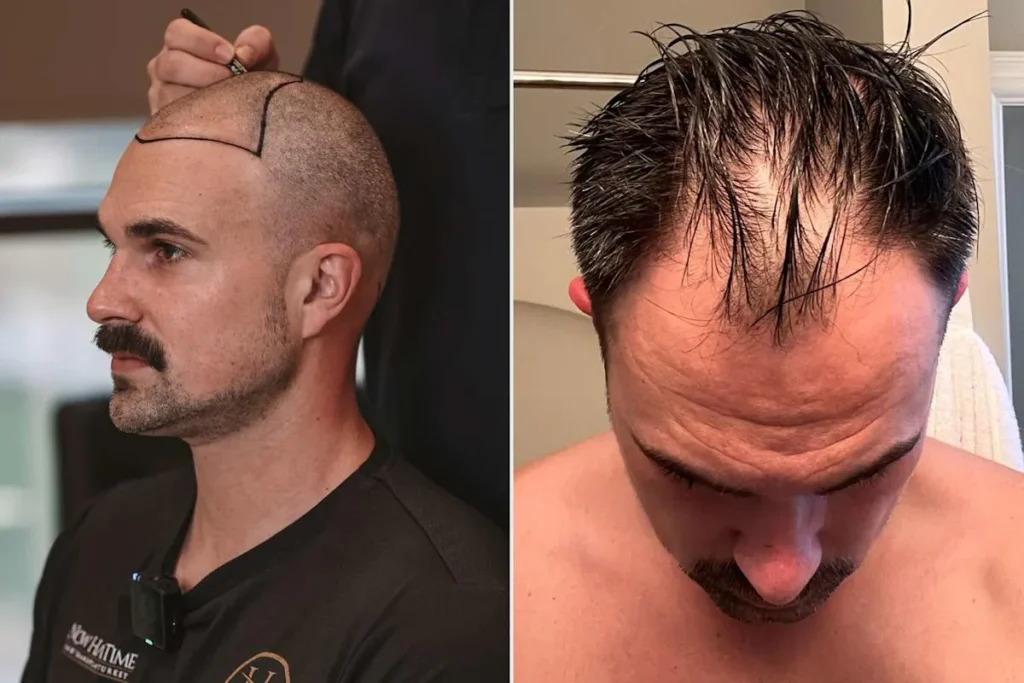
Hair loss is a big problem worldwide, affecting over 870 million people in 2024. It can make men and women feel less confident and affect their happiness. Luckily, non-invasive hair restoration has made great progress. It offers safe, clinically proven ways to fight hair loss without surgery.
GoldCity Center is leading this change, giving trusted, internationally competitive medical expertise in non-surgical hair loss treatments. They focus on making patients feel good about themselves. GoldCity Center helps people look and feel great without surgery.
Key Takeaways
Over 870 million individuals worldwide suffer from hair loss.
Non-invasive hair restoration offers a clinically proven alternative to surgery.
GoldCity Center provides internationally competitive medical expertise.
Patient-centered care is at the heart of GoldCity Center’s approach.
Non-surgical treatments can empower individuals to regain confidence.
Understanding the Hair Loss Epidemic

Hair loss, or alopecia, is a big problem worldwide. It affects millions, causing physical and emotional pain.
The market for treating hair loss is growing fast. It’s expected to hit 12.09 billion USD by 2034. This shows more people want non-surgical hair loss treatments.
The Scale of Hair Loss in 2025
Hair loss touches people of all ages and backgrounds. It can be caused by genetics, hormonal changes, and the environment.
Who Is Most Affected by Hair Thinning
Hair thinning hits both men and women. Men often lose hair, affecting up to 80% at some point. Women also experience thinning, often after menopause.
Knowing who is most affected helps in creating better non-invasive hair restoration treatments. Tailored solutions can help more people.
7 Proven Non-Invasive Hair Loss Treatment Options

Non-invasive hair restoration treatments are a great alternative to surgery. The market for hair loss treatments is growing fast. Now, people have many safe and easy ways to fight hair loss without surgery.
Recently, non-invasive treatments have become more popular. Topical products make up 56 percent of the market, and oral treatments make up 32 percent. People want safer and easier ways to treat hair loss without surgery.
FDA-Approved Topical Solutions
FDA-approved topical solutions are a top choice for non-invasive hair loss treatments. Minoxidil is a well-known example. It helps grow hair and slow down hair loss.
These solutions are applied directly to the scalp. They increase blood flow, helping hair follicles grow healthier.
Prescription Oral Medications
Prescription oral medications are another good option. Finasteride is a common one. It slows down hair loss and can even grow new hair.
These medications work from the inside. They’re great for people with male or female pattern baldness.
Low-Level Laser Therapy (LLLT)
Low-Level Laser Therapy (LLLT) is a non-invasive treatment. It uses low-level laser or light-emitting diodes to stimulate hair growth. You can find LLLT devices in caps, helmets, and combs.
LLLT increases blood flow to the scalp. It promotes hair growth at the cellular level. It’s easy and painless, and you can use it at home.
Platelet-Rich Plasma Therapy
Platelet-rich plasma (PRP) therapy is a new, non-surgical treatment. It involves injecting PRP from the patient’s own blood into the scalp.
PRP therapy stimulates hair growth. It releases growth factors that help new hair follicles develop. Many people find it effective in treating hair loss.
Conclusion: Creating Your Non-Surgical Hair Restoration Plan
Non-surgical hair restoration treatments are a luxury for those losing hair. They cause little discomfort and look natural. By exploring the non surgical hair loss treatment options, you can make a plan just for you.
A good baldness therapy plan can really boost hair growth and your confidence. Thanks to no surgery hair restoration advancements, you can get the look you want without surgery.
Adding hair restoration non surgical treatments to your routine can make you look younger and more vibrant. The secret to non surgical hair growth is a custom treatment plan from a skilled professional.
Choosing a non-surgical hair restoration plan can change your life. It lets you fight hair loss and feel more confident and vibrant.
FAQ
What are non-surgical hair loss treatments?
Non-surgical hair loss treatments help grow hair without surgery. They include topical solutions, oral meds, Low-Level Laser Therapy (LLLT), and Platelet-Rich Plasma (PRP) therapy.
Are non-invasive hair loss treatments effective?
Yes, many non-invasive treatments work well to grow hair and stop loss. How well they work depends on the person and the treatment.
What is Low-Level Laser Therapy (LLLT) and how does it work?
LLLT uses low-level laser or light to help hair grow. It boosts blood flow to the scalp, making hair follicles healthier and promoting growth.
Is Platelet-Rich Plasma (PRP) therapy painful?
PRP therapy might hurt a bit when injecting platelet-rich plasma into the scalp. But, most clinics use numbing creams to make it less painful.
Can I use non-surgical hair loss treatments alongside other hair care products?
Yes, you can use these treatments with other hair care products. But, talk to a healthcare professional first to make sure they work well together.
How long does it take to see results from non-surgical hair loss treatments?
Seeing results from these treatments varies. Some might show results in a few months, while others take longer.
Are non-surgical hair loss treatments suitable for everyone?
Many people can use these treatments for hair loss. But, it’s important to talk to a healthcare professional to find the right treatment for you.
Can non-invasive hair restoration treatments be used for hair regrowth on bald spots?
Yes, treatments like LLLT and PRP therapy can help grow hair on bald spots. How well they work depends on your case and the treatment.
References
National Center for Biotechnology Information. Evidence-Based Medical Insight. Retrieved from https://pubmed.ncbi.nlm.nih.gov/23652886/


