

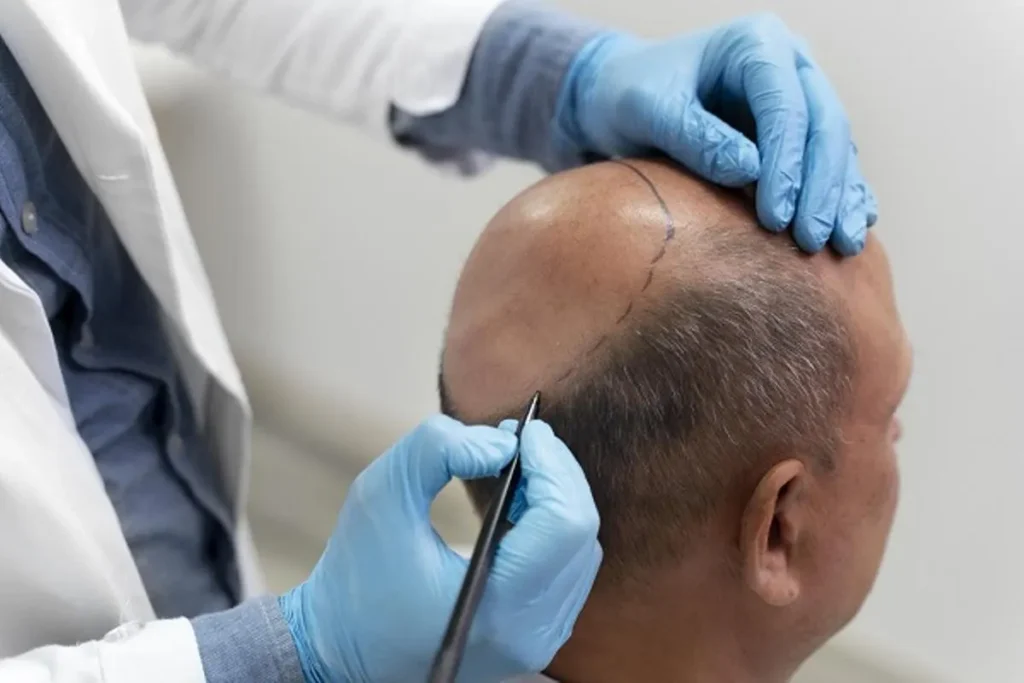
Millions of men face hair loss, affecting their looks, confidence, and self-esteem. Male pattern baldness causes about 95 percent of hair thinning in men. It’s key to find non-invasive solutions.
Hair restoration without surgery is now a top choice for men. Treatments like PRP, exosome therapy, and laser tech offer proven ways to boost confidence and hair density. Knowing the causes of hair loss helps men choose the best treatments for their journey.
Key Takeaways
Non-surgical treatments can effectively address male hair loss.
Advanced therapies like PRP and laser technology stimulate hair growth.
Understanding the causes of hair loss is key for the right treatment.
Men can regain confidence and hair density without surgery.
Exploring non-invasive options is vital for men with hair loss.
Understanding Male Hair Loss and Its Causes

It’s important to know why men lose their hair. Male hair loss, or alopecia, hits over 85 percent of men at some point. About 95 percent of these cases are male pattern baldness.
The Science Behind Male Pattern Baldness
Male pattern baldness, or androgenic alopecia, is a genetic issue. It leads to hair loss over time. This can show as a receding hairline or thinning on the crown.
The hormone DHT, made from testosterone, is the main culprit. It shrinks hair follicles. This disrupts the hair growth cycle, making hairs thinner and shorter.
“Male pattern baldness is a complex condition influenced by genetics, hormones, and environmental factors,” says a leading expert in hair restoration. “Understanding the underlying causes is essential for developing effective treatment plans.”
Common Triggers and Progression of Hair Thinning
While male pattern baldness is the main reason for hair loss, other factors can also play a part. These include:
Chronic stress or stressful events
Medical conditions such as hormonal imbalances and autoimmune diseases
Certain medications, including those used to treat depression, high blood pressure, and cancer
By finding out why men lose their hair, they can look for treatments that fit their needs. Options like medications and PRP therapy can slow down hair loss and help new hair grow.
Effective Non-Surgical Hair Restoration Options

Non-surgical hair restoration is now a good choice for men fighting hair loss. Thanks to new medical tech and understanding of hair growth, men have many effective treatments. These treatments don’t need surgery.
FDA-Approved Medications
Finasteride and minoxidil are two top FDA-approved meds for hair loss. Finasteride slows down hair loss, and minoxidil wakes up dormant follicles for growth. Studies show they work well against male pattern baldness.
“Finasteride and minoxidil together have changed the game for many men with hair loss,” a top dermatologist notes. “They’re a safe, non-invasive way to fight hair thinning.”
Advanced Regenerative Treatments
Platelet-Rich Plasma (PRP) therapy uses your own blood to fix hair follicles and boost density. It’s popular because it works well and has few side effects.
PRP therapy starts with a small blood draw and then concentrates platelets.
The concentrated plasma is injected into the scalp to boost hair growth.
It can be paired with other treatments for better results.
Light-Based Technologies
Low-level laser therapy (LLLT) uses red light to improve scalp blood flow and hair follicle health. It helps grow hair and keeps the scalp healthy.
Combining these treatments can lead to big improvements in hair density and health. Used alone or together, these options offer hope for men wanting to restore their hair without surgery.
Conclusion: Choosing the Right Hair Restoration Approach
Non-surgical hair restoration is a key solution for men dealing with hair loss. It avoids the need for surgery. The choice depends on how much hair is lost, personal goals, lifestyle, and budget.
Men looking for hair solutions for men have many non-surgical options. These include FDA-approved drugs, advanced treatments, and light-based technologies. These can be tailored to fit each person’s needs. Combining treatments can lead to better results, making it a good choice for those wanting to restore their hair.
Getting advice from a hair restoration expert is important. They can suggest the best hair treatment for hair loss for men based on your situation. Options include medications, PRP therapy, or low-level laser therapy. Non surgical hair transplant and other mens hair restoration methods offer many ways to get a fuller head of hair.
In the end, finding the right hair restoration method can boost a man’s confidence. It can make him look more radiant and youthful.
FAQ
What is male pattern baldness, and how does it affect hair loss?
Male pattern baldness is a genetic condition that affects many men. It causes hair to thin gradually, mainly on the crown and temples. Knowing about this condition helps in finding the right treatment.
What are the available non-surgical hair restoration options for men?
Men have several non-surgical hair restoration options. These include FDA-approved drugs like finasteride and minoxidil, PRP therapy, low-level laser therapy, and custom hair systems. These methods aim to boost hair growth and improve hair density.
How do FDA-approved medications help with hair restoration?
FDA-approved drugs like finasteride and minoxidil slow down hair loss and encourage new growth. They offer a good solution for men dealing with hair loss.
What is PRP therapy, and how does it stimulate hair growth?
PRP therapy uses the body’s own growth factors to stimulate hair follicles. It promotes hair growth and increases hair density.
How does low-level laser therapy promote hair growth?
Low-level laser therapy boosts blood flow to the scalp. It’s a non-invasive way to help men with hair loss.
What factors should be considered when selecting a hair restoration approach?
Choosing the right hair restoration method depends on several factors. These include the extent of hair loss, personal preferences, and budget. Talking to a hair restoration specialist can help find the best treatment plan.
Can non-surgical hair restoration be tailored to individual needs?
Yes, non-surgical hair restoration offers many options tailored to individual needs. It provides a personalized solution for men wanting to restore their hair without surgery.
What are the benefits of non-surgical hair restoration for men?
Non-surgical hair restoration offers a promising solution for men. It provides effective options to improve hair density and overall hair health without surgery.
How can men achieve significant improvements in hair density and overall hair health?
Men can see significant improvements by combining non-surgical hair restoration treatments. This includes using medications, PRP therapy, and low-level laser therapy. These methods can greatly enhance hair density and overall hair health.
References
National Center for Biotechnology Information. Evidence-Based Medical Insight. Retrieved from https://pmc.ncbi.nlm.nih.gov/articles/PMC8922312/[1


