

Millions of men face hair loss, affecting their looks and confidence. New technologies offer hair replacement systems and non-invasive treatments like laser therapy and serums. These help regrow, replace, or restore hair.
Learn how non-surgical hair restoration can give you a fuller head of hair. You don’t need surgery. With many treatment options, you can regain confidence and self-esteem through luxury transformation in hair restoration.
Key Takeaways
Non-surgical treatments can stimulate hair growth and enhance appearance.
Advanced technologies offer custom hair replacement systems.
Laser therapy and topical serums are effective non-invasive treatments.
Non-surgical hair restoration boosts confidence and self-esteem.
Treatments are available for various hair loss needs.
Understanding Hair Loss and Restoration Options

Hair loss affects over 85% of men and 55% of women at some point. It can make you feel bad about how you look and how you feel about yourself. Luckily, there are many non-surgical ways to fix hair loss now.
Common Causes of Hair Loss
Hair loss can come from many things like genes, hormones, health issues, and how you live. Male pattern baldness is a big problem, affecting almost half of men worldwide. Knowing why you’re losing hair helps find the best way to stop it.
Genetic predisposition
Hormonal imbalances
Medical conditions such as alopecia areata
Lifestyle factors, including stress and nutritional deficiencies
Who Benefits Most from Non-Surgical Solutions
Non-surgical hair fixes are great for early hair loss or if you don’t want surgery. They’re also good for making your hair thicker or your scalp healthier.
Non-surgical treatments are safer and easier to get. They can be made just for you.
Setting Realistic Expectations
Non-surgical hair fixes can work well, but don’t expect magic overnight. It might take time to see changes. Mixing treatments and a plan made just for you can help a lot.
Consult with a professional to determine the best course of treatment.
Be patient, as results may take several months to become apparent.
Consider combining treatments for enhanced outcomes.
Effective Non Surgical Hair Restoration Procedures

Today, there are many non-surgical hair restoration options. These treatments help people get a fuller, healthier head of hair. They are designed to meet different needs.
Platelet-Rich Plasma (PRP) Therapy
PRP therapy uses platelet-rich plasma to boost hair growth. Studies show it works well for early to moderate hair loss. It uses the body’s healing powers to revitalize hair follicles.
Key Benefits of PRP Therapy:
Minimally invasive procedure
Uses the body’s own platelets
Promotes natural hair growth
Medication-Based Treatments
Medications like Minoxidil and finasteride are effective for hair loss. Minoxidil boosts blood flow to the scalp. Finasteride stops testosterone from turning into DHT, a hair loss hormone.
Low-Level Laser Therapy (LLLT)
LLLT uses low-level lasers or LEDs to stimulate hair growth. It increases blood flow and makes hair thicker and healthier. You can use it with caps, helmets, or combs.
LLLT is easy to use, making it a popular choice for hair loss.
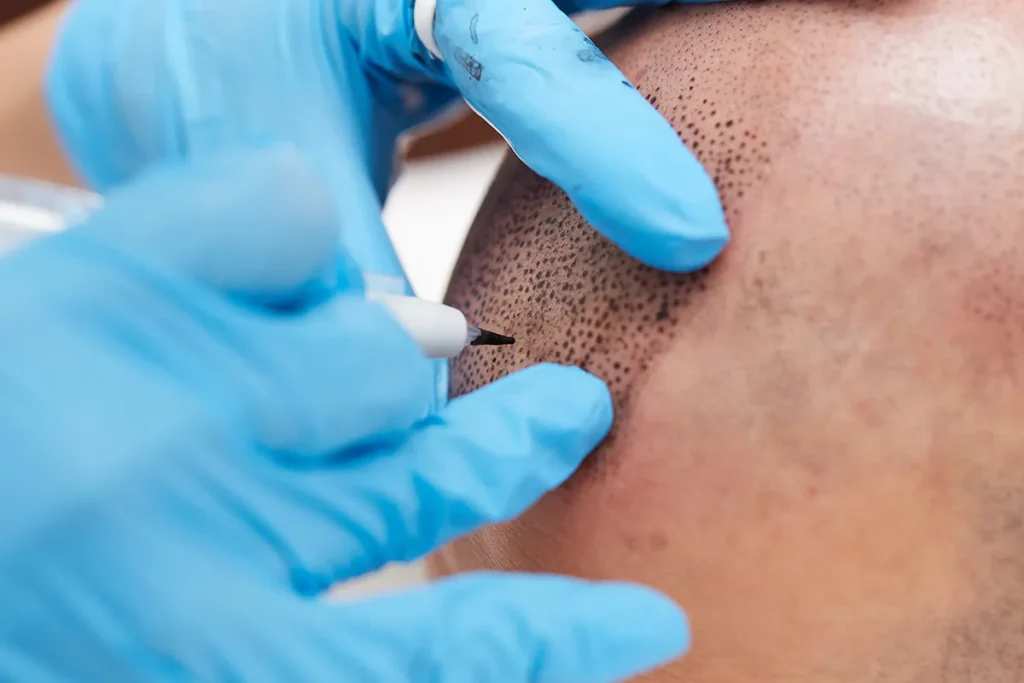
Scalp Micropigmentation for Density Appearance
Scalp micropigmentation tattoos the scalp with dots for a fuller look. It hides bald spots, makes hair look thicker, or improves receding hairlines.
Knowing about these non-surgical hair restoration options helps you choose the best one. Whether it’s PRP therapy, medications, LLLT, or scalp micropigmentation, getting a fuller head of hair is easier than ever.
Maximizing Your Hair Restoration Results
To get the best from hair restoration, a personalized treatment strategy is key. This makes sure the treatment fits your hair loss needs perfectly.
Creating a Personalized Treatment Plan
Start with a detailed consultation with a hair restoration expert. They’ll look at your hair loss, health history, and lifestyle. Then, they’ll suggest the best non-surgical hair loss solutions for you.
Your plan might include:
Platelet-Rich Plasma (PRP) Therapy
Medication-Based Treatments
Low-Level Laser Therapy (LLLT)
Scalp Micropigmentation for Density Appearance
Timeline for Visible Improvements
Knowing when you’ll see results is important. You can expect:
3-6 months: First signs of thicker hair and less loss.
6-12 months: More noticeable hair growth and thickness.
Combining Treatments for Enhanced Outcomes
Using more than one treatment can really boost results. For example, minoxidil with PRP can make hair denser. And finasteride and minoxidil together can help up to 94% of men.
Maintenance and Long-Term Care Strategies
To keep your hair looking great, follow a maintenance and long-term care plan. This means regular check-ups, sticking to your treatment plan, and maybe adding more treatments as advised by your specialist.
With a solid treatment plan and good hair care, you can keep your hair looking great for a long time. This will boost your confidence.
Conclusion
Non-surgical hair restoration has changed how we deal with hair loss. It offers many effective and easy-to-get treatments. By knowing why we lose hair and looking at non-surgical options, we can choose the best path for our hair.
Methods like platelet-rich plasma therapy, medicines, and low-level laser therapy make non surgical hair restoration flexible. These hair restoration non surgical ways are cheaper and have different outcomes. They also need different care levels.
Choosing no surgery hair restoration or non surgical hair transplant means getting more hair without surgery. The right treatment and regular care lead to lasting results. This brings back our confidence.
FAQ
What is non-surgical hair restoration?
Non-surgical hair restoration is a way to help hair grow and look better without surgery. It includes treatments like PRP therapy, medications, LLLT, and scalp micropigmentation.
How does PRP therapy work for hair restoration?
PRP therapy uses your own blood’s platelet-rich plasma (PRP) injected into your scalp. The growth factors in PRP help your hair follicles grow, making your hair thicker and fuller.
Are non-surgical hair restoration treatments effective?
Yes, these treatments have been shown to work well. They can make your hair grow more, get thicker, and look better. But, how well they work can depend on you and the treatment.
What is the timeline for visible improvements with non-surgical hair restoration?
Seeing improvements can take a few months to a year. This depends on the treatment and your own body’s response.
Can I combine different non-surgical hair restoration treatments?
Yes, mixing treatments can make them work better. A plan that uses several treatments can be more effective than just one.
How do I maintain the results of non-surgical hair restoration?
Keeping up with treatments and care is key to lasting results. This might mean regular sessions, special hair products, and healthy habits.
Are non-surgical hair restoration treatments suitable for everyone?
Many people can benefit from these treatments for hair loss. But, the best plan depends on your hair loss cause, how much you have, and your health.
What is the difference between non-surgical hair replacement and non-surgical hair restoration?
Hair replacement covers up hair loss, while hair restoration aims to grow more hair. Restoration uses medical treatments to improve hair density.
Are there any side effects associated with non-surgical hair restoration treatments?
Most treatments have few side effects. But, some might cause temporary redness or irritation. Always talk to a professional about any risks or side effects.
References
National Center for Biotechnology Information. Evidence-Based Medical Insight. Retrieved from https://pmc.ncbi.nlm.nih.gov/articles/PMC11283242/


