

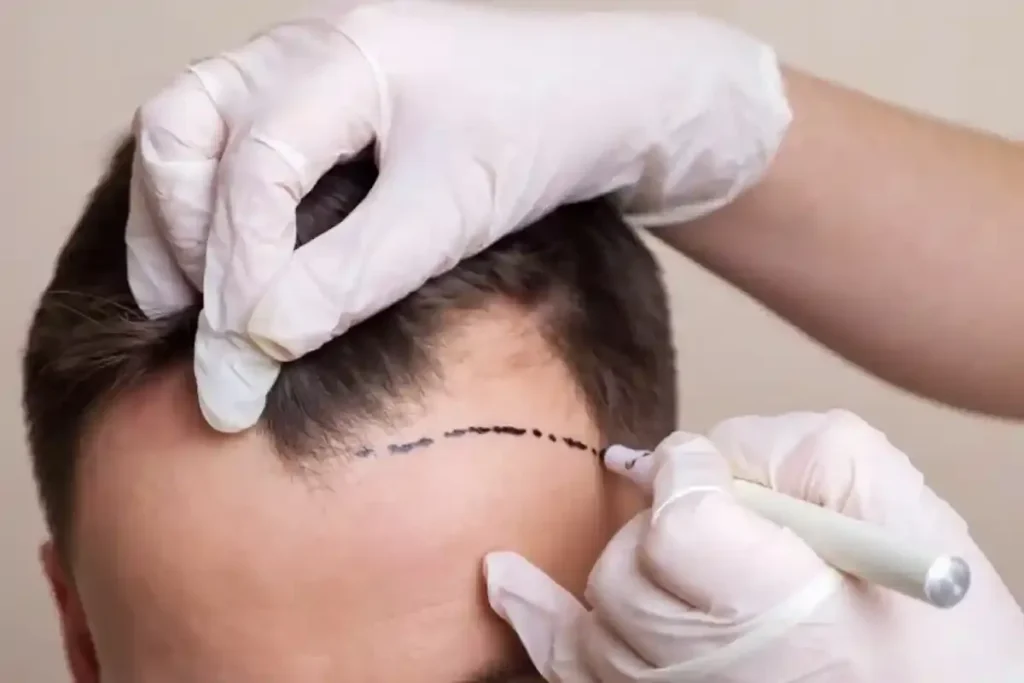
Getting a hair restoration is a big step towards feeling better about yourself. But, many people notice facial puffiness after the surgery. About 42.47% of patients face this issue.
Going to a well-known clinic like GoldCity Center can really help your recovery. It’s important to know how to deal with swelling after hair transplant to heal well.
Key Takeaways
Understand that facial swelling is a normal part of the healing process.
Choose a clinic with a commitment to international medical standards.
Learn effective management techniques to minimize swelling.
Follow a complete post-surgery care plan for the best recovery.
Be aware of the timeline for swelling to subside.
Understanding Post Hair Transplant Swelling

It’s important to know why swelling happens after a hair transplant. Swelling is a natural reaction to the scalp trauma from the surgery.
Swelling usually starts 2 or 3 days after the surgery and lasts about 3 to 4 days. It mainly affects the forehead and eyelids, causing hair transplant eye swelling and swelling face after hair transplant.
Why Swelling Occurs After Hair Restoration
Swelling happens because of the body’s natural response to surgery. This includes fluid buildup and the effects of anesthesia. The amount of hair transplant face swelling can differ based on the person and the surgery method.
The body’s reaction to surgery brings more blood to the area, causing inflammation and swelling. Fluid buildup, mainly around the forehead and eyes, gets worse because of gravity. This makes the swelling move down from the scalp.
FUE vs. FUT: Differences in Swelling Severity
The type of hair restoration surgery affects how much swelling happens. FUE (Follicular Unit Extraction) and FUT (Follicular Unit Transplantation) have different effects on swelling.
FUE usually causes less swelling because it’s less invasive. It has smaller incisions and less tissue damage. On the other hand, FUT involves removing a bigger strip of scalp, leading to more swelling.
Knowing these differences helps patients prepare for recovery. By understanding what to expect, they can better handle hair transplant swelling eyes and other side effects.
Timeline and Progression of Facial Swelling

Knowing when facial swelling after a hair transplant will happen is key. It helps you know what to expect and how to recover well. Swelling is a normal part of healing, and how fast it goes depends on you and the transplant method.
Initial Swelling Phase (Days 1-2)
Right after the transplant, swelling starts. You might see it around your forehead and eyes. This is your body’s way of reacting to the surgery. Keeping your head up and using cold packs can help with this swelling.
Peak Swelling Period (Days 3-5)
By the third to fifth day, swelling gets worse. It might make your face and eyes look different. Following your doctor’s instructions and taking your meds can help. Remember, it’s normal for swelling to get worse during this time.
Recovery and Reduction (Days 6-10)
After the worst of the swelling, you start to feel better. By days 6-10, most people see a big drop in swelling. How fast it goes down depends on you and how well you care for yourself. Staying healthy and listening to your surgeon helps a lot.
Swelling after FUE hair transplants is usually milder than after FUT. Knowing the difference helps you understand what to expect. It makes the recovery process easier to handle.
Effective Methods to Reduce Post Hair Transplant Swelling
Managing swelling after a hair transplant is key to a smooth recovery. By taking steps before surgery, using medical treatments, and trying home remedies, you can lessen swelling. This helps your body heal better.
Pre-Surgery Preventive Measures
Before your hair transplant, you can take steps to lower swelling risk. Steroids are often prescribed to fight swelling. Some doctors also suggest wearing a headband or using tape on your forehead to help.
Discuss steroid options with your surgeon
Consider wearing a headband or adhesive tape
Avoid strenuous activities before and after surgery
Medical Interventions and Medications
Medical treatments are vital for managing swelling after surgery. Anti-inflammatory medications can help reduce swelling and ease pain. Always follow your surgeon’s advice on how much to take and when.
Take prescribed anti-inflammatory medications as directed
Attend follow-up appointments to monitor healing
Report any unusual swelling or symptoms to your surgeon
At-Home Remedies and Cold Compression
Home remedies can help with swelling. Using cold compresses or ice packs on the area can reduce swelling. Make sure to wrap the ice pack in a cloth to protect your skin.
Optimal Sleeping Positions and Elevation Techniques
Keeping your head up is important to reduce swelling. Sleeping on multiple pillows or using a wedge pillow helps. This keeps your head elevated, which aids in drainage and prevents swelling.
Use multiple pillows or a wedge pillow to elevate your head
Avoid sleeping on your stomach or side
Keep your head elevated during the day when resting
By using these methods, you can reduce swelling and have a smoother recovery. Always follow your surgeon’s advice and go to all follow-up appointments. This helps you heal well.
Conclusion: When to Seek Medical Attention
Post hair transplant swelling is normal during recovery. But, it’s important to watch how it changes. If swelling gets too much or lasts too long, it could mean an infection. Look out for signs like pus, pain, or itchiness.
If swelling doesn’t go away in 1-2 weeks, tell your consultant. Long-term swelling can harm the donor area. This could ruin the success of your hair transplant.
Knowing the signs of problems helps you act fast. This way, you can keep your health safe and get the most from your hair transplant. By knowing when to get medical help, you can have a smooth recovery and enjoy your new look.
FAQ
What causes swelling after a hair transplant?
Swelling happens because of the body’s reaction to the surgery. It’s also due to fluid buildup and the effects of anesthesia.
Is swelling after a hair transplant normal?
Yes, swelling after a hair transplant is normal. It’s a common part of the healing process.
How long does swelling last after a hair transplant?
Swelling starts a few days after the transplant. It gets worse around days 3-5. By days 6-10, it usually goes away.
What is the difference in swelling between FUE and FUT hair transplant procedures?
FUE causes less swelling because it’s less invasive than FUT. This makes it a better option for some.
How can I reduce swelling after a hair transplant?
To reduce swelling, keep your head up. Use cold compresses and anti-inflammatory drugs. These steps help with recovery.
What are some pre-surgery preventive measures to minimize swelling?
Before surgery, knowing the causes helps. Taking steps beforehand can reduce swelling.
When should I seek medical attention for post hair transplant swelling?
If swelling doesn’t go away or gets worse, see a doctor. This ensures a safe recovery.
Can I experience swelling in other areas beside my face after a hair transplant?
Swelling can happen in the face, eyes, and head. But it usually stays in the facial area.
How can I manage swelling around my eyes after a hair transplant?
Use cold compresses and keep your head up. These help reduce eye swelling.
Are there any long-term effects of post hair transplant swelling?
Swelling is usually temporary. It goes away within a week after the transplant.
References
National Center for Biotechnology Information. Evidence-Based Medical Insight. Retrieved from https://pmc.ncbi.nlm.nih.gov/articles/PMC2956963/[1


