

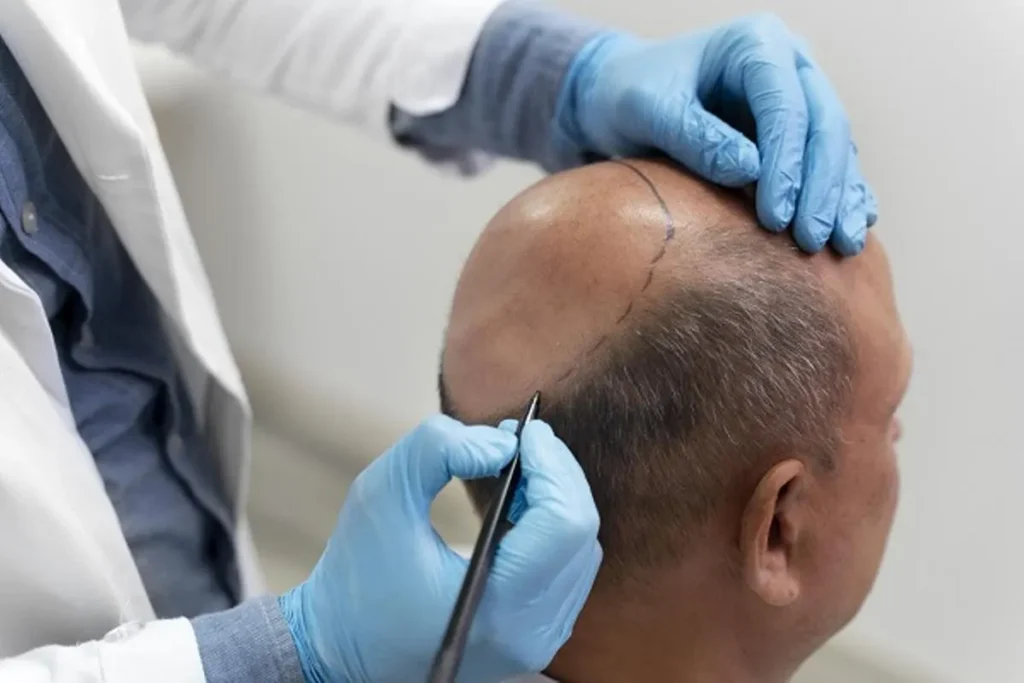
A receding hairline can really affect how you feel about yourself. It can make you feel less confident and change how you look. But, thanks to new hair transplant technology, you can now get a younger-looking hairline.
About 80% of men deal with hair loss, and a receding hairline is common. Hair transplant methods have improved a lot. Now, they have success rates from 75% to 98%.
Techniques like Follicular Unit Extraction (FUE) and Direct Hair Implantation (DHI) Sapphire are popular. They work well.
These methods move healthy hair follicles from the back or sides to thinning areas. This gives natural-looking and permanent results. Thanks to new technology, you can now look luxurious and youthful. This boosts your confidence and beauty.
See the receding hairline before and after magic. Discover powerful treatments and amazing transplants that restore a perfect, thick hairline.
Key Takeaways
Hair transplant procedures offer a highly effective solution for receding hairlines.
Success rates for hair transplants can range from 75% to 98%.
FUE and DHI Sapphire methods are advanced techniques used in modern hair transplants.
Natural-looking and permanent results can be achieved through hair transplant procedures.
A youthful appearance and enhanced confidence can be restored.
Understanding Receding Hairlines and Hair Transplant Solutions

A receding hairline can really affect how you feel about yourself. It’s important to know why it happens and what you can do about it. Many people face this issue because of their genes and a condition called androgenetic alopecia.
What Causes a Receding Hairline?
Genetic predisposition and androgenetic alopecia are the main reasons for a receding hairline. These factors make hair follicles sensitive to DHT, a byproduct of testosterone. This sensitivity causes the follicles to shrink and stop producing hair.
Other things can also lead to a receding hairline, such as:
Age
Hormonal changes
Stress
Poor hair care practices
Types of Hair Transplant Procedures for Hairline Restoration
Hair transplant procedures move healthy follicles from one area to another. There are mainly two methods for restoring a hairline:
Both FUE and FUT have their benefits. The choice depends on your hair loss, the quality of your donor area, and what you prefer.
It’s key to understand why hairlines recede and the options for fixing it. By picking the right procedure, you can get a natural-looking hairline and feel more confident.
Receding Hairline Before and After: Transformation Process

Fixing a receding hairline through hair transplant is detailed and rewarding. It not only brings back a natural hairline but also boosts confidence and self-esteem.
The Hair Transplant Procedure Explained
The hair transplant procedure is a complex technique. It moves hair follicles from the back and sides to the balding areas. This surgery is done under local anesthesia and can take hours.
It aims to give a natural-looking hairline that frames the face well.
There are two main techniques: Follicular Unit Transplantation (FUT) and Follicular Unit Extraction (FUE). FUT removes a strip of hair-bearing skin, then cuts it into individual follicles. FUE extracts individual follicles directly from the donor area. The choice depends on the patient’s needs and preferences.
Recovery Timeline and What to Expect
The recovery from hair transplant surgery is straightforward. Patients might see swelling and redness at first, which goes away in a few days. The transplanted hairs will fall out in 1-2 weeks, which is normal.
New hair growth starts around 3-4 months after, with full results in 12 months.
Visual Timeline of Hair Growth
Knowing the hair growth timeline after a transplant helps manage expectations. The process is gradual, with noticeable improvements at each stage.
0-3 months: Initial shedding and slight redness
3-4 months: New hair growth starts, often fine and soft
6-9 months: Hair growth becomes more pronounced and thicker
12 months: Full maturity of transplanted hair, final results visible
The journey to restore a receding hairline through hair transplant surgery is transformative. Understanding the procedure, recovery, and hair growth timeline helps make informed decisions about hair restoration.
Conclusion: Is Hair Transplant Right for Your Receding Hairline?
A hair transplant for a receding hairline can change your life. It gives a permanent and natural look. People can get a youthful hairline and feel more confident.
Hairline transplant results are amazing. The transplanted hair grows naturally. Looking at before and after photos shows how much it can improve your look.
For those looking for a lasting fix, a hair transplant is a good choice. Knowing what to expect helps make the right decision.
FAQ
What is a hair transplant, and how does it work for a receding hairline?
A hair transplant moves hair follicles from one part of the body to thinning areas. For a receding hairline, it moves healthy hair to the thinning spots. This restores a natural-looking hairline.
What are the different types of hair transplant procedures available for receding hairlines?
There are two main types: Follicular Unit Extraction (FUE) and Follicular Unit Transplantation (FUT). FUE takes individual follicles, while FUT removes a strip of scalp. Both can fix a receding hairline.
How long does it take to see the final results of a hair transplant for a receding hairline?
Results take several months to a year or more. At first, the transplanted hair may fall out. But it will grow back in a few months. It takes up to a year to see the full effect.
Are hair transplants for receding hairlines painful?
Hair transplant procedures are done under local anesthesia. This makes the surgery almost painless. Some might feel a bit sore after, but this is usually easy to manage with pain meds.
Can I expect a natural-looking hairline after a hair transplant?
Yes, a skilled surgeon can make your hairline look natural. They consider your face, hair, and scalp when planning. The goal is a hairline that looks and feels like yours.
How do I choose the right surgeon for my hair transplant?
Look for a surgeon with good qualifications, experience, and before-and-after photos. Choose a board-certified hair restoration specialist for the best results.
What is the cost of a hair transplant for a receding hairline?
The cost varies based on the balding area, grafts needed, and surgeon’s fees. It can range from a few thousand to several thousand dollars.
Are there any risks or complications associated with hair transplant surgery?
Hair transplant surgery has some risks, like infection or scarring. But these are rare with a qualified surgeon.
Can I undergo a hair transplant if I have a high hairline or other hair loss patterns?
Yes, hair transplant surgery can work for different hair loss patterns, including high hairlines. A skilled surgeon will find the best treatment for you.
How do I care for my transplanted hair after the surgery?
Your surgeon will give you care instructions. Gently wash and care for the transplanted area. Avoid harsh chemicals and heat styling to help it grow well.
References
Bared, A. (2019). Hair transplantation: The hairline and the 1-year result. Facial Plastic Surgery Clinics of North America, 27(3), 365–371. https://pubmed.ncbi.nlm.nih.gov/31280851/


