Explore the groundbreaking use of stem cell therapy for hair growth and confidence. With over 4,700 clinical trials, this innovative treatment is changing how we tackle hair restoration.
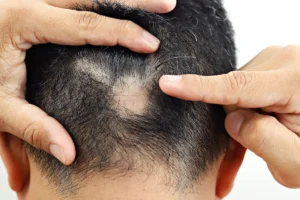
Stem cell therapy is different from old hair transplant methods. It uses the body’s own cells to encourage hair growth. This safe, non-surgical method wakes up dormant hair follicles, giving hope to those with hair loss.
Thanks to regenerative medicine, a new chapter in hair restoration has begun. It lets people take control of their beauty and individuality.
Stem cell for hair loss is a game changer. Read our powerful guide to this amazing technology and see how to restore your hair safely.
Key Takeaways
Stem cell therapy is a non-surgical, regenerative approach to hair restoration.
It works by reactivating dormant hair follicle stem cells to promote natural hair growth.
Over 4,700 clinical trials are currently exploring the therapeutic stem cell therapy.
This treatment offers a promising solution for individuals experiencing hair loss.
Stem cell therapy empowers individuals to own their beauty and uniqueness.
Understanding Stem Cell Therapy for Hair Loss
Stem cell research has made it possible to regrow hair, changing hair restoration. Stem cell therapy uses your body’s cells to grow hair and make it thicker.
What Are Stem Cells and How Do They Work?
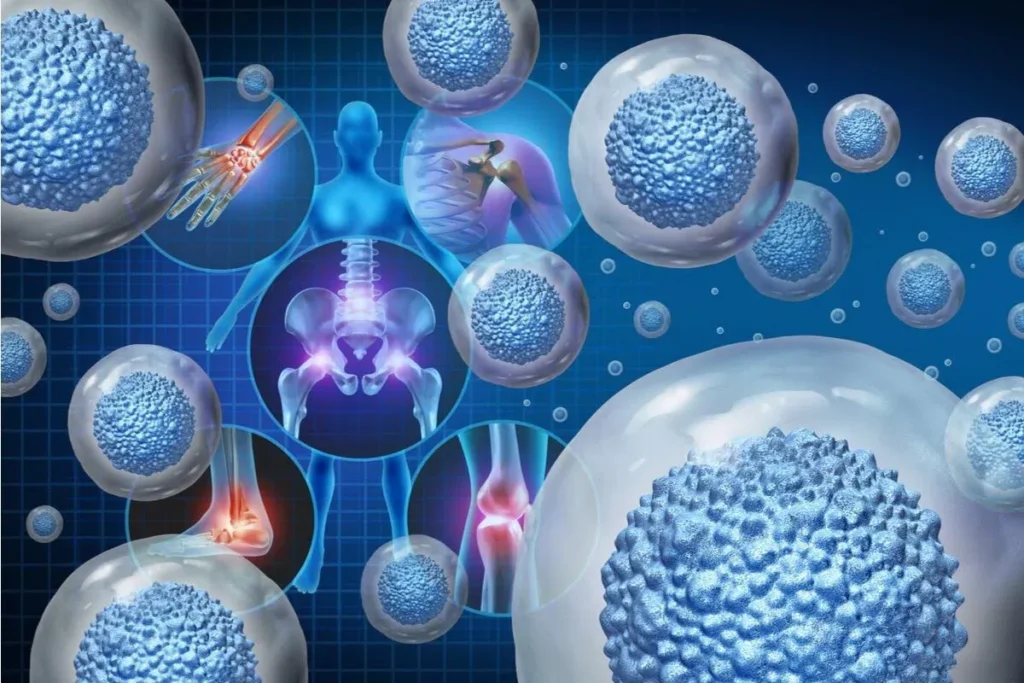
Stem cells are multipotent cells that can turn into different cell types. They help repair and grow tissues. In hair therapy, they target hair loss, making follicles healthy and growing hair.
Studies show that stem cells from adipose tissue, bone marrow, hair follicles, and umbilical cord blood help grow hair. This breakthrough offers new hope for treating hair loss.
The Science Behind Hair Regeneration
Stem cell therapy for hair loss works by reactivating dormant hair follicles and growing hair naturally. It improves scalp health and the hair growth cycle. This therapy offers a promising solution for hair loss.
As stem cell technology advances, it shows clinically proven results for hair density and growth. This therapy uses stem cells to offer a natural and lasting solution to hair loss.
Types of Stem Cell Treatments for Hair Loss

Hair loss treatment has made a big leap with stem cell therapies. These treatments offer a new way to regrow hair. They work in different ways, like direct cell transplantation, stem cell-derived conditioned medium, and stem cell-derived exosomes. Each method has its own way to fight hair loss.
Direct Cell Transplantation
Direct cell transplantation takes stem cells, processes them, and injects them into the scalp. This method is seen as a strong way to grow hair by putting stem cells right where they’re needed. As “The future of hair restoration lies in the ability to harness the regenerative power of stem cells,” it shows how direct cell transplantation is a new and exciting method.
Stem Cell-Derived Conditioned Medium
Stem cell-derived conditioned medium is also getting attention for hair restoration. It uses the medium where stem cells grow, full of growth factors and proteins good for hair. This medium can wake up hair follicles, making the scalp healthier.
Stem Cell-Derived Exosomes
Stem cell-derived exosomes are tiny packets from stem cells that help cells grow. They help hair follicles work better, leading to more hair growth. Using exosomes is a new and promising way to treat hair loss, without surgery and possibly very effective.
Stem cell therapies can be customized for each person. They can adjust the treatment based on what each person needs. This means patients get the best treatment for their hair loss, helping them grow new hair.
The Stem Cell Hair Restoration Process
Discover how stem cell therapy can revitalize your hair and boost your confidence. This cutting-edge treatment uses your body’s natural healing to encourage hair growth.
Consultation and Candidacy Assessment
Your journey starts with a detailed consultation. A specialist will check if you’re a good fit for stem cell hair restoration. They’ll look at your hair loss, medical history, and health.
During the consultation, you can expect:
A thorough examination of your scalp and hair loss areas
Discussion of your medical history and any previous hair restoration treatments
Personalized recommendations based on your unique needs
Procedure Steps and What to Expect
The stem cell hair restoration process has several steps:
Extraction of fat tissue through a minimally invasive liposuction process
Processing of the extracted fat to isolate stem cells
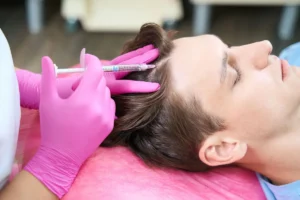
Injection of the stem cells into the scalp, targeting areas of hair loss
Patients often report a mild sensation during the injection process, but this is generally well-tolerated.
Recovery and Results
After the procedure, you might see some redness or swelling. This usually goes away in a few days. The real benefits of stem cell hair restoration show over time. You’ll see your hair grow thicker and your hair density improve.
Most people need more than one session for the best results. You’ll start to see your hair get thicker and denser over time. Here’s what you can expect:
Understanding the stem cell hair restoration process helps you decide if it’s right for you. With its innovative approach and promising results, stem cell therapy is a compelling option for those looking to restore their hair’s natural vitality.
Conclusion
Stem cell therapy is a big step forward in treating hair loss. It’s a gentle and very effective way to make hair thicker and boost confidence. This therapy uses stem cells to help hair grow naturally and lastingly.
Stem cell hair transplants have changed how we treat hair loss. They offer a new, advanced way to restore hair. With this therapy, people can see a big change in their hair, making it fuller and healthier.
The science behind stem cell hair therapy is getting better all the time. This means more people can get the natural, shiny hair they want. Whether you’re losing hair or just want better hair, stem cell therapy is a great option.
This therapy combines the latest in stem cell science with a deep understanding of hair growth. It’s a luxurious and effective way to get the hair you’ve always wanted.
FAQ
Do stem cells really work for hair loss?
Yes, stem cell therapy has shown promising results. It reactivates dormant follicles and promotes hair growth. This leads to better hair density and growth.
What is stem cell therapy for hair restoration?
Stem cell therapy for hair restoration uses stem cells to stimulate hair growth. It also reactivates dormant hair follicles. This is a new way to treat hair loss.
How do stem cells contribute to hair regrowth?
Stem cells help hair regrow by activating dormant follicles. They also enhance the natural hair growth cycle. This improves scalp health.
What are the different types of stem cell treatments available for hair loss?
There are several stem cell treatments for hair loss. These include direct cell transplantation, stem cell-derived conditioned medium, and stem cell-derived exosomes. Each has its own benefits.
Can stem cells regrow hair?
Yes, stem cells can regrow hair. They stimulate dormant follicles and promote natural hair growth. This results in thicker, fuller hair.
What is the process of stem cell hair restoration?
The process starts with an initial consultation and a candidacy assessment. Then, there are procedure steps and a recovery period. Multiple sessions are often needed for the best results.
How long does it take to see results from stem cell therapy for hair loss?
Results from stem cell therapy for hair loss vary. But, you can see improvements in hair growth and density within several months.
Is stem cell therapy for hair loss safe?
Yes, stem cell therapy for hair loss is safe. It’s a minimally invasive treatment. Using autologous stem cells reduces the risk of adverse reactions.
Can stem cell therapy be used in conjunction with other hair loss treatments?
Yes, stem cell therapy can be combined with other hair loss treatments. This includes medications or low-level laser therapy. It can enhance its effectiveness and promote better results.
How do I know if I’m a good candidate for stem cell hair restoration?
To find out if you’re a good candidate, consult a qualified healthcare professional. They will assess your hair loss and overall health. They will then recommend the best treatment for you.
References
Stem cells are being investigated in applications in male pattern baldness and other forms of alopecia of the human scalp. https://pmc.ncbi.nlm.nih.gov/articles/PMC10174680/