

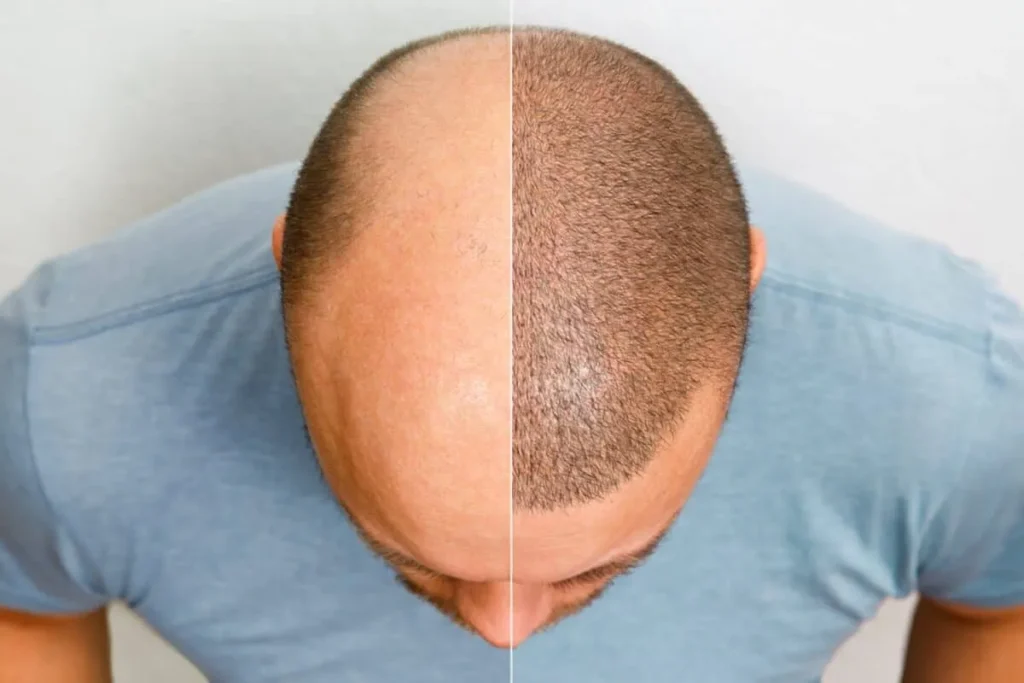
Millions of people take corticosteroids like prednisone for serious health issues. Yet, many experience hair loss as a side effect. If you’re dealing with steroid-induced hair thinning, wondering if your hair will grow back is normal. The answer depends on several things, like the steroid type, treatment length, and your genes.
It’s key to understand how steroid hair loss happens. Different steroids can cause hair loss in different ways. For example, corticosteroids might lead to temporary hair loss. But anabolic steroids can cause more lasting damage by raising DHT levels.
Key Takeaways
Corticosteroids can cause temporary hair loss.
Anabolic steroids may lead to more permanent hair loss.
The chance of hair growing back depends on the steroid type and how long you use it.
Genetic predisposition plays a role in steroid-induced hair loss.
Knowing why you lost your hair is important for recovery.
Understanding Different Types of Steroid Hair Loss

Steroids can cause hair loss in many ways. The type of steroid used affects how it impacts hair growth. This leads to various forms of hair loss.
Corticosteroids and Telogen Effluvium
Corticosteroids are used for their anti-inflammatory effects. They can cause hair loss through telogen effluvium. This condition disrupts the hair growth cycle, causing more hairs to fall out.
Telogen effluvium is often temporary. Hair growth usually returns when corticosteroid use is stopped or reduced.
Anabolic Steroids and DHT Production
Anabolic steroids can also lead to hair loss. They increase dihydrotestosterone (DHT) production. DHT causes hair follicles to shrink, resulting in thinner, shorter hairs and hair loss.
This type of hair loss is harder to reverse. It involves the conversion of testosterone to DHT, which can cause permanent damage if not addressed.
How Steroids Disrupt Normal Hair Growth Cycles
Steroids change the body’s hormonal balance, disrupting hair growth cycles. Corticosteroids can suddenly shift the hair growth phase, causing telogen effluvium. Anabolic steroids increase DHT levels, causing hair follicles to shrink.
Understanding how steroids affect hair growth is key to addressing hair loss. By recognizing the different impacts, individuals can take steps to prevent hair loss. This can include medical treatment or lifestyle changes to address the root cause.
Can Steroid Hair Loss Grow Back?

Steroid-induced hair loss can be upsetting. But, is it possible to grow it back? The answer depends on the type of steroid and how it affects hair growth.
Recovery Timeline for Corticosteroid-Induced Hair Loss
Hair loss from corticosteroids, like prednisone, can often be reversed. Hair usually starts growing back 3-6 months after stopping the drug. But, this time can change based on the dose and how long you used it.
In some cases, hair may grow back naturally. But, using minoxidil can help speed up hair growth and make hair follicles stronger.
Permanent vs. Temporary Hair Loss Factors
How long hair loss lasts depends on the steroid type and your genes. Anabolic steroid-induced hair loss might not grow back if not treated quickly.
Type of Steroid: Corticosteroids vs. Anabolic Steroids
Genetic Predisposition: Family history of hair loss
Dosage and Duration: Higher doses and longer use increase risk
Research and Statistics on Hair Regrowth
Studies show that hair can grow back after steroid loss. But, how well it grows back varies. Up to 50% of people see a lot of regrowth after stopping steroids.
Steroid Hair Loss in Women
Steroid hair loss in women is very upsetting. It’s less common than in men but can happen due to hormonal changes. Using finasteride and minoxidil can help, but always talk to a doctor first.
Knowing why you lost hair and the right treatment is key to getting it back. By tackling the root cause and using the right treatments, you can get your hair back.
Treatment Options for Steroid Hair Loss
Understanding the treatment options for steroid hair loss is key. This condition can be tough to tackle, but there are ways to help your hair grow back. You can also slow down hair loss.
Medication Approaches
Finasteride and minoxidil are two main medications for this issue. Finasteride stops the hormone DHT, which causes hair loss. Minoxidil is applied to the scalp to make hair grow longer and thicker.
Finasteride is great for male pattern baldness and works well for steroid hair loss. Minoxidil helps hair grow back and is often used with other treatments.
Combination Therapies and Success Rates
Combining treatments can lead to better results. For example, using finasteride and minoxidil together works better than either one alone. This combo can help your hair grow more and lose less.
Success rates vary, but many people see big improvements in their hair. It’s important to talk to a doctor to find the right treatment for you.
When to Seek Professional Help
If you’re losing hair due to steroids, get professional help. A doctor can find the cause and suggest the best treatment. They can also check how well the treatment is working.
Getting help early is important. It can help you treat the hair loss successfully and prevent it from getting worse.
Conclusion
Steroid hair loss is a big worry for those taking corticosteroids or anabolic steroids. It happens because steroids mess with hair growth cycles, causing too much hair to fall out. Knowing about telogen effluvium and DHT production helps tackle this problem.
Even though losing hair from steroids is tough, there’s hope for growing it back. Finasteride and minoxidil can help. Using them together might work even better. Getting help from a professional is key to finding the right treatment.
Understanding why steroids cause hair loss and looking into treatments is a good start. Does steroids make you lose hair? It’s a bit complicated, but with the right approach, you can fight it and help your hair grow back.
FAQ
Do steroids cause hair loss in females?
Yes, steroids can lead to hair loss in females. The extent of hair loss depends on the steroid type and individual factors.
Is hair loss from steroids permanent?
Hair loss from steroids can be either temporary or permanent. It depends on the steroid type, dosage, and how long it’s used. Corticosteroids usually cause temporary hair loss, while anabolic steroids can cause permanent loss.
Will my hair grow back after stopping steroids?
Often, hair loss from corticosteroids is reversible. Hair growth may resume after stopping the medication. But, it can take several months for hair to grow back.
Can steroids make you lose your hair?
Yes, certain steroids, like anabolic steroids, can cause hair loss. They increase dihydrotestosterone (DHT) levels. This can shrink hair follicles and lead to hair loss.
Are there any treatments available for steroid hair loss?
Yes, there are treatments available. Medications like finasteride and minoxidil can slow hair loss and promote regrowth. Combination therapies may also help with steroid hair loss.
How long does it take for hair to regrow after steroid-induced hair loss?
The time it takes for hair to regrow varies. Generally, it can take several months to a year or more after stopping corticosteroids.
Can women experience permanent hair loss due to steroids?
While less common, women can experience persistent hair loss from steroids. This is more likely with anabolic steroids or hormonal imbalances.
What are the most effective treatments for steroid hair loss?
Medications like finasteride and minoxidil are often used to treat steroid hair loss. Low-level laser therapy (LLLT) and platelet-rich plasma (PRP) therapy can also help promote hair regrowth.
References
National Center for Biotechnology Information. Evidence-Based Medical Insight. Retrieved from https://pubmed.ncbi.nlm.nih.gov/1444500/**[1


