

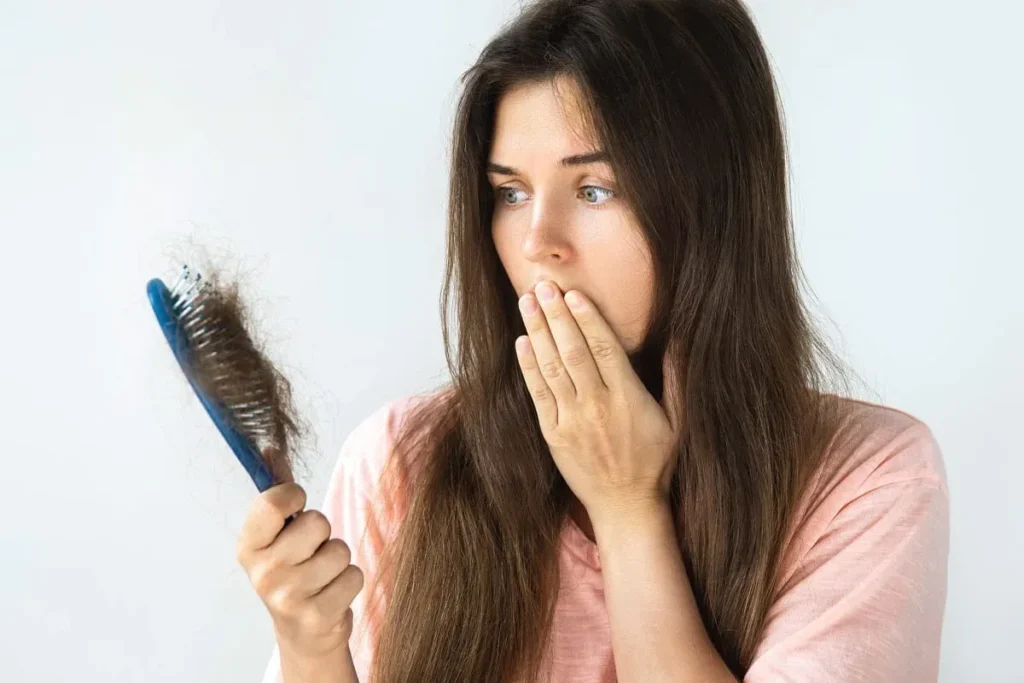
Many people experience sudden hair loss when they’re stressed. Studies show that about 71.3% of people have hair loss, and stress is a big reason.
Women are more likely to lose hair due to stress. It’s important to understand how our mental health affects our hair.
Learning about the link between stress and hair loss can boost our confidence. It helps us on our path to lasting beauty.
Stress alopecia women solutions offer incredible relief. Discover powerful ways to calm your mind and achieve amazing hair regrowth now.
Key Takeaways
Hair loss affects a significant portion of the population, with stress being a major contributor.
Women are more likely to experience stress-related hair loss.
It’s key to understand how stress affects our hair.
Getting the right care can really help with hair loss.
Knowing more about stress alopecia can help us feel more confident.
The Science Behind Stress Alopecia Women Experience

It’s important to know how stress can cause hair loss, which is a big issue for many women. Stress alopecia is a condition where hair falls out because of stress. It affects a lot of women around the world.
Prevalence and Statistics
Many studies have found that stress and anxiety are common in women. These feelings can make hair fall out. About 28% of women experience hair loss because of stress.
Stress alopecia is a big problem that needs more attention. Knowing the signs and symptoms helps women get the right treatment. It also helps them manage their stress better.
Biological Mechanisms of Stress-Induced Hair Loss
Stress can mess up the normal hair cycle. When we’re stressed, our hair follicles can stop growing. This leads to a lot of hair falling out.
Cortisol Levels: High cortisol can mess up the hair growth cycle.
Hormonal Imbalance: Stress can change our hormones, affecting hair growth.
Inflammation: Long-term stress can cause inflammation, leading to hair loss.
Knowing how stress affects hair can help women manage their stress. This might reduce the impact of stress alopecia on their hair.
Common Types of Stress-Related Hair Loss

Hair loss due to stress is not just one thing; it’s several types with different signs. Knowing these differences helps us tackle the problem better.
Telogen Effluvium
Telogen Effluvium is a temporary hair loss caused by stress. It happens when many hair follicles stop growing and rest, causing a lot of hair to fall out.
Symptoms include: hair loss after washing or combing, and thinning hair on the scalp.
Alopecia Areata
Alopecia Areata is an autoimmune disease where the body attacks hair follicles. Stress can make it worse, but it’s not the only reason.
Characteristics of Alopecia Areata: patchy hair loss, often in round or oval patches, on any hair-bearing area.
Trichotillomania
Trichotillomania is a mental disorder where people feel compelled to pull out their hair. It’s often tied to stress and anxiety.
Signs of Trichotillomania: uneven hair loss, mainly on the scalp, with a feeling of relief after pulling hair.
Knowing about these conditions is the first step to managing stress-related hair loss. By figuring out the specific type, people can find the right treatment and make lifestyle changes to protect their hair from stress.
Prevention and Treatment Strategies
Stress-related hair loss can be upsetting. But, there are ways to prevent and treat it. Knowing how stress affects hair helps people take action.
Proven treatments like minoxidil can help hair grow and stop shedding. Stress-reducing activities like meditation and yoga are also key. Gentle scalp care is important too.
Keeping your scalp healthy is key to avoiding stress-related hair loss. Use stress management, gentle scalp care, and medical treatments together. This way, you can get your hair back and feel confident again.
Can stress make your hair fall out? Yes, it can. But, with the right steps, you can stop and treat it.
Does anxiety cause hair loss? Anxiety can lead to stress, which can cause hair loss. By managing anxiety and stress, you can lower your risk of hair loss.
FAQ
Does stress really cause hair loss?
Yes, stress can lead to hair loss. When stressed, your body’s hormonal balance changes. This can cause hair loss, known as stress alopecia.
What are the common types of stress-related hair loss?
Stress can cause several hair loss types. Telogen effluvium happens when stress stops hair growth and leads to shedding. Alopecia areata causes patchy hair loss due to an autoimmune issue. Trichotillomania is when someone compulsively pulls out their hair.
Can anxiety cause hair loss?
Yes, anxiety can lead to hair loss. It increases stress hormones like cortisol. This disrupts hair growth and can cause loss.
Will my hair grow back after stress-related hair loss?
Often, yes. Hair growth can resume once stress is managed. But, growth rates and extent vary by person and severity.
How can I prevent stress-related hair loss?
You can lower your risk of stress-related hair loss. Manage stress with meditation, yoga, or deep breathing. Eat well and take care of your hair.
Are there any effective treatments for stress-related hair loss?
Yes, many treatments work for stress-related hair loss. These include medications, low-level laser therapy (LLLT), and platelet-rich plasma (PRP) therapy. A healthcare professional might suggest a mix of these.
Can stress cause balding?
Stress can contribute to hair loss, but it’s not the only cause of balding. Balding often results from genetics, hormones, and environment.
Does stress cause receding hairline?
Stress can lead to hair loss, but it doesn’t directly cause a receding hairline. A receding hairline usually comes from genetics and hormones.
References
National Center for Biotechnology Information. Evidence-Based Medical Insight. Retrieved from https://pmc.ncbi.nlm.nih.gov/articles/PMC11514570/


