

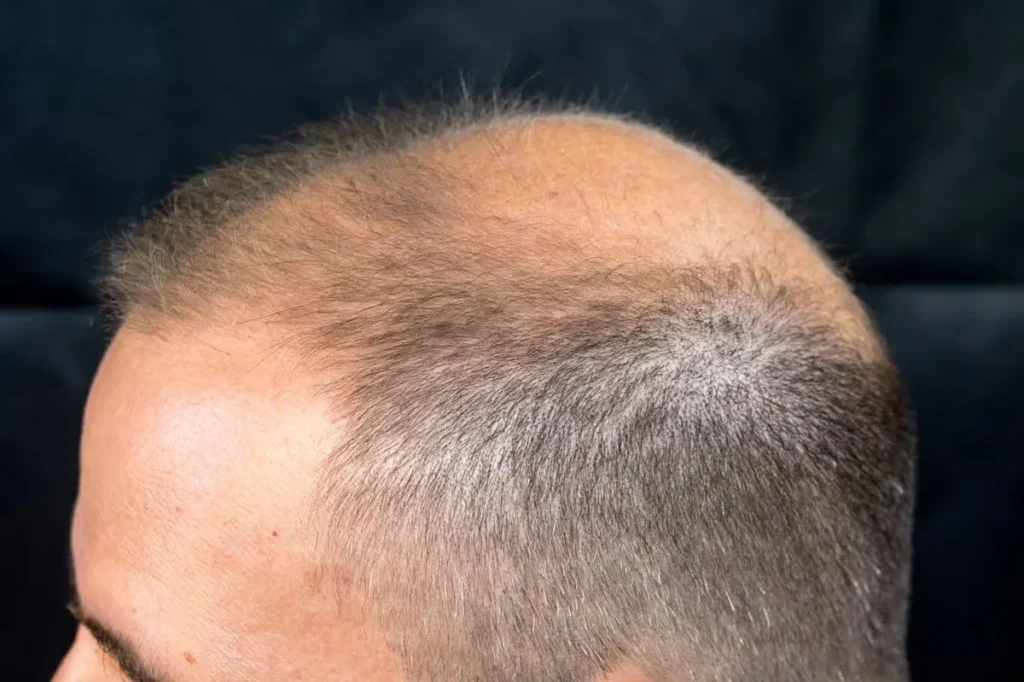
Have you noticed unusual hair loss and wondered if your stress levels might be to blame? Recent studies have found a link between stress and alopecia areata. This is an autoimmune condition that causes patchy hair loss. It affects about 2% of people worldwide, causing a lot of distress.
Stress can change your hormones, leading to hair loss. The stress response releases hormones that can harm your hair follicles. Knowing this can help you start managing stress-related hair loss and keep your scalp healthy.
Stress and bald spots are closely linked. Discover incredible fast fixes and powerful ways to regrow your hair and reduce anxiety today.
Key Takeaways
Psychological stress is linked to alopecia areata, a condition causing patchy hair loss.
Stress-induced hormonal changes can trigger autoimmune attacks on hair follicles.
Understanding the connection between stress and hair loss is key for managing it.
Managing stress is a big step towards a healthier scalp.
Recent research sheds light on how stress leads to hair loss.
The Science Behind Stress and Bald Spots

Stress and hair loss are linked through many body processes. Stress can cause conditions like alopecia areata, leading to bald spots.
What is Alopecia Areata?
Alopecia areata is an autoimmune disease. It happens when the immune system attacks hair follicles, causing hair loss. This condition affects not just looks but also self-esteem and well-being.
Key Facts About Alopecia Areata:
Affects about 2% of the world’s population.
Can start at any age, often in the 20s or 30s.
Stress and genetics both play a part.
Prevalence and Risk Factors
Knowing about alopecia areata’s prevalence and risk factors is key. Both genetics and environment play a role.
Understanding these factors helps manage the condition. It can also reduce the chance of getting bald spots.
How Stress Triggers Hair Loss Mechanisms

Stress and hair loss are linked in many ways. Hormonal changes, immune responses, and cell changes play a part. Stress can start a chain of events that harms hair growth.
Stress-Induced Hormonal Changes
Stress makes our body release cortisol and other hormones. Elevated cortisol levels can increase DHT, a hormone that causes hair loss. DHT makes hair thinner and shorter, stopping hair growth.
Immune System Response to Stress
Stress affects our immune system, which is key to hair health. When stressed, our immune system can go out of balance. This can lead to alopecia areata, where the immune system attacks hair follicles, causing hair loss.
Recent Research on Mitochondrial Dysfunction
New studies show stress can harm hair follicle cells. This is due to mitochondrial dysfunction. Mitochondrial dysfunction means cells can’t get the energy needed for hair growth, leading to hair loss.
Understanding these factors helps us see how stress affects hair. By knowing about hormonal changes, immune responses, and mitochondrial dysfunction, we can fight stress-related hair loss. This way, we can keep our hair healthy and vibrant.
Managing and Treating Stress-Related Hair Loss
Dealing with stress-related hair loss needs a full plan. This plan should include ways to lower stress and medical help. By tackling the main causes of hair loss, people can help their hair grow back. They can also lower the chance of more hair loss.
Effective Stress Reduction Techniques
Stress plays a big role in hair loss. Lowering stress can help stop this problem. Yoga, meditation, and deep breathing exercises can help. They lower cortisol, which helps hair grow.
Adding these habits to your day can make a big difference. It can improve your mental health and hair health.
Also, eating well and exercising regularly is key. Foods rich in vitamins and minerals, like biotin and vitamin D, help hair grow.
Medical Treatments for Stress-Induced Bald Spots
For those with a lot of hair loss, medical treatments can help. Minoxidil can make hair grow faster and stop it from falling out. PRP (Platelet-rich Plasma) therapy involves injecting PRP into the scalp to boost hair growth.
Using these treatments with stress-reducing methods can work best. This way, people can make their hair healthier and fuller.
It’s important to talk to a doctor to find the best treatment. With the right mix of stress management and medical care, people can see big improvements in their hair.
Conclusion
It’s important to understand how stress affects hair health. Recent studies show a link between stress, hormonal changes, and hair loss. This includes conditions like alopecia areata.
Can stress lead to bald spots or alopecia? Yes, it can. Stress can cause hair loss, showing up as bald patches or more. Knowing this helps us take steps to manage stress and look our best.
Living a life that reduces stress and promotes hair health is a journey. It’s about embracing nature and reducing stress. This way, we can find our inner glow and own our beauty, leading to timeless elegance.
FAQ
Can stress really cause bald spots?
Yes, stress can lead to bald spots. Studies show a link between stress and alopecia areata, a condition causing patchy hair loss.
What is alopecia areata?
Alopecia areata is an autoimmune condition causing patchy hair loss. It results in bald spots. It affects about 2% of the world’s population, impacting appearance and self-confidence.
How does stress trigger hair loss?
Stress releases hormones like cortisol, which can harm hair follicles. This leads to hair loss. Mitochondrial dysfunction also plays a role.
Can stress reduction techniques help with hair loss?
Yes, stress reduction techniques like yoga and meditation can help. They lower cortisol levels and promote hair growth.
What medical treatments are available for stress-induced bald spots?
Medical treatments like minoxidil and PRP therapy are available. They can be used with stress reduction techniques to improve hair health.
Is stress-related hair loss reversible?
Yes, with the right stress management and medical treatments, hair health can improve. This can even reverse stress-related hair loss.
Can stress cause balding?
Stress can lead to hair loss, including alopecia areata. This can cause balding. But, hair loss varies by person.
Does stress cause alopecia?
Yes, stress is a known trigger for alopecia areata. This autoimmune condition causes patchy hair loss.
How can I manage stress-related hair loss?
Managing stress-related hair loss needs a holistic approach. This includes stress reduction, medical treatments, and focusing on overall well-being.
References
National Center for Biotechnology Information. Evidence-Based Medical Insight. Retrieved from https://pmc.ncbi.nlm.nih.gov/articles/PMC10380371/


