

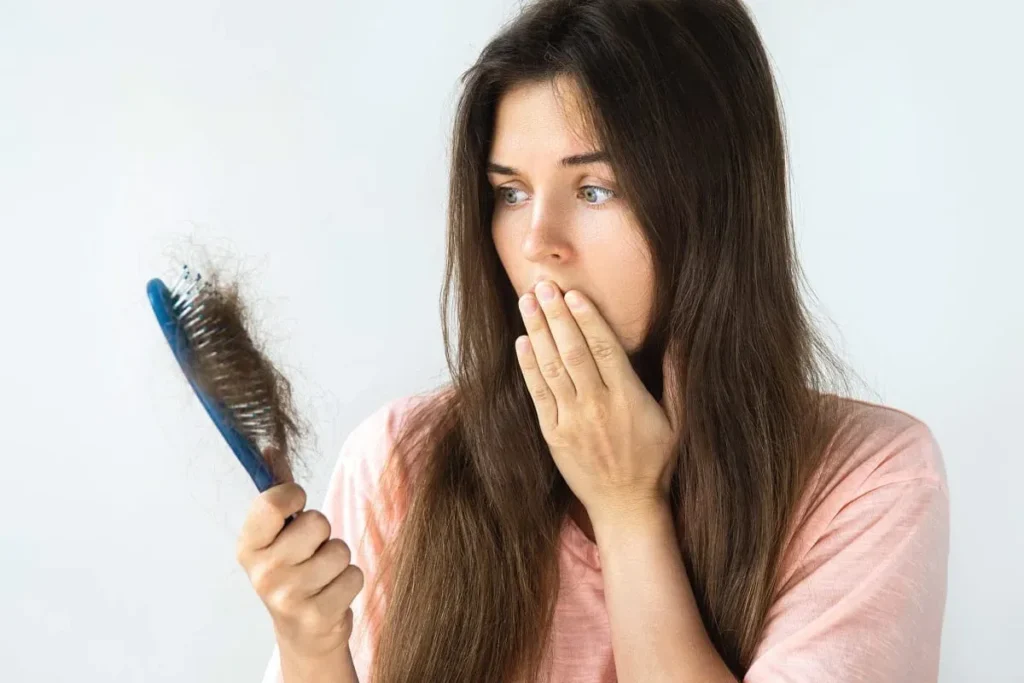
Experiencing sudden hair shedding during or after a stressful period can be alarming. For many women, this is not an isolated incident. Telogen effluvium, a condition triggered by stress, affects countless women worldwide, leading to diffuse hair loss.
Stress female hair loss: shocking secrets and powerful treatments to stop shedding and achieve amazing hair volume.
Research shows that women under extreme pressure are 11 times more likely to experience hair shedding (Natarelli, et al., 2023). When the body experiences significant stress, about 70 percent of anagen hair shifts into the telogen or resting phase, leading to noticeable shedding.
Understanding the link between stress and hair loss is key for women facing this issue. By acknowledging the causes and effects, women can take the first step towards addressing their hair loss and regaining their confidence.
Key Takeaways
Telogen effluvium is a common condition triggered by stress, leading to diffuse hair shedding.
Women under extreme pressure are 11 times more likely to experience hair shedding.
Significant stress causes a substantial amount of hair to shift into the resting phase.
Understanding the link between stress and hair loss is key for addressing the issue.
Recognizing the causes and effects can help women regain their confidence.
Understanding Stress Female Hair Loss

Women who are very stressed are more likely to lose their hair. This can really affect their life quality. Stress-induced hair loss, or stress alopecia, is a big problem for many women around the world.
What is Telogen Effluvium?
Telogen effluvium is when you lose a lot of hair because of stress. It happens when many hair follicles stop growing and start resting. This leads to a lot of hair falling out. It’s often caused by big stress events, like being sick, having surgery, or going through a tough time emotionally.
Key Facts About Telogen Effluvium:
Typically appears 2 to 4 months after a stressful event
Can cause up to 300 hairs to shed per day
More common in women
How Common is Stress-Related Hair Loss in Women?
Research shows that women who are stressed a lot tend to lose more hair. A study with 424 people found that stressed women were 9.0% likely to lose hair. This is compared to 3.7% for women who were not as stressed.
Signs and Symptoms to Watch For
It’s important to know the signs of stress-related hair loss. This way, you can get help and treatment early. Some common signs include:
Noticeable shedding after illness or burnout
Thinning along the scalp or temples
Delayed regrowth
A dermatology expert says, “Knowing why you’re losing hair is key to finding a good treatment.” Getting help early can really help women with stress-related hair loss.
The Science Behind Stress and Hair Shedding

Stress and hair loss are closely linked, a topic of much study. Knowing how stress affects hair can help women deal with shedding.
How Stress Affects Hair Growth Cycles
Cortisol, the stress hormone, disrupts hair growth. Stress triggers a “fight or flight” response, raising cortisol levels. This can cause hair to stop growing too soon, leading to more shedding. Stress-induced hair loss is often temporary and reversible, fixing itself once stress is gone.
Timeline: From Stress to Hair Loss
How long it takes for stress to cause hair loss varies. Shedding usually starts 3-4 months after the stressful event. This is because hair goes through growth, transitional, and resting phases. Stress can push more hair into the resting phase, causing more shedding. Knowing this timeline helps women find the cause of their hair loss and get the right treatment.
The Molecular Impact of Stress on Hair Follicles
Stress affects hair growth and causes inflammation at a molecular level. Cortisol and other stress hormones can harm hair follicles. This can lead to hair loss, but hair usually grows back within 3 to 6 months after stress is managed.
Recovery and Regrowth Expectations
The good news is that stress-induced hair loss can be reversed. Proper stress management and hair care can help hair regrow. In fact, 95 percent of acute cases resolve completely. To encourage regrowth, it’s key to tackle the stress and keep hair care routines healthy. This way, women can unlock their natural beauty and confidence, enjoying a full and healthy head of hair.
Conclusion
It’s important to understand how stress affects hair loss in women. When stress makes hair fall out, it can be upsetting. But, the good news is that hair loss from stress can often be fixed.
Using yoga, meditation, and deep breathing can help lower cortisol levels. This can help your hair grow back. Also, gentle scalp care and treatments from dermatologists can aid in recovery. If you’re losing a lot of hair, tackling the stress is the first step to getting your hair back.
By focusing on stress management and hair care, women can start a journey to healthier hair. With the right steps, hair can grow back in 3 to 6 months after stress is managed. It might take longer for hair to get back to its normal volume and thickness. But, yes, with the right care and stress management, hair can grow back.
FAQ
What is stress-induced hair loss, and how does it occur?
Stress-induced hair loss, or telogen effluvium, happens when stress pushes hair into a resting phase. This leads to a lot of shedding. It’s often caused by physical or emotional stress.
How does stress affect the hair growth cycle?
Stress releases cortisol, which messes with the hair growth cycle. It makes hair go into the resting phase too early. This causes a lot of shedding.
What are the signs and symptoms of telogen effluvium?
Signs include a lot of hair shedding after being sick or stressed. You might also notice thinning on your scalp or temples. Hair growth might slow down.
Is hair loss caused by stress permanent?
Usually, hair grows back once stress is managed. So, it’s a temporary and reversible condition.
Can stress cause sudden female hair loss?
Yes, stress can lead to sudden hair loss in women. It’s often because of physical or emotional stress causing telogen effluvium.
How can women manage stress-related hair loss?
Women can manage stress-related hair loss by understanding its causes and recognizing signs. Seeking the right treatment helps regain hair health and confidence. A holistic approach to stress and hair care can lead to healthier, more radiant hair.
Does hair loss from stress grow back?
Yes, in most cases, hair lost due to stress grows back once the stress is managed.
Can you lose hair from stress?
Yes, stress can cause significant hair loss in women. It disrupts the normal hair growth cycle.
What role do dermatologists play in treating stress-related hair loss?
Dermatologists are key in diagnosing and treating stress-related hair loss. They provide personalized plans to help women regain their hair’s health.
References
National Center for Biotechnology Information. Evidence-Based Medical Insight. Retrieved from https://pubmed.ncbi.nlm.nih.gov/40965527/


