

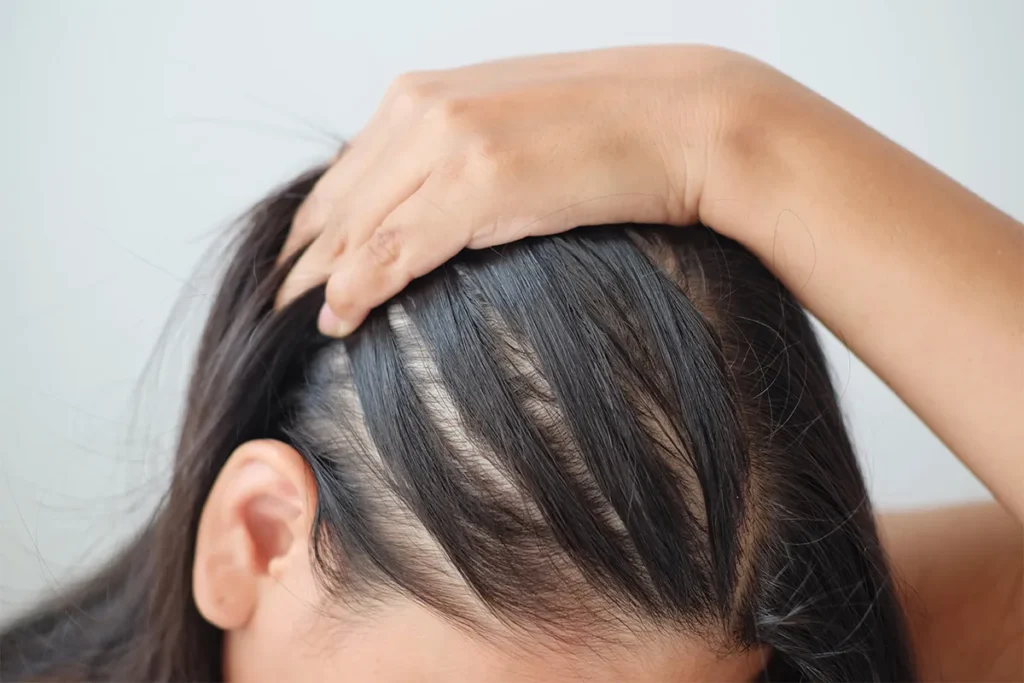
Experiencing a lot of hair shedding after a big stress can be upsetting. But, it’s a common issue called telogen effluvium. It’s a temporary and fixable form of hair loss that affects millions, causing a lot of emotional pain. The good news is that with the right help, special nutrition, and proven treatments, most people can get their hair density back.
Achieve stress hair loss recovery with these amazing results. Use our powerful tips to stimulate follicles and regrow your hair quickly.
When we face big physical or emotional stress, it can make our hair follicles stop growing too soon. This leads to hair loss that starts suddenly and affects a lot of hair at once. Most people see a lot of hair falling out two to three months after the stressful event.
Key Takeaways
Telogen effluvium is a reversible condition that can be triggered by significant stress.
Hair regrowth is possible with proper guidance and nutritional support.
Addressing underlying stressors is key for recovery.
Evidence-based treatments can help people regain their full hair density.
Most people see big improvements in 3-6 months.
Understanding Stress-Induced Hair Loss

Hair loss after stress is more common than you might think. It’s key to know why it happens. Stress-induced hair loss, linked to telogen effluvium, can be upsetting for those who experience it.
What Is Telogen Effluvium?
Telogen effluvium happens when stress messes with hair growth. It makes more hairs than usual fall out. This shows as thinning all over the scalp, not just in patches. It usually starts 2-3 months after a big stress, like a serious illness or surgery.
“Stress can really mess with hair growth,” a top dermatologist notes. “Knowing how it works is key to fixing stress-induced hair loss.”
How Stress Affects Hair Follicles
Stress messes with hair follicles by changing the growth cycle. Normally, hair grows in cycles. But stress can make more hairs stop growing too soon. This leads to more hair falling out.
Stress makes more cortisol, a hormone that can slow hair growth.
More cortisol means more hairs stop growing and fall out.
This causes a lot of hair loss, noticed after the stress is over.
Recognizing the Signs and Patterns
Spotting telogen effluvium means looking for thinning all over the scalp. Also, think about any recent stress that might have caused it. If you’re losing a lot of hair, see a doctor for help with stress hair loss treatment.
Knowing why and how stress causes hair loss is the first step to getting your hair back. By tackling stress and using the right stress related hair loss treatment, you can help your hair grow back and stop more loss.
Effective Stress Hair Loss Recovery Methods

Recovering from stress hair loss means tackling stress and giving your hair the nutrients it needs. This approach helps you fix the problem, not just the symptoms.
Addressing the Underlying Stressors
First, you need to manage the stress that’s causing hair loss. Try relaxation techniques like meditation, yoga, and deep breathing. These can lower stress and stop more hair loss.
Meditation: Regular practice calms your mind and lowers stress.
Yoga: It combines poses, breathing, and meditation to relax and reduce stress.
Deep Breathing Exercises: Simple and effective, they help reduce stress and relax.
Nutritional Support for Hair Regrowth
Good nutrition is key for hair to grow back. Eating foods rich in protein, iron, and biotin helps a lot.
Protein: Foods like lean meats, fish, and eggs are good for hair.
Iron: Foods like spinach and beans help because iron deficiency causes hair loss.
Biotin: A B-complex vitamin, found in nuts, eggs, and whole grains, is important for hair growth.
Lifestyle Changes That Promote Recovery
Changing your lifestyle also helps. Use gentle hair care, avoid heat styling, and get regular trims. These steps support hair recovery.
Gentle Hair Care: Use mild shampoos and conditioners and be gentle when combing or brushing.
Avoiding Heat Styling: Use heat styling tools less or protect your hair with a spray.
Regular Trims: Trims prevent split ends and breakage.
By making these changes, you can help your hair recover from stress loss and grow back healthy.
Conclusion: Timeline and Expectations for Hair Restoration
Getting back your natural beauty and confidence after hair loss from stress takes time and care. With the right treatment, you can see your hair start to grow back.
About 95 percent of people with acute telogen effluvium get better in 2-3 months after the stress stops. Hair usually starts growing back in 3-6 months. By learning how to stop stress hair loss and taking good care of your hair, you can shine and feel beautiful.
The time it takes for hair to grow back can differ. But, with a healthy lifestyle and managing stress, hair growth can start in a few months. Full recovery might take up to a year. By making healthy changes and starting a journey to beauty, you can glow and look timeless.
FAQ
What is stress-induced hair loss, and how does it occur?
Stress-induced hair loss happens when stress makes hair follicles stop growing. They then enter a resting phase, leading to a lot of hair shedding. This usually happens due to big physical or emotional stress.
How long does it take to regrow hair after stress-induced hair loss?
It can take months to a year or more for hair to grow back. This depends on how long the stress lasted and how well you take care of your hair.
What are the most effective ways to address underlying stressors that cause hair loss?
To tackle stress, try meditation, yoga, or deep breathing. If stress is really affecting you, see a therapist or counselor.
What nutritional support is essential for hair regrowth after stress-induced hair loss?
Eating a balanced diet is key. Include foods rich in vitamins and minerals like biotin, vitamin D, and omega-3 fatty acids. These help your hair grow.
Are there any lifestyle changes that can promote recovery from stress-induced hair loss?
Yes, regular exercise, good sleep, and avoiding heat styling can help. These changes support your hair’s recovery.
How can I manage stress to prevent further hair loss?
Use mindfulness, exercise, and relaxation to manage stress. These methods can stop more hair loss and improve your overall health.
Can stress hair loss be treated with supplements or medications?
Supplements and medications might help hair grow. But, talk to a healthcare professional before starting any new treatments.
How can I care for my hair during the recovery process?
Use mild shampoos, avoid heat styling, and be gentle when combing. These steps help your hair during recovery.
Is it possible to regrow hair after experiencing stress-induced hair loss?
Yes, with the right care, stress management, and nutrition, you can regrow your hair.
What are the signs that my hair is regrowing after stress-induced hair loss?
Look for less shedding, new hair growth, and better hair density and health. These signs show your hair is growing back.
References
National Center for Biotechnology Information. Evidence-Based Medical Insight. Retrieved from https://www.ncbi.nlm.nih.gov/books/NBK430848/


