

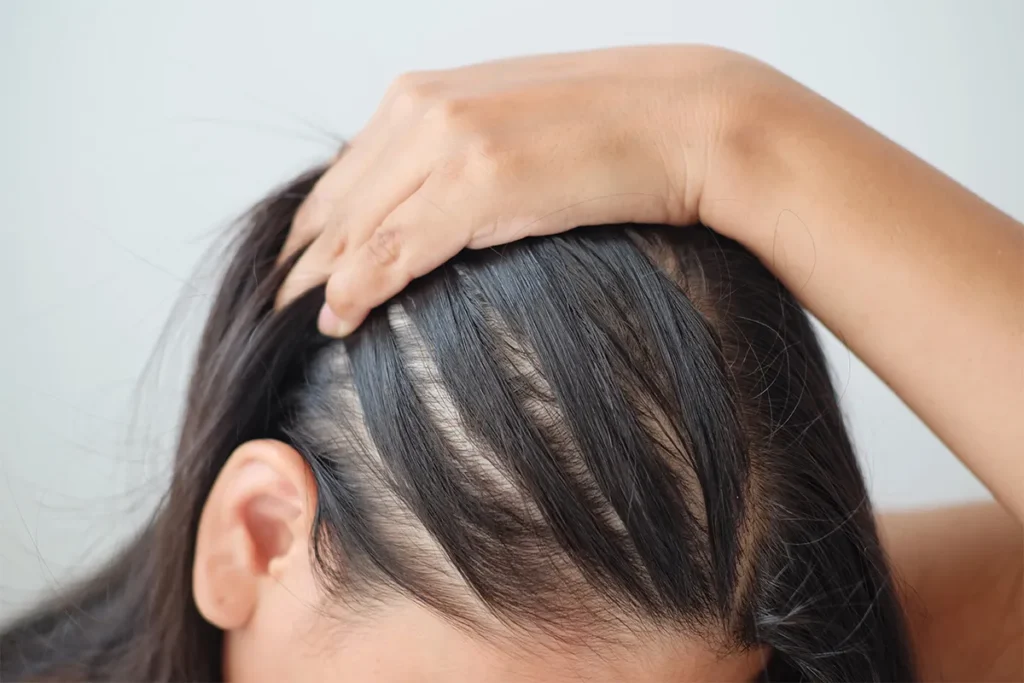
Thinning hair in front woman solutions that work! Use these power tips and amazing treatments to restore your hairline and boost confidence.
Experiencing thinning hair at the front can really hurt your confidence. Millions of women silently struggle with this issue. They often feel alone and unsure of what to do.
If you see a wider part line or receding temples, you’re not alone. Nearly one-quarter of women deal with hair thinning. This is a common problem that many women face quietly.
But there’s good news. Modern science has found ways to help with thinning hair. By learning about the causes and trying treatments, women can feel more confident. They can have the full, healthy hair they’ve always wanted.
Key Takeaways
Nearly one-quarter of women report experiencing hair thinning.
Thinning hair can significantly impact a woman’s confidence and quality of life.
Modern science offers effective solutions to address hair thinning.
Understanding the causes of hair thinning is key to finding the right treatment.
Women can regain their confidence with the right knowledge and treatment.
Understanding Female Hair Thinning: Causes and Patterns

As women get older, hair thinning becomes more common. But it’s not just older women who face this issue. Thinning hair in the 30s is now a big worry for many young women.
Common Causes of Frontal Hair Thinning in Women
Frontal hair thinning in women often comes from androgenetic alopecia. This is a hereditary condition where hair follicles shrink due to DHT sensitivity. It’s a main reason for hair loss in women.
Other big factors include:
Traction alopecia, caused by hairstyles that pull on the hair follicles.
Frontal fibrosing alopecia, a condition with inflammation and scarring.
Hormonal changes, which can impact hair growth and density.
Natural aging, leading to thinner, shorter hair.
Stress and lifestyle choices, which can also cause hair thinning.
How to Identify Early Signs of Thinning Hair
Spotting early signs of thinning hair is key. Look for a wider part line, hair loss at the crown, and less hair overall.
By catching these signs early, women can start treatments. This can help stop more hair loss and even grow new hair.
Effective Solutions for Thinning Hair in Front Woman

Women with thinning hair in the front can find relief through medical treatments, hair care, and lifestyle changes. These methods tackle the problem from different angles, providing a strong solution.
Medical Treatments and Professional Options
Medical treatments are a key step against frontal hair thinning. FDA-approved medications like minoxidil and finasteride slow down hair loss and encourage new growth. Minoxidil, applied topically, widens hair follicles and extends the growth phase. Finasteride, taken orally, blocks DHT, a hormone linked to hair loss.
Other professional options include:
Low-Level Laser Therapy (LLLT): This non-invasive treatment uses a low-level laser or light-emitting device to stimulate hair growth.
Platelet-rich Plasma (PRP) Therapy: This involves injecting platelet-rich plasma (PRP) derived from the patient’s own blood into the scalp to stimulate hair growth.
Hair Transplantation: A surgical procedure where hair follicles are moved from the back and sides of the head to the thinning areas.
Hair Care Strategies and Styling Techniques
Right hair care and styling can also help. Using gentle, sulfate-free shampoos and conditioners keeps hair and scalp healthy. Avoiding heat styling and using a wide-tooth comb reduces hair breakage.
Effective styling techniques include:
Choosing hairstyles that make hair look thicker, like layers or a bob.
Using volumizing products like mousse or thickening sprays.
Avoiding tight hairstyles that pull on the hair, such as tight ponytails or braids.
Lifestyle Changes and Nutritional Approaches
Lifestyle and nutrition are key for healthy hair growth. A balanced diet rich in vitamins and minerals, like biotin, vitamin D, and omega-3 fatty acids, supports hair health. Staying hydrated and managing stress through meditation or yoga also helps.
Key nutritional elements include:
By using medical treatments, hair care, and lifestyle changes, women can tackle thinning hair in the front. This approach promotes overall hair health.
Conclusion: Taking Action Against Hair Thinning
Women facing hairline thinning can take steps to address it. Knowing why hair thins is key to finding the right solution. It could be genetics, hormonal changes, or other reasons.
For those wondering why their hair is thinning, there are many options. Medical treatments and lifestyle changes can help. Getting advice from a healthcare professional is important for a proper plan.
Thinning hair is common, but too much loss is not normal. Women can find solutions like better hair care and nutrition. This helps them grow healthier, fuller hair.
By fighting hair thinning, women can shine and feel beautiful. With the right help, they can improve their look and feel confident.
FAQ
What are the common causes of thinning hair in women?
Thinning hair in women can come from many sources. These include androgenetic alopecia, certain hairstyles, hormonal shifts, and stress. Knowing these causes is key to finding a solution.
How can I identify early signs of thinning hair?
Look for a wider part line, hair loss at the crown, and hair thinning at the front. Spotting these signs early can help you act fast.
What medical treatments are available for thinning hair in women?
Treatments like minoxidil and finasteride can slow hair loss and encourage new growth. A healthcare professional can guide you to the right treatment.
Are there any hair care strategies that can help with thinning hair?
Yes, gentle shampoos, avoiding too much heat styling, and gentle combing can help. These steps support healthy hair growth.
Can lifestyle changes help with thinning hair?
Definitely, lowering stress, eating well, and staying hydrated can boost hair health. Combining these with treatments offers a full solution.
Is thinning hair normal in women in their 30s?
Hair thinning is common with age, but it’s not set in stone. Women in their 30s can fight thinning with various treatments.
What are some options for women with thinning hair on the crown?
For crown thinning, try medical treatments, hair care tips, and lifestyle changes. A healthcare or dermatologist can help choose the best path.
How can I help my thinning hair?
Helping thinning hair means understanding causes, spotting early signs, and finding solutions. Combining treatments, hair care, and lifestyle changes promotes hair growth.
References
National Center for Biotechnology Information. Evidence-Based Medical Insight. Retrieved from https://pmc.ncbi.nlm.nih.gov/articles/PMC6322157/


