

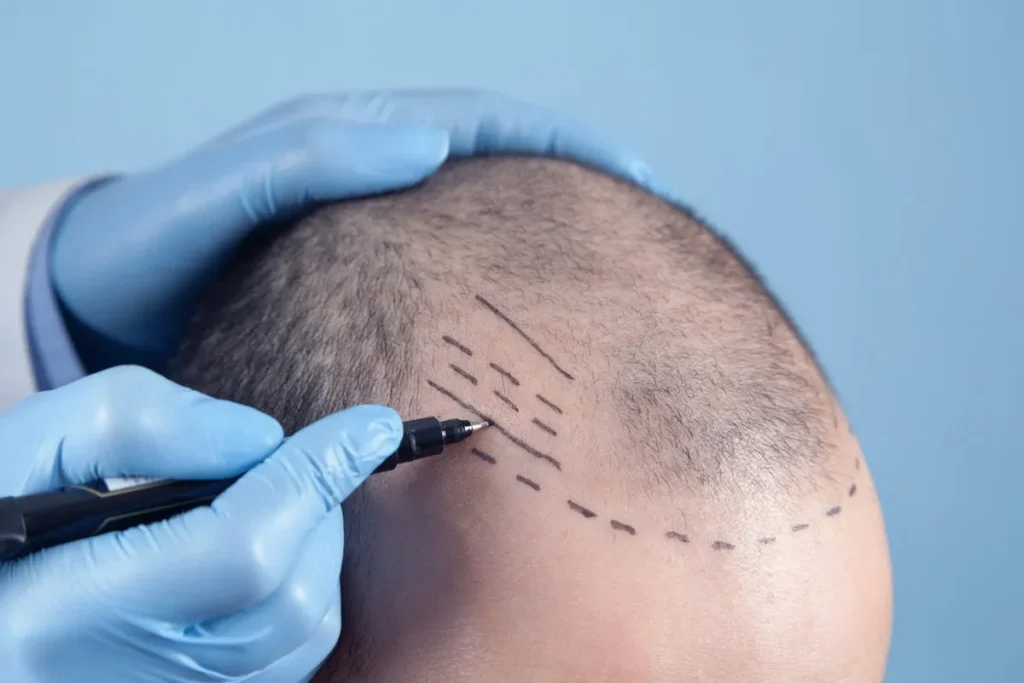
Hair loss is a big problem worldwide. About 35 million American men suffer from androgenetic alopecia. By age 50, almost half of adult males face hair loss. Hair replacement surgery offers a lasting solution, giving natural-looking results.
Modern hair restoration techniques have changed a lot. They’ve moved past old methods like plug grafts and scalp reductions. Now, advanced surgeries offer elegance and confidence with the latest technology.
Thanks to medical tech, surgical hair replacement is now a real option. GoldCity Center uses the latest in balding surgery. This means you get the best in hair restoration.
Key Takeaways
Understanding the prevalence of hair loss and its impact.
Exploring the evolution of hair replacement surgery.
Discovering advanced surgical options for hair restoration.
Learning about the latest innovations in balding surgery.
Restoring confidence through natural-looking and permanent results.
Understanding Hair Loss and Surgical Solutions

Starting to deal with hair loss means first understanding how common it is and the surgical options out there. It’s a condition that affects both men and women, impacting their self-confidence and overall happiness.
The Prevalence of Hair Loss in America
Hair loss, or alopecia, is widespread in the U.S. About 35 million men suffer from androgenetic alopecia. By age 50, half of all adult males will experience some hair loss. Genetics, hormonal changes, and aging are common causes.
Statistics on Hair Loss:
Evolution of Hair Replacement Techniques
Hair transplantation has seen big improvements over time. Techniques like Follicular Unit Transplantation (FUT) and Follicular Unit Extraction (FUE) are now more popular. They offer better results and faster recovery times than older methods.
Determining Your Candidacy for Surgery
Not everyone with hair loss can get surgery. The extent of hair loss, overall health, and what you hope to achieve are key. Talking to a qualified professional is vital to understand your options and plan a treatment that’s right for you.
Knowing the causes and stages of hair loss helps people make better choices about treatment. Surgical hair replacement is a good option for those wanting to regain their hair and confidence.
7 Types of Hair Replacement Surgeries and Techniques

There are many surgical options for fighting baldness now. People can pick the best method for their needs and likes.
Follicular Unit Transplantation (FUT)
Follicular Unit Transplantation, or FUT, takes a strip of hair skin from the back of the head. It’s then split into units and moved to bald spots. This way, many grafts can be put in at once, helping those with a lot of hair loss.
Follicular Unit Extraction (FUE)
Follicular Unit Extraction, or FUE, takes out units one by one from the donor area. This method is less invasive and leaves little to no scar. It’s great for those who like to keep their hair short.
Direct Hair Implantation (DHI)
Direct Hair Implantation uses a special tool to take out grafts and put them in without cuts. This method lets the surgeon control the hair’s angle and depth, making it look more natural.
Robotic-Assisted Hair Transplantation
Robotic-Assisted Hair Transplantation uses robots to make hair transplants more precise and quick. The robot picks the best grafts and makes the recipient sites accurately. This mix of human skill and robot precision leads to great results.
Each hair replacement surgery has its own benefits. They suit different hair loss types and patient choices. Knowing about each method helps people choose the right one for their hair journey.
Conclusion: Making an Informed Decision
It’s important to know about different hair replacement treatments if you’re losing hair. Looking into baldness surgery and hair restoration surgeries can help you choose the right treatment. This way, you can find what works best for you.
Talking to a hair restoration specialist is key. They can guide you through the options. This includes hair replacement surgery, to find the best solution for you.
Hair replacement surgery can make your hair look natural again. It can boost your confidence and self-esteem. With many hair restoration surgeries out there, you can get a full head of hair and feel great.
Choose the right hair replacement treatments to look and feel your best. Start your hair restoration journey and boost your confidence. You deserve to feel beautiful and radiant.
FAQ
What is hair replacement surgery?
Hair replacement surgery, also known as hair transplantation, moves healthy hair follicles from one area to another. It’s usually done on the scalp to cover up bald spots or thinning hair.
What are the different types of hair replacement surgery?
There are several types, including Follicular Unit Transplantation (FUT), Follicular Unit Extraction (FUE), Direct Hair Implantation (DHI), and Robotic-Assisted Hair Transplantation.
What is the difference between FUT and FUE hair transplantation?
FUT takes a strip of hair-bearing skin from the back and sides. FUE, on the other hand, takes individual follicles directly from the scalp. FUE is seen as a more advanced, less invasive method.
Is hair replacement surgery painful?
The surgery is done under local anesthesia. This means patients might feel some discomfort but it’s not painful. Afterward, pain is managed with medication.
How long does it take to recover from hair replacement surgery?
Recovery time varies. It depends on the surgery type and the individual. Generally, people can get back to normal in a few days to a week.
What are the benefits of robotic-assisted hair transplantation?
This method uses advanced technology. It makes the procedure more precise and faster. This leads to more natural-looking results and quicker recovery times.
Can hair replacement surgery be used to restore hair on other parts of the body?
Yes, it can be used for other areas like the beard, eyebrows, or chest.
How long do the results of hair replacement surgery last?
The results are long-lasting. Transplanted hair follicles grow naturally for a lifetime.
Are there any risks or complications associated with hair replacement surgery?
Like any surgery, there are risks. These include infection, scarring, and graft failure. But, choosing a skilled surgeon can help minimize these risks.
References
National Center for Biotechnology Information. Evidence-Based Medical Insight. Retrieved from https://www.ncbi.nlm.nih.gov/pmc/articles/PMC2840892/


