

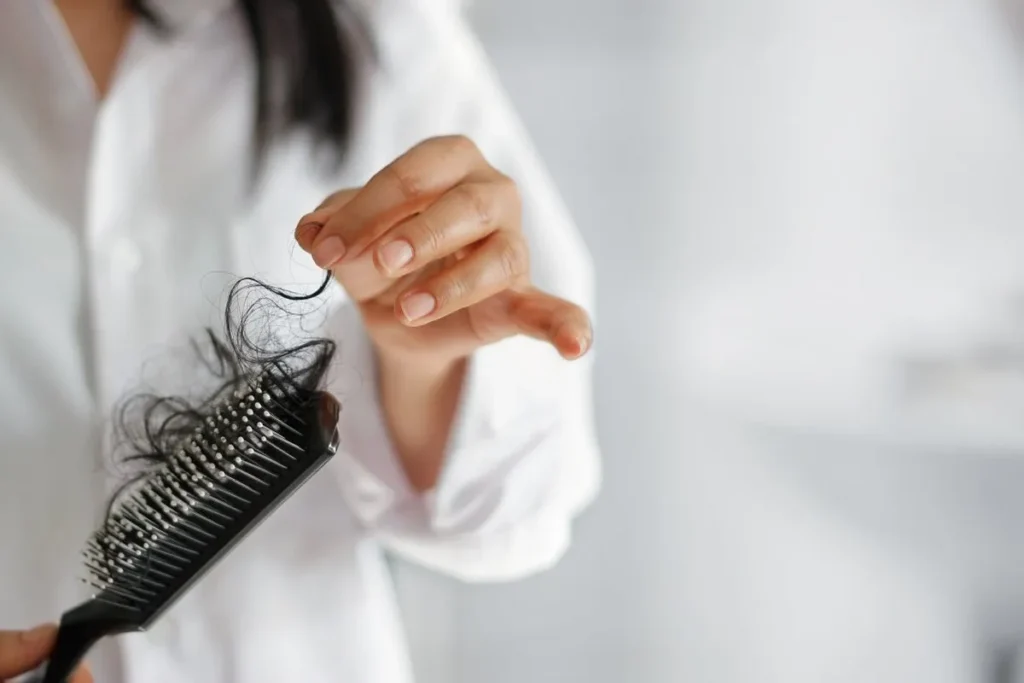
Millions of people who survived COVID-19 are now dealing with hair loss. This issue is not well-known in medical talks. The condition, called telogen effluvium, affects 20 to 25 percent of those who got COVID-19. It’s one of the most common but least talked about effects of post-COVID syndrome.
COVID-19 causes telogen effluvium by releasing too many harmful substances in the body. It also leads to inflammation, high fever, stress, and some medicines. Studies show that telogen effluvium happens in 24 to 85 percent of COVID-19 patients. Hair loss starts 30 to 57 days after getting sick and usually stops in 3 to 6 months on its own.
Want to stop hair loss after COVID-19? Learn how to get your hair back with our expert tips. Find out which vitamins and home treatments can help you regain your beautiful hair.
Key Takeaways
Post-COVID hair loss affects 20-25% of COVID-19 survivors.
Telogen effluvium is triggered by proinflammatory cytokines and systemic inflammation.
Hair shedding typically begins 30-57 days after COVID-19 infection.
Natural resolution of hair loss usually occurs within 3-6 months.
Vitamins and home treatments can help promote hair regrowth.
Understanding Post-COVID Hair Loss (Telogen Effluvium)

It’s important to know how COVID-19 can lead to hair loss. Studies show that 24 to 85 percent of people with COVID-19 experience telogen effluvium. This makes it a big worry for those getting better from the virus.
Why COVID-19 Triggers Hair Shedding
COVID-19 makes hair fall out because of the body’s stress response. When we’re stressed, our hair follicles stop growing and rest. This leads to a lot of hair falling out. This condition, telogen effluvium, is usually temporary but can be scary.
Key Factors Contributing to Telogen Effluvium:
Physical stress caused by COVID-19
Emotional stress during and after the illness
Nutritional deficiencies exacerbated by the infection
Normal Timeline: When to Expect Recovery
How long it takes to get better from telogen effluvium varies. It usually starts 30 to 57 days after getting sick. It can take 3 to 6 months to get better on its own. A 2020 study found that about 1 in 10 people saw a lot of hair falling out after COVID-19.
Knowing why and when hair loss happens after COVID-19 helps. Learning about it is the first step to taking care of your hair again.
Vitamins for Hair Loss After COVID: What Works

Many people experience hair loss after COVID-19. Vitamins like biotin, vitamin D, and zinc can help. Studies show that taking supplements during COVID-19 can prevent hair loss.
Essential Nutrients: Biotin, Vitamin D, and Zinc
Biotin is key for hair growth. It makes hair follicles strong and improves blood flow. Vitamin D helps hair grow and reduces falling out. Zinc keeps the scalp healthy, supporting hair growth.
These nutrients work together to help hair grow back. For example, not having enough biotin can lead to hair loss. So, taking supplements can help.
Antioxidants and Anti-Inflammatory Supplements
Antioxidants and anti-inflammatory supplements also help hair grow. They fight off stress and inflammation.
Omega-3 fatty acids and vitamin E are good examples. They have anti-inflammatory effects that help hair grow.
Creating an Effective Supplement Regimen
To get the most from supplements, make a plan that fits you. Talk to a doctor to find the right supplements.
A good supplement plan, along with a healthy diet and lifestyle, can help your hair grow back after COVID-19.
Effective Home Treatments for Post-COVID Hair Recovery
Hair loss after COVID-19 can be upsetting. But, with the right scalp care and hair nourishment, you can help your hair grow back. Taking care of your scalp is also key to regrowing lost hair.
Scalp Massage and Stimulation Techniques
Scalp massages boost blood flow, helping hair grow faster. Try a self-scaled massage by rubbing your scalp in circles with your fingers. It not only wakes up hair follicles but also eases stress, which can cause hair loss.
For a better experience, use a scalp massager or a soft-bristled brush. Doing this during your hair care routine is easy and helps a lot.
Hair Care Products and Ingredients to Look For
The right hair care products can really help your hair grow back. Look for products with biotin, keratin, and antioxidants. These support hair health and make hair follicles stronger.
Try our recommended hair care products for silky textures and velvety hydration. They also leave your hair smelling fresh and clean. Key ingredients to find include:
Biotin: Essential for hair growth, biotin strengthens hair follicles and makes hair thicker and fuller.
Keratin: A protein in hair, keratin repairs and protects hair from damage.
Antioxidants: Antioxidants like vitamin E and C protect hair follicles from damage, promoting healthier hair growth.
Diet and Lifestyle Changes That Support Regrowth
Eating foods rich in protein and nutrients is good for hair. Foods like eggs, fish, and lean meats help make keratin, which strengthens hair. Eating a balanced diet with vitamins and minerals is important for hair growth.
Living a healthy lifestyle also helps hair grow back. This includes managing stress, exercising regularly, and getting enough sleep. Combining these lifestyle changes with the right hair care routine helps create the best environment for hair growth.
Conclusion: When to Expect Results and When to Seek Help
Take charge of your hair growth journey. Most COVID hair fall cases get better in three to six months. This is with the right care and treatments like vitamins and home remedies for female regrowth telogen effluvium.
If hair fall lasts over a year, it’s time to see a dermatologist. They can find the cause and suggest treatments to stop hair loss after COVID-19.
Knowing when to expect results and when to get help for hair loss is key. This way, you can shine and own your beauty. With the right steps, you can say hello to a radiant look and goodbye to hair fall problems.
FAQ
What is telogen effluvium, and how is it related to COVID-19?
Telogen effluvium is a condition that makes hair fall out more than usual. It’s often caused by stress, like the kind from COVID-19. Knowing about this condition helps tackle hair loss after COVID.
How long does it take to recover from post-COVID hair loss?
Recovery times vary, but most people see hair growth in a few months. Being patient and sticking to treatments is key.
What vitamins and supplements are effective for hair loss after COVID-19?
Biotin, vitamin D, and zinc support hair growth. Antioxidants and anti-inflammatory supplements also help by fighting stress and inflammation.
Are there any home treatments that can help with post-COVID hair recovery?
Yes, scalp massage, the right hair care, and diet changes help hair grow back. Nutrient-rich foods and scalp stimulation are great for recovery.
How can I promote hair growth and reduce shedding after COVID-19?
For hair growth, use the right nutrients, gentle hair care, and manage stress. Products that nourish the scalp and support health are helpful.
When should I seek professional help for my hair loss?
If hair loss is persistent or severe, see a dermatologist. They offer personalized advice and treatments for your condition.
Can diet alone help with regrowing hair after COVID-19?
Diet is important for hair health, but it works best with supplements, proper hair care, and stress management.
Are there any specific hair care products that can help with post-COVID hair loss?
Look for products with keratin, biotin, and saw palmetto. Sulfate-free shampoos and conditioners are also good for hair.
How can I reduce stress to help minimize hair loss?
Try meditation, yoga, or deep breathing to reduce stress. A healthy lifestyle, including exercise and sleep, is also key.
What are some signs that my hair regrowth treatment is working?
Signs of success include less hair shedding, new hair growth, and better hair health. These show your treatment is working.
References
National Center for Biotechnology Information. Evidence-Based Medical Insight. Retrieved from https://pmc.ncbi.nlm.nih.gov/articles/PMC9262270/


