

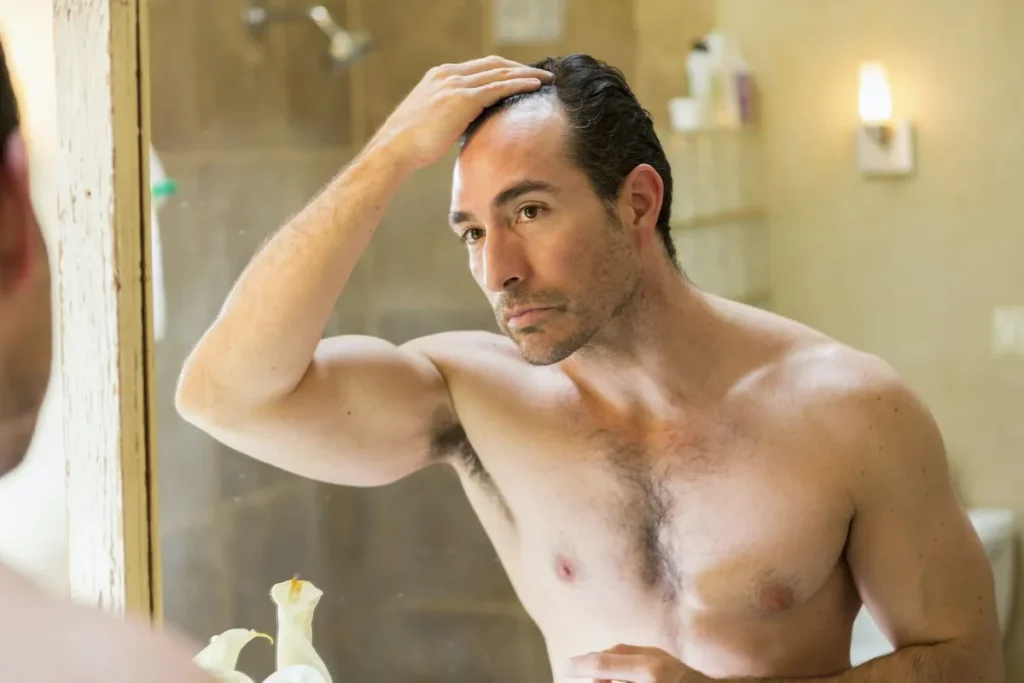
Male pattern baldness is a common concern for many men. It affects not just their looks but also their confidence. Genetics play a significant role, with 95% of hair loss in men coming from hereditary factors.
As men get older, the chance of losing hair grows. Hair loss isn’t just about looks; it can also hurt self-esteem and overall happiness. At GoldCity Center, we focus on treating male pattern baldness with care and understanding.
Spotting hair loss early and getting the right care can really help keep your hair healthy. Our team is here to help you understand why you’re losing hair and find the best solution for you.
Key Takeaways
Male pattern baldness is a common issue linked to genetics.
Hair loss can start in men as early as their 20s.
It’s important to catch hair loss early to manage it well.
Understanding the causes and exploring treatment options is key to dealing with hair loss.
Getting care that fits your needs can greatly help in keeping your hair healthy.
What Age Do Men Start Going Bald: Statistics and Trends

Male baldness affects men at various ages. It’s caused by genetics, hormones, and age. This condition is known as androgenetic alopecia.
Prevalence Rates Across Different Age Groups
About 16-20% of men aged 18-29 start losing hair. This number grows to 40-53% by ages 40-49. By 50, over 50% of men face hair loss.
By 60, up to 66% of men deal with male pattern baldness. Baldness starts early for some and later for others. Knowing this can help men prepare for hair loss.
Early Signs of Balding in Young Adults
Young men often worry about early balding signs. Thinning hair, mainly around the temples or crown, is a common first sign. A receding hairline can also signal baldness early on.
It’s key for young adults to watch for these signs. Knowing your family history helps understand your risk of baldness.
Recognizing the First Symptoms of Hair Loss
Spotting hair loss early is important. Excessive hair shedding, a wider part, or different hair texture are early signs. Men should notice these changes and talk to a doctor if worried.
Understanding male baldness helps men manage their hair loss. This knowledge aids in making smart hair care choices.
The Progression and Timeline of Male Pattern Baldness

Baldness doesn’t happen overnight. It’s a slow process that can take decades. Male pattern baldness affects millions of men and follows a pattern that can vary a lot.
Understanding the Norwood Scale of Balding Patterns
The Norwood Scale helps measure male pattern baldness. It goes from Type I, with little hair loss, to Type VII, with a lot. Knowing your type can help you see where you are and where you might be headed.
How Long Does It Take to Go Completely Bald?
Going completely bald can take 15 to 25 years after you first notice hair loss. This time can differ a lot from person to person, thanks to genetics and hormones.
Genetic and Hormonal Factors in Hair Loss
Genetics play a big role in male pattern baldness. Hormones, like DHT, also affect hair loss. Knowing this can help you manage your hair loss better.
Key Factors Influencing Hair Loss:
Genetic predisposition
Hormonal imbalance, like DHT
Age
Understanding these factors can help men take action against hair loss. This can include medical treatments, lifestyle changes, or just accepting your natural look.
Conclusion
Knowing when men start going bald is key to fighting male pattern baldness. Balding can start as early as puberty. But, most men see a lot of hair loss in their early twenties.
The Norwood Scale shows how balding changes over time. It helps people understand their hair loss journey. This scale is a clear guide for those dealing with balding.
Genetics and hormones greatly affect when hair loss starts. Spotting balding early can help slow it down. Taking action early is important.
Starting a journey to restore hair can make a big difference. With new treatments and knowledge, you can feel confident again. Your journey to a fuller head of hair is just beginning.
FAQ
At what age do most men start going bald?
Male pattern baldness can start early, even in puberty. But, it often begins in the late teens to early twenties. After 30, it becomes more common.
What are the early signs of balding in young adults?
Young adults might notice a receding hairline or thinning on the crown. They might also see more hair falling out than usual.
How long does it take to go completely bald?
Balding speeds vary by person. It can take years or even decades for a man to lose all his hair.
What is the Norwood Scale of balding patterns?
The Norwood Scale classifies male pattern baldness. It ranges from a slight hairline recession to total baldness.
What are the genetic and hormonal factors involved in hair loss?
Hair loss comes from genetics and hormones. Dihydrotestosterone (DHT), a strong form of testosterone, shrinks hair follicles.
When do guys start losing hair?
Guys might lose hair in their late teens. But, noticeable hair loss often happens in the twenties and thirties.
At what age does hair loss begin?
Hair loss can start at any age. But, men often see significant loss in their twenties and thirties.
How fast does balding occur?
Balding speeds up or slows down for everyone. It’s usually a slow process that takes years.
What age do men typically go bald?
There’s no exact age for balding. But, men often see a lot of hair loss in their thirties, forties, and fifties.
Can balding be prevented or slowed down?
Preventing balding is hard, but not impossible. Treatments and lifestyle changes can slow or stop hair loss. These include medications, laser therapy, and diet changes.
References
National Center for Biotechnology Information. Evidence-Based Medical Insight. Retrieved from https://pubmed.ncbi.nlm.nih.gov/24566563/


