

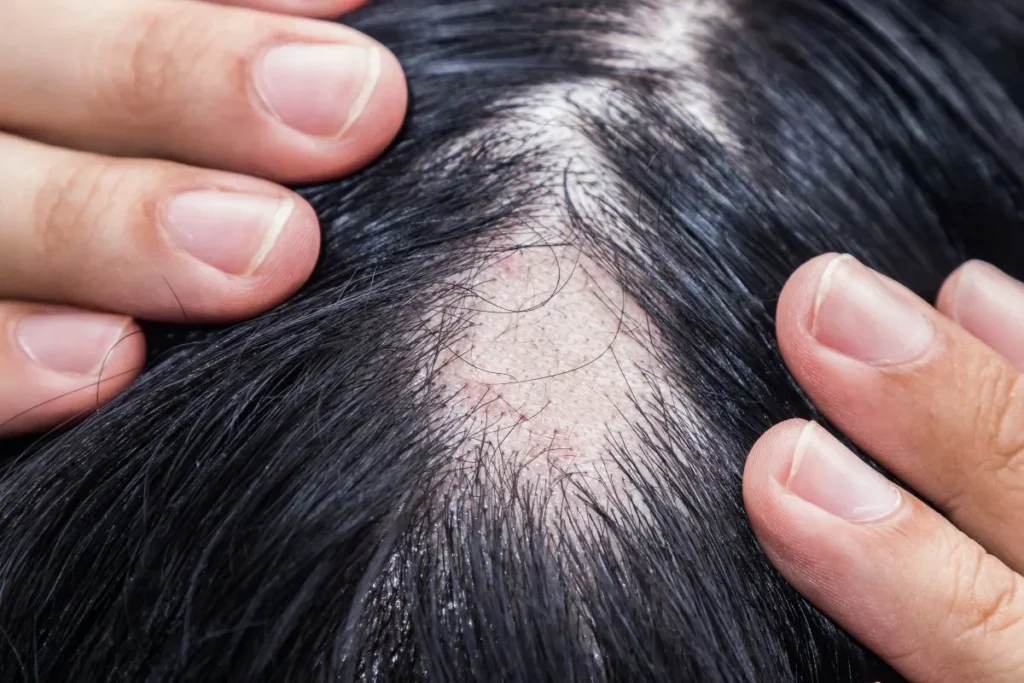
Millions of people worldwide face the distress of hair loss as a symptom of an underlying issue. When the body’s immune system attacks healthy tissues, it can cause various forms of alopecia. Alopecia areata is a common condition where the immune system targets hair follicles, leading to patchy or diffuse hair loss.
Conditions like lupus and thyroid disorders also contribute to hair loss. It’s important to understand the underlying autoimmune disorder to address hair loss effectively. By learning about these conditions and their symptoms, individuals can start their journey to regain their timeless beauty and radiant glow.
Key Takeaways
Autoimmune diseases can cause hair loss by attacking hair follicles or related skin structures.
Alopecia areata is a common autoimmune condition leading to hair loss.
Lupus and thyroid disorders are other significant autoimmune diseases that can cause hair loss.
Understanding the underlying condition is key to addressing hair loss.
Treating the root cause can help individuals regain their confidence and beauty.
Understanding Autoimmune-Related Hair Loss

When the immune system goes wrong, it can attack hair follicles. This leads to autoimmune-related hair loss. The body sees hair follicles as enemies and fights them, slowing down hair growth or causing hair loss.
How Autoimmune Diseases Attack Hair Follicles
The immune system’s fight against hair follicles shows up in different ways. For example, alopecia areata causes patchy hair loss. The follicles are not destroyed but stop growing hair.
The immune system’s mistaken attack on hair follicles is complex. It involves many immune cells and substances. This makes treating autoimmune hair loss a detailed task, focusing on changing how the immune system works.
Distinguishing Autoimmune Hair Loss from Other Types
Telling autoimmune hair loss apart from other types is key for the right treatment. Unlike common baldness, autoimmune hair loss can show up as patchy bald areas or widespread shedding. Sudden hair loss with other body symptoms points to an autoimmune issue.
To diagnose autoimmune hair loss, look at the whole picture. This includes the hair loss pattern, symptoms, and tests to rule out other causes. This way, patients get treatments that really fix the problem.
What Autoimmune Disease Causes Hair Loss: Primary Conditions

Autoimmune diseases can harm our bodies, causing hair loss. When the immune system attacks healthy tissues, it can stop hair from growing. Alopecia areata and lupus are two main diseases that cause hair loss.
Alopecia Areata
Alopecia areata is an autoimmune disease that leads to patchy hair loss. It usually happens on the scalp but can also affect other areas. The immune system attacks hair follicles, causing hair to fall out.
This can lead to sudden and unpredictable hair loss. It might also happen with other autoimmune diseases.
Lupus and Hair Loss
Lupus is a chronic autoimmune disease that can cause hair loss. Hair loss in lupus is just one symptom, along with skin rashes, joint pain, and kidney problems. Treating lupus involves controlling the immune system and addressing hair loss.
Hair loss in lupus can range from mild thinning to severe hair loss. It’s important to understand why hair loss happens in lupus. This helps in finding the right treatment.
Secondary Autoimmune Conditions Affecting Hair Growth
Secondary autoimmune conditions can also cause hair loss. These conditions often show symptoms like hair thinning and loss. This happens because the body’s immune system is reacting.
Thyroid Disorders
Thyroid disorders, like Hashimoto’s thyroiditis and Graves’ disease, can lead to hair loss. They affect the thyroid hormones needed for hair growth. Both hypothyroidism and hyperthyroidism can make hair thinner or fall out. It’s important to manage these conditions to help hair grow back.
Less Common Autoimmune Causes
Other autoimmune causes of hair loss include scleroderma and dermatomyositis. Scleroderma can harden the skin and affect the scalp. Dermatomyositis is an inflammatory disease that affects the skin and muscles. These conditions show how many autoimmune diseases can affect hair growth.
Scleroderma: Can cause skin thickening and affect the scalp, leading to hair loss.
Dermatomyositis: An inflammatory condition that can cause skin and muscle inflammation, potentially leading to hair loss.
It’s important to understand these secondary autoimmune conditions to treat hair loss. Recognizing the wide range of autoimmune causes helps people get the right medical care for their hair loss.
Conclusion
It’s important to understand how autoimmune diseases and hair loss are connected. Conditions like alopecia areata, lupus, and thyroid disorders need different treatments. By recognizing symptoms and getting medical advice, you can find ways to grow your hair back and feel better overall.
Yes, autoimmune diseases can cause hair loss. It’s key to find out the cause to treat it. Conditions like alopecia areata and lupus can lead to hair loss. Knowing this helps manage the condition better.
By focusing on your hair health and getting the right treatment, you can shine from within. You can achieve a radiant glow and timeless beauty. Start your journey to healthy hair today and transform your routine for the better.
FAQ
What are the most common autoimmune diseases that cause hair loss?
Alopecia areata, lupus, and thyroid disorders are common causes of hair loss. These diseases happen when the immune system attacks healthy tissues, including hair follicles.
How do autoimmune diseases cause hair loss?
Autoimmune diseases lead to hair loss when the immune system attacks hair follicles. This can cause alopecia areata with patchy bald spots or lupus with thinning hair.
What is alopecia areata, and how does it affect hair growth?
Alopecia areata is an autoimmune disease causing patchy bald spots on the scalp. It happens when the immune system attacks hair follicles, leading to sudden hair loss.
Can lupus cause hair loss, and what are the other symptoms?
Yes, lupus can cause hair loss along with other symptoms like skin rashes and joint pain. Managing lupus involves controlling the autoimmune response and treating hair loss.
How do thyroid disorders affect hair growth?
Thyroid disorders can lead to hair thinning or loss. This is because thyroid hormones are essential for hair growth. Treating the thyroid condition is important for restoring hair.
Are there less common autoimmune causes of hair loss?
Yes, less common causes include scleroderma and dermatomyositis. Scleroderma can harden the skin, and dermatomyositis affects the skin and muscles.
How can I distinguish autoimmune hair loss from other types of hair loss?
To tell autoimmune hair loss from other types, look for sudden onset and patchy hair loss. Also, consider hair loss with other systemic symptoms.
What is the key to managing autoimmune hair loss?
Managing autoimmune hair loss means understanding the cause and getting medical advice. Knowing about your condition and treatment options is key to improving your well-being.
References
National Center for Biotechnology Information. Evidence-Based Medical Insight. Retrieved from https://pubmed.ncbi.nlm.nih.gov/28602939/


