

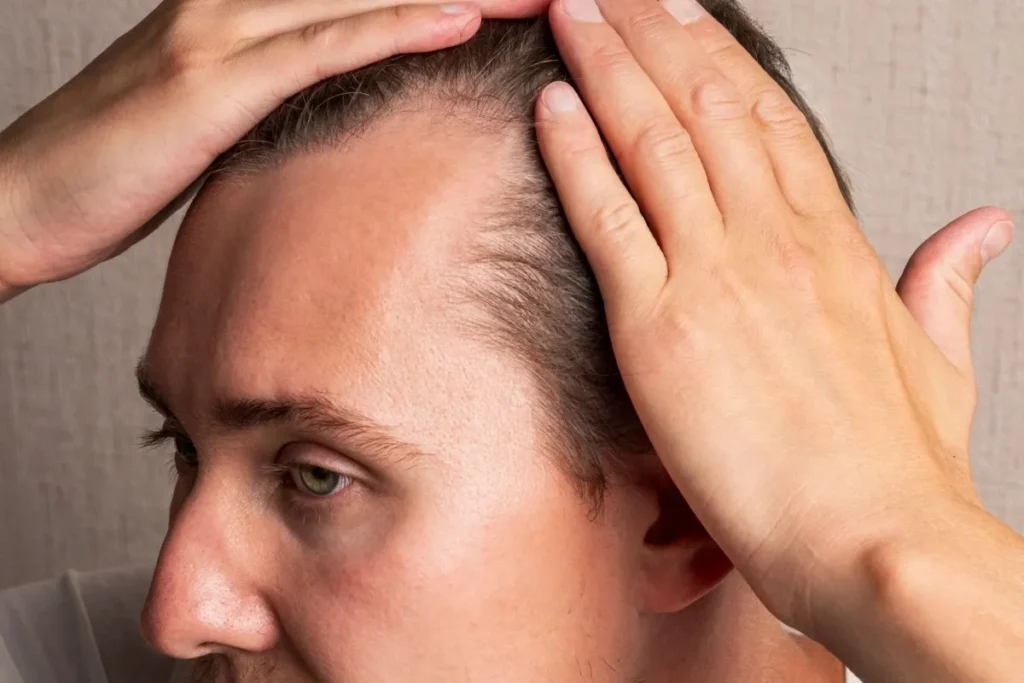
A receding hairline is a common worry for millions around the world. If you’ve seen your hairline moving back, you’re in good company. About 65 percent of men start to lose hair by age 35. This issue affects not just how you look but also how you feel about yourself.
It’s important to know why your hair is falling out. At GoldCity Center, we focus on you. We use the latest research and care with kindness to help you take back control of your hair.
Genetics are a big part of it, with up to 80 percent of male pattern baldness coming from family traits. But a receding hairline can also mean there’s something going on with your scalp or hair.
Key Takeaways
A receding hairline affects millions globally, impacting appearance and confidence.
Genetic factors are responsible for up to 80 percent of male pattern baldness cases.
Understanding the causes of hair loss is the first step toward addressing the issue.
A receding hairline can indicate underlying health issues related to the scalp and hair.
GoldCity Center offers a patient-centered approach to help you regain control over your hair health.
Understanding Receding Hairlines

Receding hairlines are common in aging men. They can also be caused by genetics, lifestyle, and environment. By 35, about 65 percent of men start to notice hair loss. By 50, nearly 50 percent see significant receding.
What Is a Receding Hairline?
A receding hairline moves higher on the forehead, making the forehead wider. It’s more common in men and can look different. It often starts above the temples, making an M-shaped or U-shaped recession.
Common Patterns and Progression
How a receding hairline progresses varies. There are a few common patterns:
A straight receding hairline, where the hairline moves back uniformly.
An M-shaped hairline, where the hair loss is more pronounced around the temples.
A U-shaped hairline, also known as a horseshoe-shaped hairline, where the hair loss extends further back.
Experts use the Norwood Scale to classify male pattern baldness. It shows different stages of hair loss, from minimal to extensive.
Knowing these patterns helps find the best way to manage a receding hairline. Spotting early signs and understanding how it might progress helps make better hair care choices.
What Causes Receding Hairline

Understanding a receding hairline involves looking at genetics, hormones, and lifestyle. It’s a mix of different factors. Knowing these causes helps in finding solutions.
Genetic Factors and DHT
Genetics play a big role in hair loss. The hormone DHT (dihydrotestosterone) is key. It makes hair thin by weakening follicles. If your family has baldness, you might lose hair too.
DHT affects hair growth, causing a receding hairline. Knowing your genetic risk helps in fighting hair loss.
Age-Related Hair Loss
Age is a big factor in hair loss. Hair grows slower and follicles shrink as we age. This makes hair thinner and shorter. Hormonal changes and lifestyle choices can speed up this process.
Hormonal fluctuations
Increased stress
Poor dietary habits
These factors worsen age-related hair loss. It’s important to tackle it from all angles.
Lifestyle and Environmental Factors
Lifestyle and environment also affect hair loss. Stress can disrupt hair growth. Pollution, too much heat styling, and harsh chemicals damage hair.
Reduce stress through meditation and exercise
Avoid excessive heat styling
Use gentle hair care products
Choosing a healthy lifestyle can prevent a receding hairline.
Nutritional Deficiencies
Lack of nutrients like iron, zinc, and biotin can cause hair loss. A diet without these can harm hair growth.
Eating well or taking supplements helps hair grow. It also reduces the risk of a receding hairline.
Effective Solutions for Receding Hairlines
Fixing a receding hairline needs a mix of medical treatments, natural remedies, and lifestyle changes. Starting early is important to manage and maybe even stop the problem.
Medical Treatments and Medications
Medical treatments are often the first step against receding hairlines. Minoxidil and Finasteride are two top medicines used.
Minoxidil: Applied topically, it makes hair grow and slows loss.
Finasteride: Taken orally, it lowers DHT levels, a hormone linked to hair loss.
Natural Remedies and Supplements
For a more natural way, many turn to supplements and remedies. Biotin and Saw Palmetto are favorites.
Lifestyle Changes and Prevention
Changing your lifestyle can also help stop or slow hair loss. Eating well, reducing stress, and avoiding harsh hair treatments are good steps.
By mixing these methods, people can find a good solution for their receding hairline. It’s about finding the right mix and sticking with it.
Conclusion
Understanding why a hairline recedes is key to fighting hair loss. We’ve seen how genetics, age, lifestyle, and diet affect hair loss.
A receding hairline conclusion shows we need many ways to fight hair loss. This includes medical treatments, natural remedies, and healthy habits.
A hair loss summary tells us there are many solutions. These range from medicines to supplements and better daily habits. Knowing these options helps us choose the best for our hair.
A solutions summary gives us the power to fight hair loss. By using the right treatments and living healthily, we can have thicker, healthier hair. This boosts our confidence.
Fixing a receding hairline takes time, effort, and the right advice. With the right steps, we can make our hair look full and youthful again.
FAQ
What is a receding hairline?
A receding hairline starts above the temples, forming an “M” shape. It can spread to more balding areas. Both men and women can get it, due to genes, hormones, and lifestyle.
Why is my hairline receding?
Many things can cause a receding hairline. Genes, hormones like DHT, age, stress, diet, and lifestyle choices play a part. Knowing these factors helps in finding solutions.
When does a receding hairline typically start?
When a receding hairline starts varies by person. It can start in late teens or twenties for some, or later for others. Genes are a big factor in when it starts.
Can a receding hairline be treated?
Yes, many treatments exist for a receding hairline. Options include medicines like minoxidil and finasteride, natural remedies like saw palmetto, and changing your diet and managing stress.
Are there any effective natural remedies for a receding hairline?
Yes, natural remedies like low-level laser therapy, rosemary essential oil, and a diet rich in vitamins and minerals can help. Biotin, vitamin D, and omega-3 fatty acids are good for hair growth.
How can I prevent my hairline from receding further?
To stop your hairline from receding, eat well, reduce stress, avoid harsh chemicals, and use gentle hair products. Supplements that support hair health are also helpful. Starting early is key.
Is a receding hairline a sign of balding?
A receding hairline can be an early sign of balding, mainly in men. But not everyone with a receding hairline will go bald. Progress depends on genes and health.
Can stress cause a receding hairline?
Yes, stress can lead to hair loss, including a receding hairline. This is due to telogen effluvium, where stress makes hair follicles rest, causing more shedding. Managing stress is vital for preventing hair loss.
Are there any medical treatments that can stop a receding hairline?
Medical treatments like minoxidil (Rogaine) and finasteride (Propecia) can slow hair loss and sometimes grow new hair. They work best when started early.
References
National Center for Biotechnology Information. Evidence-Based Medical Insight. Retrieved from https://www.ncbi.nlm.nih.gov/books/NBK430924/[3


