

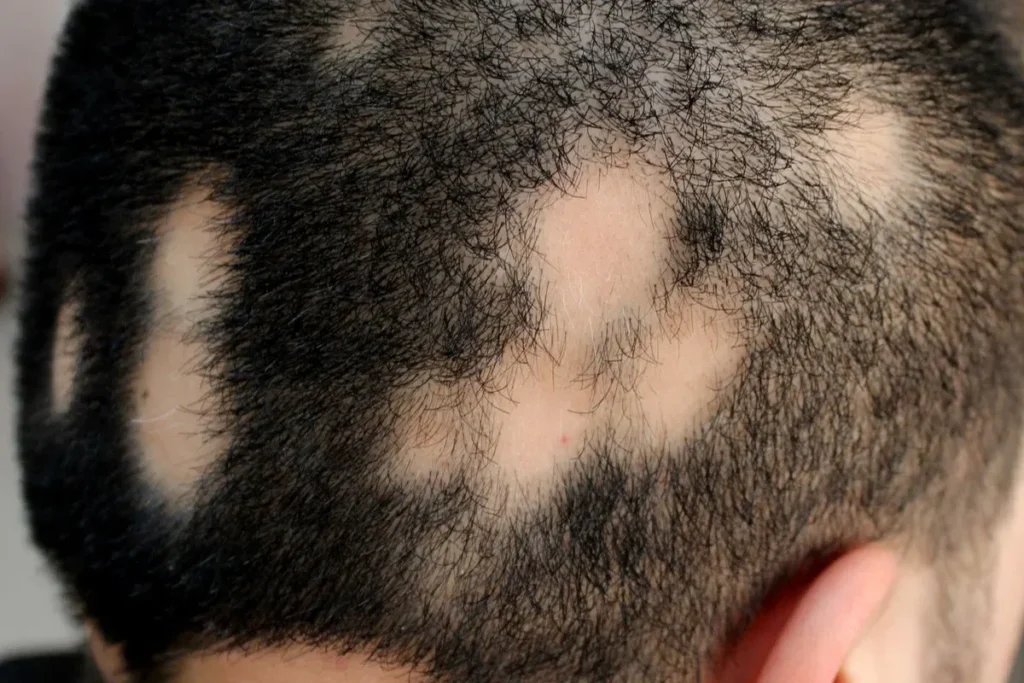
Alopecia areata is an autoimmune condition that leads to patchy hair loss. It usually happens on the scalp but can occur anywhere hair grows. When the immune system attacks hair follicles by mistake, it causes hair loss. This leaves people with unexplained bald spots.
This condition was first noted by a British dermatologist in the early 19th century. It affects about 2 percent of people globally. At GoldCity Center, we use the latest medical knowledge and focus on our patients. We aim to help them deal with this tough condition confidently and with support.
Key Takeaways
Alopecia areata is an autoimmune disease causing patchy hair loss.
The condition can affect any hair-bearing area on the body.
It occurs when the immune system mistakenly attacks hair follicles.
Alopecia areata affects approximately 2 percent of people worldwide.
GoldCity Center offers patient-centered care for individuals with alopecia areata.
Understanding What is Areata: An Autoimmune Hair Loss Condition

Alopecia areata affects many people, impacting their self-esteem and well-being. It is surprisingly common, found in about 2 percent of the world’s population at some point.
To fully understand alopecia areata, we need to look at its definition and classification. It’s an autoimmune condition where the immune system attacks healthy hair follicles. This disrupts the normal hair growth cycle.
Definition and Classification of Alopecia Areata
Alopecia areata starts and progresses unpredictably. It often causes patchy hair loss on the scalp but can also affect other body parts. It’s classified as an autoimmune disorder, where the immune system mistakenly attacks hair follicles.
As
Knowing its classification helps in finding the right treatment and management plans.
How the Immune System Attacks Hair Follicles
The immune system plays a key role in alopecia areata. In this condition, immune cells mistakenly identify hair follicles as foreign. This leads to inflammation and disrupts hair growth, causing hair loss.
The question of can you be born with alopecia is often asked. While there’s a genetic link, alopecia areata can start at any age. This shows how complex the condition is and why it needs a detailed management plan.
Understanding how the immune system attacks hair follicles is key to finding effective treatments. Ongoing research into alopecia areata is bringing new insights, giving hope to those affected.
Symptoms and Patterns of Hair Loss

Hair loss from alopecia areata can show up in different ways. Patchy hair loss is the most common symptom. It looks like distinct patches of hair loss, often on the scalp but can be anywhere on the body.
Characteristic Patchy Hair Loss Development
Alopecia areata often starts with small, round patches of hair loss. These patches are about the size of a quarter. They can appear in a few weeks and sometimes grow bigger.
People with alopecia may feel really down about themselves because of how it looks.
Areas Commonly Affected Beyond the Scalp
While the scalp is most often hit by alopecia areata, other areas can get affected too. This includes the beard, eyebrows, and even patchy arm hair. Knowing this helps understand the full range of symptoms.
Unpredictable Progression and Recovery Cycles
Alopecia areata is hard to predict. It can change at different speeds for different people. Some might only lose hair once, while others might keep losing it over and over.
Knowing if you were born with alopecia or if it came later can help with treatment plans. It’s key to talk to a doctor if you think you might have alopecia areata. This way, you can figure out the best way to deal with it.
Who Gets Alopecia Areata and Why
Alopecia areata can start at any age, but it often begins in childhood or early adulthood. It’s a condition that can affect people in different ways. The exact impact varies from person to person.
Prevalence and Demographics
Alopecia areata is found in many people around the world. It can happen to anyone, regardless of age, ethnicity, or gender. Some groups might be more likely to get it, though.
Prevalence Rates: It’s a fairly common condition, affecting about 2% of the world’s population at some point.
Age of Onset: Can You Be Born With Alopecia?
Alopecia areata is not present at birth. It can start at any age. It often begins in childhood or adolescence, but can also start in adulthood.
Understanding the age of onset is key for early diagnosis and treatment. Spotting the signs and symptoms early can help manage the condition better.
Genetic Predisposition and Triggering Factors
Having a family history of alopecia areata raises your risk. Stress and environmental factors can also trigger it.
Key Factors:
Genetic predisposition
Autoimmune diseases
Environmental triggers
Knowing these factors can help you understand your risk. It can also help you take steps to lessen the impact of alopecia areata.
Conclusion: Living with and Managing Alopecia Areata
Understanding alopecia’s start and its effect on hair follicles is key. Alopecia Areata is an autoimmune disorder. It makes the immune system attack hair follicles, causing patchy hair loss. While there’s no cure, treatments can help manage the condition.
Can Alopecia Areata be managed? Yes, treatments like corticosteroids and topical immunotherapy can help. It’s important for those losing hair to talk to healthcare professionals. They can find the best treatment plan.
By keeping up with new treatments and working with healthcare providers, people can manage their alopecia. A proactive approach can improve outcomes and quality of life.
FAQ
What is alopecia areata?
Alopecia areata is an autoimmune condition. It causes hair loss because the immune system attacks hair follicles. This leads to patchy or complete hair loss on the scalp or body.
Can you be born with alopecia areata?
Yes, you can be born with a genetic predisposition to alopecia areata. This makes you more likely to develop it later in life.
How rare is alopecia areata?
Alopecia areata affects about 2% of the global population. It’s a relatively rare condition, but its prevalence can vary.
What are the symptoms of alopecia areata?
The main symptom is patchy hair loss. It often starts with a small, round bald spot on the scalp. It can also affect eyebrows, eyelashes, or beards.
Is alopecia areata a permanent condition?
Alopecia areata is not always permanent. Some people may fully recover, while others may have recurring hair loss. In some cases, it can be persistent.
Can alopecia areata be treated?
There’s no cure for alopecia areata, but treatments can manage it. These include medications, therapies, and lifestyle changes. It’s important to consult a healthcare professional for personalized care.
What triggers alopecia areata?
The exact triggers are not fully understood. It’s believed that genetics, environment, and immune system factors contribute to it.
Can stress cause alopecia areata?
Stress is not a direct cause, but it can trigger or worsen the condition in some. Managing stress through relaxation and self-care can help.
How does alopecia areata affect hair follicles?
The immune system attacks hair follicles in alopecia areata. This causes them to shrink and enter a resting phase. Hair loss occurs, but the follicles can regrow hair.
References
National Center for Biotechnology Information. Evidence-Based Medical Insight. Retrieved from https://pubmed.ncbi.nlm.nih.gov/28602939/


