

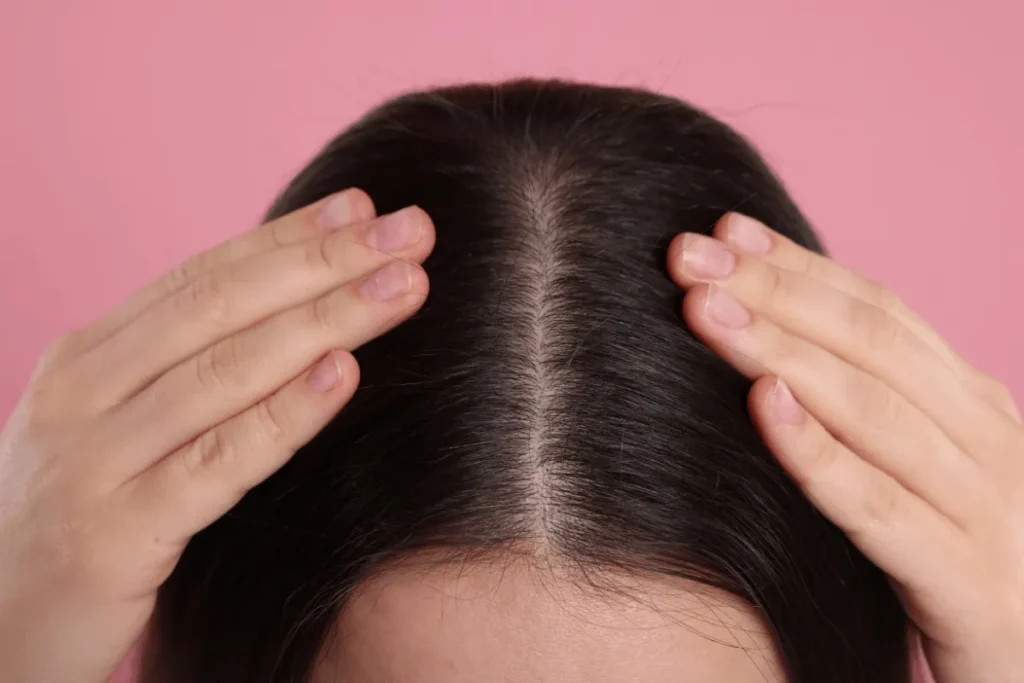
Polycystic ovary syndrome (PCOS) is a complex disorder that affects women of childbearing age. It often leads to hair growth abnormalities. This condition is marked by high levels of male hormones, irregular periods, and cysts on the ovaries.
What is the most common syndrome related to hair growth? Get the amazing truth and learn powerful ways to manage your hair health easily.
PCOS is more than just a reproductive issue. It also affects the skin, causing excessive hair growth and hair loss on the scalp.
It’s important to understand PCOS to improve hair health and overall well-being. PCOS affects about 5 to 10 percent of women of childbearing age. Up to 75% of these women experience too much facial and body hair or significant hair loss on the scalp.
Key Takeaways
PCOS is a common endocrine disorder affecting women of reproductive age.
It is characterized by hyperandrogenism, ovulatory dysfunction, and polycystic ovarian morphology.
PCOS has significant dermatological implications, including hirsutism and androgenetic alopecia.
Up to 75% of patients with PCOS experience hair growth abnormalities.
Understanding PCOS is key to addressing its impact on hair health and overall well-being.
Understanding PCOS as the Leading Hair Growth Syndrome

PCOS, or Polycystic Ovary Syndrome, is a complex endocrine disorder. It affects hair growth patterns in those who have it. This condition comes from genetics, environment, and hormones, causing irregular periods, cysts on ovaries, and hair growth issues.
The main cause of hair growth disorders in PCOS is too much androgen. Knowing how PCOS affects hair is key to managing it.
Prevalence and Statistics of PCOS
PCOS is common among women of childbearing age, affecting 8-13% worldwide. It causes many symptoms, with hirsutism being common in 65-75% of patients.
How PCOS Affects Hair Growth Patterns
PCOS’s hormonal imbalance, with too much androgen, causes abnormal hair growth. This can lead to excessive hair growth in places like the face, chest, and back. It can also cause androgenetic alopecia or hair thinning on the scalp.
Healthcare providers can help by understanding these mechanisms. They can offer treatments to manage symptoms and improve life quality for those with PCOS.
Managing PCOS-related hair growth disorders needs a full approach. This includes lifestyle changes, hormonal therapies, and treatments to lower androgen levels and reduce symptoms.
Hirsutism: The Primary Hair Growth Abnormality in PCOS

Understanding hirsutism is key to managing PCOS symptoms well. Hirsutism means too much hair in a male pattern, on the face, chest, and back. It can really hurt a person’s self-esteem and life quality.
Definition and Manifestation of Hirsutism
Hirsutism is a common sign of PCOS, affecting many patients. It shows as thick, dark hair in male patterns. How bad it is can differ a lot between people.
Too much hair on the face, like the chin and upper lip
Hair on the chest and back
Hair on the abdomen, making a male-pattern hairline
These signs can be upsetting and make people feel sad and less confident.
Hormonal Mechanisms Behind Excessive Hair Growth
The main hormone cause of hirsutism is androgens, like testosterone. In PCOS, the ovaries make too much androgen, causing hirsutism.
More androgens made by the ovaries
Testosterone turned into DHT, a strong androgen that makes hair grow
Hair follicles more sensitive to androgens
Knowing how hormones work is key to finding good treatments for hirsutism in PCOS patients.
What Is the Most Common Syndrome Related to Hair Growth: Beyond Hirsutism
Hirsutism is a known symptom of PCOS, but it’s not the only hair issue. Women with PCOS face many hair disorders that affect their life quality.
It’s key to know these conditions for better care. One such condition is androgenetic alopecia. It’s a type of hair loss linked to high androgen levels.
Androgenetic Alopecia in PCOS Patients
Women with PCOS often face androgenetic alopecia. This causes thinning hair, mainly on the scalp. It can hurt their looks and self-esteem.
The hormonal imbalance in PCOS, with high androgens, causes this hair loss. It’s important to manage these hormones to treat the condition.
Other Hair Disorders Associated with PCOS
PCOS patients also deal with other hair issues. One is mild hypertrichosis, where there’s too much hair in some body areas.
Comparing these hair disorders shows how complex PCOS symptoms are:
A leading expert says, “Managing hair disorders in PCOS needs a whole-body approach. It must tackle both physical symptoms and emotional effects.”
Understanding and treating these hair disorders helps healthcare providers support PCOS patients better. This improves their overall well-being.
Conclusion: The Significant Impact of PCOS on Hair Growth
PCOS is a complex condition that affects hair growth. It can cause hirsutism or androgenetic alopecia. These are hair disorders linked to PCOS.
PCOS impacts not just the scalp but also facial and body hair. Trichoschisis, a condition of brittle hair, is a complication. It shows the need for detailed hair care.
Understanding PCOS and its effects on hair is key. It helps manage symptoms and boosts confidence. Recognizing PCOS as a hairy face disorder is the first step to a beauty transformation.
By adopting a holistic beauty approach, one can improve their routine. This leads to a glow-up story. With proper care, the effects of PCOS on hair can be lessened. This results in timeless beauty and universal radiance.
FAQ
What is PCOS and how does it affect hair growth?
PCOS, or Polycystic Ovary Syndrome, is a complex disorder in women of childbearing age. It causes hair growth problems, like hirsutism and androgenetic alopecia.
What is hirsutism and how is it related to PCOS?
Hirsutism is when women grow too much hair in a male pattern. It’s often linked to PCOS. This happens because of too many androgens.
What are the hormonal mechanisms behind excessive hair growth in PCOS?
In PCOS, too many androgens cause hair growth issues. This includes hirsutism. Androgens make hair follicles grow more hair than usual.
Can PCOS cause hair loss?
Yes, PCOS can lead to hair loss. This is often androgenetic alopecia, a type of female pattern hair loss. It’s caused by hormonal imbalances in PCOS.
What is mild hypertrichosis and how is it related to PCOS?
Mild hypertrichosis is when you grow too much hair. It’s often seen in PCOS. It can be treated with the right care.
How can I manage hair growth abnormalities associated with PCOS?
Understanding PCOS’s hormonal and clinical aspects helps manage symptoms. This includes hair growth issues. It can improve your life quality.
Are there any effective treatments for hirsutism and androgenetic alopecia?
Yes, treatments for hirsutism and androgenetic alopecia exist. They include hormonal therapies and hair growth promoters. These can reduce excess hair and promote healthy growth.
Can trichoschisis be associated with PCOS?
Trichoschisis is when hair is brittle or fragile. It’s not a direct PCOS symptom. But, hormonal imbalances in PCOS might make hair more fragile.
References
National Center for Biotechnology Information. Evidence-Based Medical Insight. Retrieved from https://pubmed.ncbi.nlm.nih.gov/19969026/


