
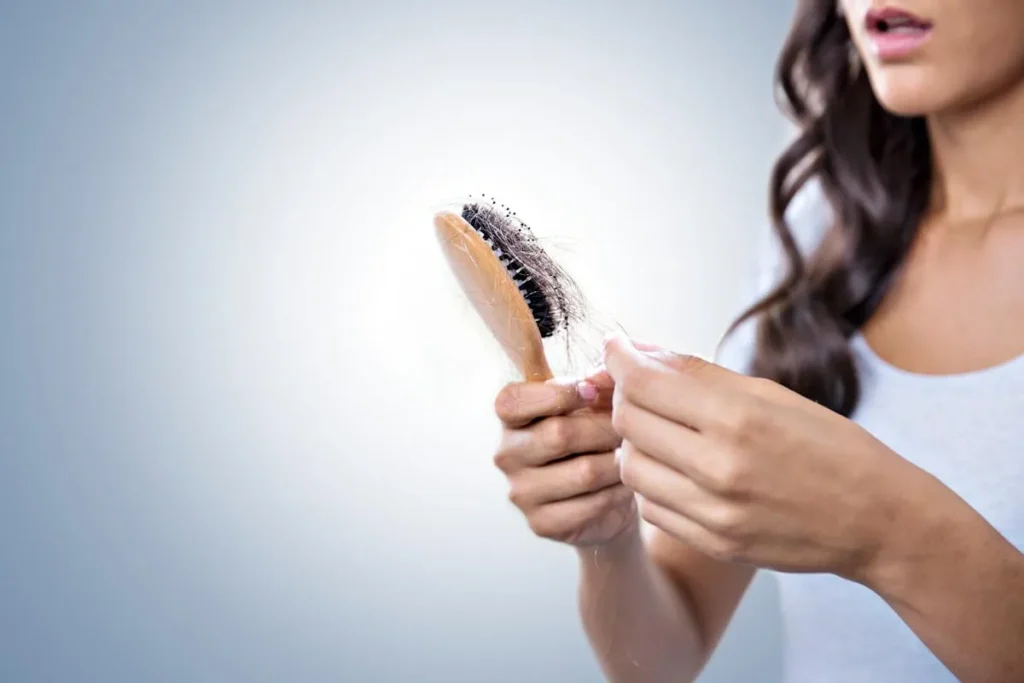
Hair loss is common, affecting about 50% of adults in their 40s in Western countries. Androgenetic alopecia is the most common type. Research shows that nutrition is key in preventing hair loss and promoting hair growth. Eating a balanced diet full of important nutrients can help keep your hair healthy and shiny.
What to eat to prevent hair loss effectively. Discover the magic of powerful superfoods and amazing nutrients for incredible hair growth.
Eating lean proteins, Omega-3 fatty acids, and vitamins A, D, K, and E is vital for your hair. The Mediterranean diet is great because it’s full of antioxidants from vegetables and fruits. It helps fight androgenetic alopecia by reducing inflammation and stress. Adding these nutrients to your meals can help your hair grow strong and prevent loss.
Key Takeaways
A well-balanced diet is key to preventing hair loss and promoting healthy hair growth.
Lean proteins, Omega-3 fatty acids, and fat-soluble vitamins are essential for healthy hair.
The Mediterranean diet provides protection against androgenetic alopecia.
Nutrition plays a critical role in preventing hair loss.
A healthy diet can help promote a radiant glow.
Understanding the Connection Between Nutrition and Hair Health

The link between what we eat and our hair’s health is very important. Hair is mostly keratin, a protein that needs the right nutrients to grow well.
The Prevalence of Hair Loss in Western Countries
Hair loss is a big issue in Western countries, affecting both men and women. Many people in these areas experience hair loss, often because of not getting enough nutrients.
How Nutritional Deficiencies Impact Hair Growth Cycles
Not getting enough nutrients can really hurt hair growth. Things like proteins, vitamins, and minerals are key for healthy hair follicles. For example, not enough iron can cause hair loss because it helps carry oxygen to hair follicles.
Protein: It’s what makes keratin, which is vital for strong hair.
Vitamin D: It’s good for hair follicle health.
Iron and Zinc: These minerals help fight hair thinning by supporting hair growth.
Telogen Effluvium: When Malnutrition Leads to Hair Shedding
Telogen effluvium is when you lose a lot of hair, often because of bad nutrition or big changes in diet. This shows how bad nutrition can hurt hair health. Eating well, with lots of proteins, vitamins, and minerals, can help avoid this.
Knowing how nutrition affects hair health helps us stop hair loss and grow healthy hair. Eating a balanced diet, full of proteins, vitamins, and minerals, is essential for healthy hair.
Essential Nutrients: What to Eat to Prevent Hair Loss

Eating a balanced diet is key to keeping your hair healthy and preventing loss. The right foods give your hair the building blocks it needs to grow. They also strengthen your hair follicles and lower the chance of thinning.
Protein: Building Keratin for Stronger Hair Shafts
Hair is mostly made of keratin protein. So, getting enough protein is vital for healthy hair. It helps make your hair follicles strong and encourages hair growth.
Foods rich in protein include eggs, spinach, lentils, and nuts. Eating these foods helps keep your hair healthy.
Vitamin D and B Complex: Key Players in Hair Follicle Health
Vitamin D is important for hair follicle health. Not having enough vitamin D can lead to hair loss. B vitamins, like biotin, are also key for hair growth and keeping it healthy.
Including vitamin D-rich foods like fatty fish, egg yolks, and fortified dairy in your diet is good. Also, eating B-rich foods like whole grains, nuts, and leafy greens supports hair health.
Iron and Zinc: Minerals That Combat Hair Thinning
Iron is needed to make hemoglobin, which carries oxygen to hair follicles. Without enough iron, you can lose hair. Zinc helps hair grow and stay healthy by keeping hair follicles in good shape.
Eating more iron-rich foods like red meat, lentils, and fortified cereals helps fight hair thinning. Zinc-rich foods such as oysters, beef, and chicken also help.
Recommended Dietary Patterns for Healthier Hair
Eating foods full of essential nutrients is key for hair growth and less hair loss. A good diet plan can make your hair healthier and stronger.
The Mediterranean Diet: Antioxidants Against Androgenetic Alopecia
The Mediterranean diet is known for many health benefits, including better hair health. It’s full of fruits, veggies, whole grains, and healthy fats. These foods are packed with antioxidants that fight androgenetic alopecia.
Eating foods like berries, leafy greens, and nuts can help. They reduce inflammation and oxidative stress, which are linked to hair loss.
Anti-Inflammatory Foods That Reduce Oxidative Stress
Adding anti-inflammatory foods to your diet can also help your hair. Foods like salmon and walnuts are full of omega-3 fatty acids. They help reduce oxidative stress and keep your scalp healthy.
Other good foods include turmeric, ginger, and green tea. They have anti-inflammatory properties that help keep hair follicles healthy.
Balancing Supplements: Benefits and Risks
While a balanced diet is important, supplements can also support hair health. Vitamins and minerals like biotin, vitamin D, and iron can help with hair loss.
But, it’s important to find the right balance. Always talk to a healthcare professional before taking supplements. Too much can cause problems.
Conclusion
Your glow-up story starts here. By adding a healthy diet for hair loss to your daily routine, you can protect and strengthen your hair. It’s key to keep your diet balanced to avoid malnourished hair loss.
A diet to prevent hair loss should include important nutrients. These nutrients help grow hair and make hair follicles stronger. With the right diet, you can get radiant, healthy hair.
Elevate your routine by making smart choices about your diet and lifestyle. This step is the first towards a luxury transformation. It’s not just about hair health; it’s about a holistic approach to beauty and wellness.
Own your beauty and unlock your inner glow with a healthy, balanced lifestyle. This lifestyle nourishes your hair from the inside out.
FAQ
What is the role of diet in preventing hair loss?
Eating a balanced diet is key to healthy hair. It should include protein, vitamin D, B complex, iron, and zinc. This helps your hair grow strong and prevents loss, making you look radiant and beautiful.
How do nutritional deficiencies impact hair growth cycles?
Lack of nutrients can mess up your hair’s growth cycle. This can lead to too much hair falling out. But, eating right can help your hair grow strong and healthy again.
What are the essential nutrients for preventing hair loss?
To stop hair loss, you need protein, vitamin D, B complex, iron, and zinc. These nutrients help build keratin and keep hair follicles healthy. Adding them to your diet can make your skin glow.
How does the Mediterranean diet help in preventing hair loss?
The Mediterranean diet is full of antioxidants and anti-inflammatory foods. It fights hair loss by reducing stress and promoting healthy hair. It’s a smart way to care for your skin through what you eat.
Can supplements help in preventing hair loss?
Supplements can help prevent hair loss if used right. But, always talk to a doctor first. They help you make smart choices for your hair care.
What are the signs of malnutrition-related hair loss?
Signs of hair loss from not eating well include a lot of hair falling out, thinning, and brittle hair. Eating right can fix these problems. Start your journey to better hair today.
How long does it take to see results from a hair-healthy diet?
Seeing results from a healthy diet takes time, usually months. But, with regular effort, you’ll see big changes. Soon, you’ll have a fuller, healthier head of hair.
References
National Center for Biotechnology Information. Evidence-Based Medical Insight. Retrieved from https://pmc.ncbi.nlm.nih.gov/articles/PMC5315033/


