

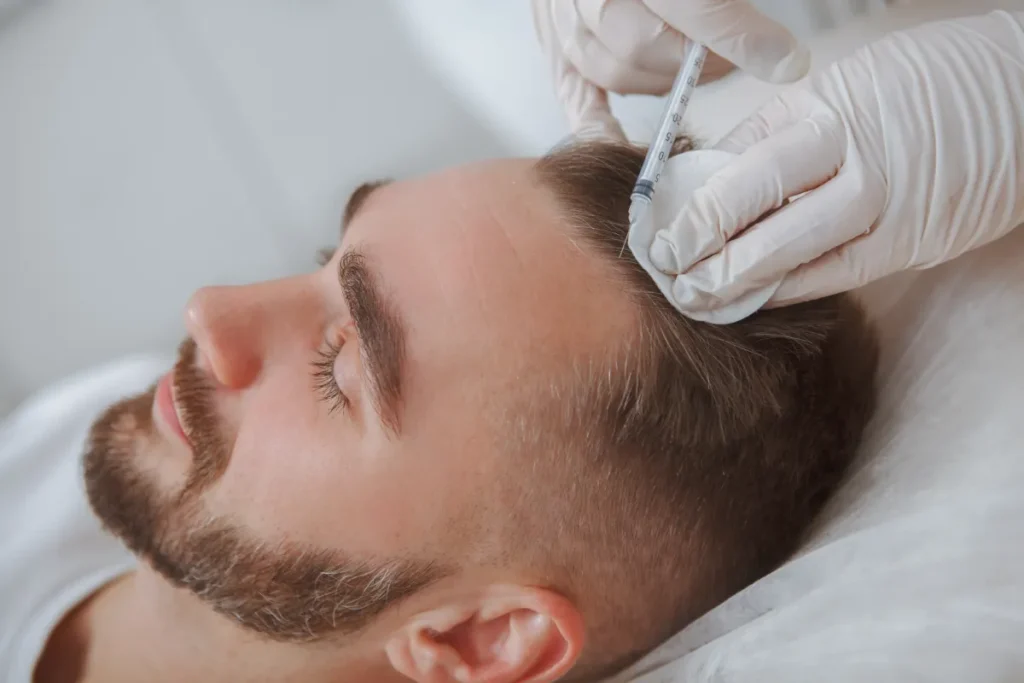
Hair loss can really affect how you feel about yourself. If you’re noticing thinning hair or bald spots, seeing a specialist is key. Dermatologists are doctors who focus on skin, hair, and nails. They’re the best choice for treating hair loss.
What type of doctor treats hair loss effectively? Discover amazing experts and powerful medical solutions for your incredible hair recovery.
At GoldCity Center, our dermatologists offer care that’s just for you. They use their knowledge to find out why you’re losing hair and suggest treatments that work. They help you feel better and get your hair back.
Key Takeaways
Consult a dermatologist for expert advice on treating hair loss.
Dermatologists specialize in skin, hair, and nail health.
Personalized treatment plans are tailored to address individual hair loss causes.
GoldCity Center’s dermatologists provide patient-centered care.
Evidence-based treatments help achieve optimal results.
Understanding Hair Loss and Its Prevalence

Hair loss comes in many forms and affects millions globally. It’s not just about looks; it also affects how we feel about ourselves. It can really impact our self-esteem and overall happiness.
Common Types of Hair Loss
Hair loss can take many forms, each with its own causes and effects. Here are some of the most common types:
Androgenetic Alopecia: Also known as male/female pattern baldness, this is the most common type. It’s often linked to genetics and hormones.
Telogen Effluvium: This condition causes a lot of hair shedding. It’s usually triggered by stress, hormonal changes, or not getting enough nutrients.
Alopecia Areata: An autoimmune disorder that leads to patchy hair loss. It can happen anywhere on the body where hair grows.
Traction Alopecia: This type of hair loss happens when hair is pulled too much. It’s often caused by certain hairstyles.
Scarring Alopecia: A rare group of disorders that destroy hair follicles. They replace them with scar tissue.
Statistics on Hair Loss in Men and Women
About 85 percent of men will experience hair loss at some point in their lives. Around one-third of women will also face hair loss. These numbers show how common hair loss is, affecting many people of all ages.
Hair loss gets more common as people get older. Men and women experience different types and patterns of hair loss. Knowing these statistics helps us understand the problem better and find the right treatments.
What Type of Doctor Treats Hair Loss: Dermatologists as Primary Specialists

Dermatologists are the top doctors for treating hair loss. They know a lot about skin, hair, and nails. This makes them perfect for dealing with hair loss problems.
Qualifications of Board-Certified Dermatologists
Board-certified dermatologists have a lot of training. They go to medical school and then do a dermatology residency. This training helps them understand and treat hair loss well.
Key Qualifications:
Completion of a dermatology residency program
Board certification by the American Board of Dermatology
Staying updated with the latest treatments and research in dermatology
Why Dermatologists Are Ideal for Hair Loss Treatment
Dermatologists use many ways to find out why someone is losing hair. They do physical checks, blood tests, and scalp biopsies. This helps them make treatment plans that work just for you.
Seeing a board-certified dermatologist for hair loss is a smart move. They can give you a correct diagnosis and a treatment plan that works for you. Their knowledge is key to solving hair loss problems and getting great results.
Other Medical Specialists Who May Address Hair Loss
Treating hair loss often requires a team effort. This includes endocrinologists and trichologists. Dermatologists usually start the process, but others help find and fix the root causes of hair loss.
Endocrinologists for Hormone-Related Hair Loss
Endocrinologists deal with hormonal imbalances, which can cause hair loss. They treat conditions like thyroid issues and polycystic ovary syndrome (PCOS). An endocrinologist explained, “Hormonal imbalances can greatly affect hair growth. It’s key to fix these imbalances for effective treatment.”
By fixing hormonal problems, endocrinologists can reduce hair loss. For example, thyroid hormone therapy can help hair grow normally in those with thyroid-related hair loss.
Trichologists and Hair Restoration Surgeons
Trichologists study hair and scalp diseases. They offer non-surgical treatments and advice on hair and scalp health. They work with dermatologists to give full care to hair loss patients.
Hair restoration surgeons do surgical hair growth restoration. They use methods like follicular unit transplantation (FUT) and follicular unit extraction (FUE). A leading hair restoration surgeon said, “New hair restoration surgery methods offer natural-looking results with little downtime.”
Trichologists diagnose and treat hair and scalp conditions.
Hair restoration surgeons perform surgical hair restoration procedures.
Both specialists are key in addressing hair loss from different angles.
In summary, while dermatologists are the first line for hair loss, endocrinologists, trichologists, and hair restoration surgeons are also vital. They provide complete care for those dealing with hair loss.
Diagnostic and Treatment Approaches for Hair Loss
Starting hair loss treatment means first figuring out why you’re losing hair. Doctors do a detailed check to find the cause. This way, they can make a treatment plan just for you.
Comprehensive Diagnostic Methods
Dermatologists use many ways to find out why you’re losing hair. Here are some:
Physical Examinations: They look closely at your scalp for signs of hair loss or scalp problems.
Blood Tests: These check for health issues like thyroid problems or not getting enough nutrients that might cause hair loss.
Scalp Biopsies: Sometimes, they take a sample of scalp tissue to get a better look.
FDA-Approved Medications and Topical Treatments
After finding out why you’re losing hair, treatment starts. Doctors often use FDA-approved medicines and creams first. Here are some:
Minoxidil: A cream that helps hair grow and slows down loss.
Finasteride: A pill that lowers a hormone called DHT that can cause hair loss.
Topical Corticosteroids: These creams reduce inflammation and help keep the scalp healthy.
Advanced Procedures and Emerging Therapies
If first treatments don’t work, there are more options. These include:
Laser Therapy: Uses low-level laser or light to help hair grow.
Platelet-rich Plasma (PRP) Therapy: Uses your own blood’s platelets to help hair grow.
Hair Transplants: A surgery that moves hair follicles to bald spots.
By using these methods, people can find treatments that really work. This helps them on their way to having a full, healthy head of hair again.
Conclusion
Learning about hair loss and finding the right specialist can change your life. It helps you feel confident and have healthier hair. Dermatologists are key in treating hair loss and can really help.
Seeing a dermatologist means getting detailed checks and plans made just for you. They offer FDA-approved treatments and new procedures. With their help, you can reach your hair health goals and have a fuller, healthier head of hair.
Starting a hair loss treatment journey with a dermatologist is a big step. It’s a way to get back your natural beauty and confidence. Dermatologists are the top experts in hair loss treatment. They give the care and support you need for a radiant, healthy look.
FAQ
What doctor specializes in hair loss?
A dermatologist is the go-to for hair loss. They can diagnose and treat many hair loss conditions.
Do dermatologists deal with hair loss?
Yes, they do. Dermatologists are trained to handle hair loss. This includes alopecia areata and androgenetic alopecia.
What type of doctor should I go to for hair loss?
See a board-certified dermatologist for hair loss. They can give the right diagnosis and treatment.
Can a dermatologist help with hair regrowth?
Yes, they can. Dermatologists can prescribe FDA-approved meds like minoxidil and finasteride. They also recommend PRP therapy.
Are there other medical specialists who can treat hair loss?
Yes, there are. Endocrinologists help with hormone-related hair loss. Trichologists offer hair care advice. Hair restoration surgeons do surgeries like hair transplantation.
What diagnostic methods are used to determine the cause of hair loss?
Dermatologists use many methods. They look at your medical history and do a physical exam. They might also do a scalp biopsy.
What are the available treatment options for hair loss?
There are many treatments. FDA-approved meds, topical treatments, PRP therapy, and LLLT are some options.
Can hair loss be treated with medication?
Yes, it can. Medications like minoxidil and finasteride can slow or stop hair loss. They might even help hair grow back.
References
National Center for Biotechnology Information. Evidence-Based Medical Insight. Retrieved from https://pmc.ncbi.nlm.nih.gov/articles/PMC10750333/


