

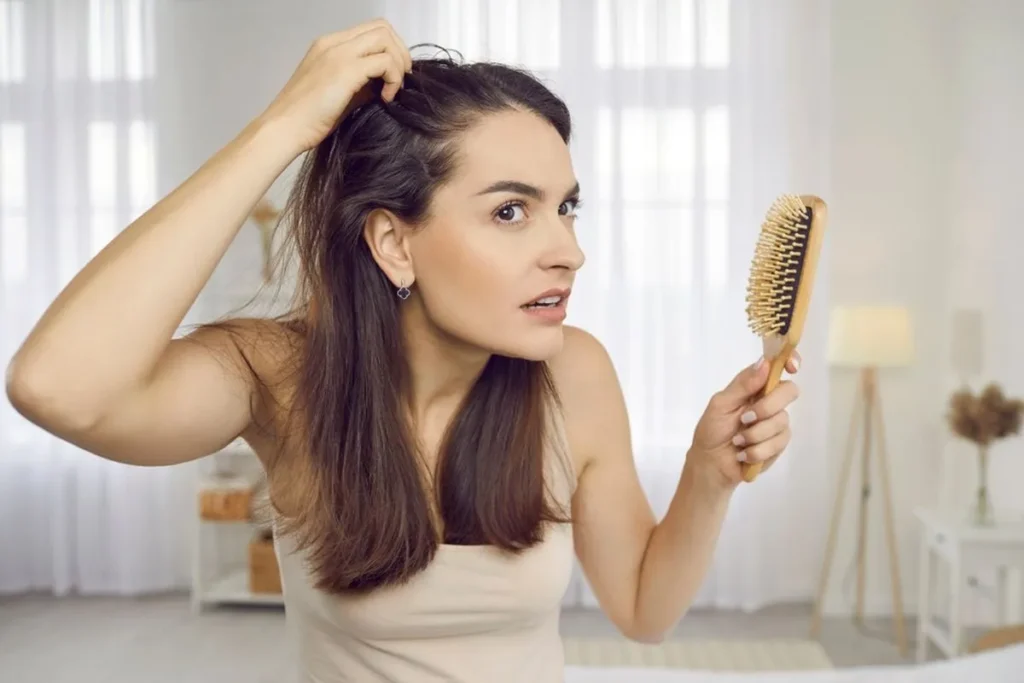
Why am i losing my hair at 40 female? Discover amazing fixes and powerful hormonal treatments to achieve incredible hair regrowth results.
Women in their 40s often notice their hair thinning, falling out, or losing shine. This can be upsetting, affecting how they feel about themselves. Hair loss in women over 40 is common, hitting up to 40 percent of women by 50.
Hormonal shifts, like the drop in estrogen and progesterone during perimenopause, are big factors in hair thinning. The American Academy of Dermatology says losing 50-100 hairs a day is normal. But, losing more could mean there’s a problem.
Key Takeaways
Hair loss in women over 40 is a common issue due to hormonal changes.
Perimenopause and menopause contribute to hair thinning.
Medical conditions like thyroid dysfunction can cause hair loss.
Lifestyle factors and genetics also play a role in hair loss.
Understanding the causes is key to finding good treatments.
Understanding Hair Loss in Women Over 40

Hair loss in women over 40 is a common issue. It’s caused by hormonal, medical, and aging factors. As women get older, their hair grows slower and becomes thinner.
Statistics and Prevalence
Up to 40% of women experience significant hair loss by age 50. Hormonal changes during perimenopause and menopause cause about 80% of hair loss. These changes can make women feel unhappy with their looks and overall health.
Hair loss affects a significant percentage of women over 40.
Hormonal changes during perimenopause and menopause contribute to hair loss.
Medical conditions such as thyroid dysfunction play a role in hair loss.
How Hair Follicles Change with Age
Hair growth slows down with age. By the mid-40s, hair follicles shrink, leading to thinner hair. This is a natural aging process, but health and genetics can also play a part.
Hair loss is more than just a beauty issue. It can signal health problems. To tackle hair loss, we need to look at hormonal, medical, and aging factors.
Why Am I Losing My Hair at 40 Female: Hormonal Factors

Women in their 40s often see changes in their hair due to hormones. Hormones are key to keeping hair healthy. When they change, hair loss can happen.
Perimenopause and Estrogen Decline
Perimenopause brings a big drop in estrogen and progesterone. Estrogen is important for hair growth. When estrogen goes down, hair growth slows, making hair thinner and shorter.
Estrogen loss is a big reason for hair loss in women at this time. About 80% of hair loss in perimenopause is due to hormone changes, mainly estrogen.
Progesterone Changes and Their Impact
Progesterone changes also affect hair health. This hormone helps control hair growth. When progesterone goes down, it can upset the body’s hormonal balance, making hair loss worse.
It’s important to understand how progesterone changes affect hair loss. Knowing this can help women deal with hair loss during perimenopause.
Testosterone Imbalance and Hair Follicles
An imbalance in testosterone can also cause hair loss. Testosterone affects hair follicles. Women have testosterone too, and an imbalance can harm hair health.
Testosterone imbalance can shrink hair follicles. This leads to thinner, shorter hairs. Knowing how testosterone affects hair is key to finding treatments.
Medical Conditions Contributing to Hair Loss
Medical conditions are a big reason for hair loss in women in their 40s. It’s important to look at health issues closely. Many health problems can cause hair loss, and knowing about them helps manage it better.
Thyroid Dysfunction
Thyroid problems, like hypothyroidism, are common in women over 40. Almost half of women in this age group have thyroid issues. Thyroid hormones are key for hair growth, and any imbalance can cause hair loss. Treating thyroid problems is key to getting hair growth back.
Ovarian Cysts and Hair Loss Connection
Ovarian cysts and hair loss are often linked to hormonal imbalances. Conditions like Polycystic Ovary Syndrome (PCOS) can lead to hair loss because of hormonal changes. Women with PCOS are more likely to lose hair, making it important to manage the condition to help hair growth.
Other Health Conditions Affecting Hair Growth
Other health issues can also affect hair growth. Autoimmune diseases, nutritional deficiencies, and chronic illnesses can all cause hair loss. Addressing these underlying conditions is key to managing hair loss. For women over 40, getting medical advice to diagnose and treat health issues is vital.
Treating hair loss in women over 40 often means tackling the underlying medical conditions. By treating these conditions, women can find real solutions to their hair loss. It’s about empowering women with the knowledge to take charge of their hair health.
Conclusion: Managing and Treating Hair Loss After 40
Understanding why hair loss happens in women over 40 is key. Hormonal shifts, health issues, and lifestyle choices all matter. Luckily, there are many treatments out there, from creams to pills and even hair transplants.
Women looking for hair loss solutions have many options. Eating right and living healthy can also help your hair grow. By tackling the root causes and trying these treatments, women can fight hair loss.
To stop hair loss caused by hormones, knowing the hormonal imbalances is vital. Talking to a doctor can help find the right treatment. With the right plan, women can feel confident and have a fuller head of hair.
By focusing on hair health, women can shine and celebrate their beauty. They can embrace this new stage of life with energy and glow.
FAQ
What are the main causes of hair loss in women over 40?
Hair loss in women over 40 can be due to many reasons. Hormonal changes, medical conditions, and aging are common causes. Hormonal shifts, like the drop in estrogen and progesterone, are key factors. Medical issues like thyroid problems and ovarian cysts also play a part.
How do hormonal changes during perimenopause affect hair growth?
During perimenopause, the drop in estrogen makes hair thinner and shorter. Changes in progesterone also affect hair health. An imbalance in testosterone can harm hair follicles, leading to loss.
Can ovarian cysts cause hair loss in women over 40?
Yes, ovarian cysts and conditions like PCOS can cause hormonal imbalances. This imbalance can lead to hair loss. It’s important to treat the underlying condition to manage hair loss effectively.
How does thyroid dysfunction impact hair growth in women over 40?
Thyroid problems, like hypothyroidism, are common in women over 40. They can greatly affect hair growth. Treating thyroid issues is key to addressing hair loss.
What are the available treatments for hair loss in women over 40?
There are many treatments available, including topical and oral medications. Hair transplants are also an option. Healthy lifestyle habits and good nutrition support hair health.
How can I stop hormonal hair loss?
To stop hormonal hair loss, you need to tackle the hormonal imbalance. This means treating medical conditions and adopting healthy habits. Targeted treatments can also help. Always consult a healthcare professional for the best treatment plan.
Which hormone causes hair loss in females?
Hormonal imbalances, like the drop in estrogen and progesterone, and an imbalance in testosterone, can cause hair loss. Understanding these hormones is key to addressing hair loss.
References
National Center for Biotechnology Information. Evidence-Based Medical Insight. Retrieved from https://pubmed.ncbi.nlm.nih.gov/30424559/


