

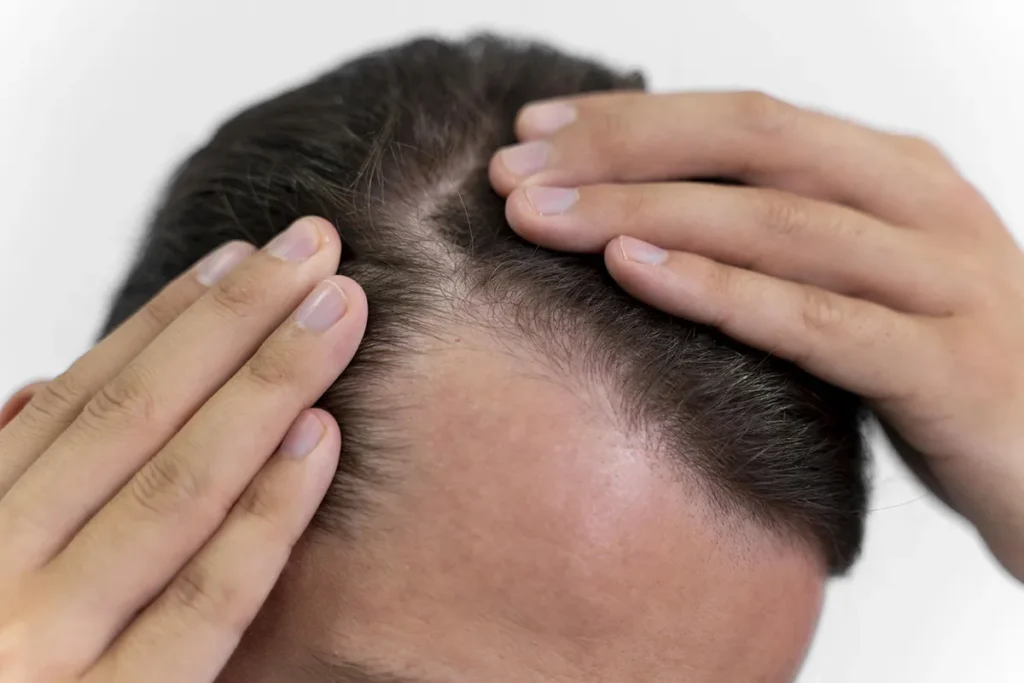
Male pattern baldness affects millions of men worldwide. It brings emotional challenges to many. About 42 percent of men see significant hair loss, and two-thirds notice thinning by age 35. It’s important to understand why this happens.
Why do men lose their hair? Explore the amazing truth and discover powerful, incredible ways to stop balding and restore your confidence now.
Starting to feel confident and beautiful means knowing why men lose their hair. Factors like genetics, DHT sensitivity, and not eating right play a big role. Stress also adds to the problem. By knowing these reasons, men can feel more confident and beautiful.
Key Takeaways
Male baldness is a prevalent condition worldwide.
Understanding the causes of hair loss is key to feeling empowered.
Genetic predisposition, DHT sensitivity, and not eating right contribute to hair loss.
Stress is a big factor in male pattern baldness.
Knowing the complexity of hair loss can help you feel more confident.
The Science Behind Why Do Men Lose Their Hair

Male balding is a complex process. It involves hormones and genetics. To grasp why men lose their hair, we must explore the biological factors at play.
The Role of DHT in Male Pattern Baldness
Dihydrotestosterone (DHT) is a strong form of testosterone linked to male baldness. It makes hair follicles shrink, causing hairs to become thinner and shorter. Eventually, this leads to hair loss. The sensitivity of hair follicles to DHT is key in male baldness.
The conversion of testosterone to DHT is aided by the enzyme 5-alpha-reductase. This happens in the hair follicle. DHT then binds to androgen receptors, shrinking the follicle. Knowing how DHT affects hair loss is vital for finding effective treatments.
Genetic Predisposition and Hereditary Factors
Genetics play a huge role in male pattern baldness, with about 95% of cases linked to it. If a man’s father or grandfather went bald, he’s more likely to too. The genetics of hair loss are complex, involving many genes that affect how sensitive hair follicles are to DHT.
Studies have found that some genetic variations can make men more prone to DHT’s effects. Knowing the hereditary factors can help predict hair loss and guide treatment options.
Understanding the science behind male hair loss is key. It includes the roles of DHT and genetics. This knowledge helps men choose the best treatments and may slow down or stop baldness.
Prevalence and Progression of Male Baldness

Understanding male baldness is key for those affected. It’s a common issue that can hurt a man’s self-esteem and confidence.
About 42% of men experience moderate to extensive hair loss. By age 35, two-thirds of American men will see hair loss. By age 50, this number jumps to about 85%.
Statistics on Male Hair Loss by Age
Male hair loss changes with age. Here’s what studies show:
By age 20, about 20% of men start losing hair.
By age 30, this number goes up to around 30%.
By age 50, about 85% of men will have lost some hair.
These numbers show why early treatment is important.
Common Patterns of Male Baldness Development
Male baldness often starts with a receding hairline or thinning at the crown. As it gets worse, hair loss can spread, leading to partial or complete baldness.
“The key to addressing male baldness lies in understanding its progression and identifying effective treatment options early on.”
Here are common patterns:
Receding hairline: Often the first sign of male baldness.
Thinning at the crown: Hair loss at the top of the head.
Vertex balding: Hair loss that progresses from the crown.
Knowing these patterns helps men find the right treatments. It can slow down or stop baldness.
As a leading expert says,
This highlights the need to act early against hair loss.
Conclusion: Environmental Factors That Accelerate Hair Loss
Environmental factors greatly affect hair loss. Lifestyle choices, like stress and diet, impact hair health. Understanding these factors is the first step to a new journey.
A diet without key nutrients can cause hair loss. High stress levels make it worse. Knowing these factors helps you start a journey to regain your beauty.
By managing stress and eating well, you can fight hair loss. Making smart lifestyle choices helps you shine. It’s a step towards a luxury transformation.
Your journey to beauty starts now. By controlling environmental factors, you can achieve lasting radiance. This beauty evolves with you.
FAQ
Why do men go bald?
Men go bald due to genetics, hormones, and the environment. Male pattern baldness is the main cause. It happens when testosterone turns into DHT, shrinking hair follicles.
Do all men go bald?
No, not all men go bald. Male pattern baldness is common but varies. Some lose little hair, while others lose a lot.
What makes a man go bald?
Genetics, hormones, and the environment affect baldness. DHT, from testosterone, is key in male pattern baldness. Genetics also play a big role in who loses hair.
Why do some men go bald earlier than others?
Many factors influence when men go bald. Genetics, lifestyle, and health are important. Family history can make hair loss come sooner.
Can stress cause hair loss in men?
Yes, stress can lead to hair loss. High cortisol levels from stress can disrupt hair growth. This can cause more hair to fall out.
How does diet impact male baldness?
A bad diet can lead to hair loss. Lack of iron, zinc, and biotin is common. Eating well can help keep hair healthy and prevent baldness.
Is male baldness reversible?
Some treatments can slow hair loss, but it’s often permanent. Medications, laser therapy, and hair transplants can help. They can make hair grow back and improve bald spots.
What are the common patterns of male baldness development?
Male pattern baldness starts at the temples or crown. It spreads, making a “M-shaped” or “U-shaped” pattern. This is how it looks as it progresses.
References
National Center for Biotechnology Information. Evidence-Based Medical Insight. Retrieved from https://pubmed.ncbi.nlm.nih.gov/24566563/


