Millions of people worldwide struggle with depression and anxiety. Many find traditional treatments hard or not effective. Light therapy is a proven, non-invasive option. It uses bright light to help regulate mood and improve mental health.
Light therapy for depression and anxiety offers amazing relief. Discover how this powerful, natural treatment can boost your daily mood.
Recent studies show bright light therapy can help up to 40% of people with depression. This is as good as many medicines, without the side effects. It works by using light boxes or portable devices to help the body’s internal clock and mood.
Key Takeaways
Light therapy is a non-pharmacological treatment for depression and anxiety.
It involves daily exposure to bright light to regulate mood.
Recent research has shown a 41% remission rate in non-seasonal depression.
Light therapy can improve symptoms of depression and related sleep issues.
Regular use of a light box is essential to maximize benefits.
Understanding Light Therapy and How It Works

Light therapy can help manage depression and anxiety. It involves using specific light wavelengths to improve mood and sleep. This treatment is known as phototherapy.
What is Phototherapy?
Phototherapy is a non-invasive treatment for health issues like depression and SAD. It works by stimulating light-sensitive cells in the retina. These cells help regulate our body’s internal clock, affecting mood and thinking.
The Science Behind Light and Mood Regulation
Light therapy affects our mood and sleep by influencing our internal clock. It changes the levels of neurotransmitters like serotonin and melatonin. These chemicals are key to our mood and sleep.
A study in the Journal of Clinical Psychology showed light therapy’s benefits. It improved depression symptoms in SAD patients. Here are the results:
Types of Light Therapy Devices
There are many light therapy devices to choose from. They meet different needs and preferences. Here are a few examples:
Light boxes: Used in the morning to help set the body’s clock.
Light lamps: Portable and versatile, great for reading and therapy.
Wearable devices: Innovative, providing light therapy anywhere, anytime.
Choosing a light therapy device requires careful consideration. Look at light intensity, wavelength, and how long to use it. A healthcare professional can help pick the best device and treatment plan for you.
Research-Backed Benefits of Light Therapy
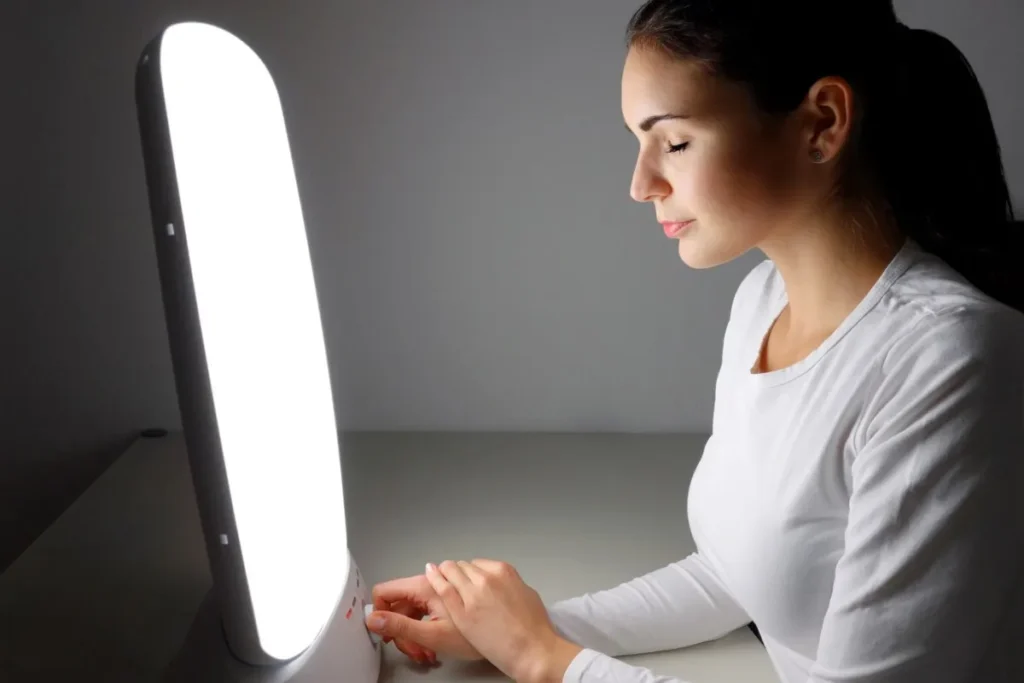
Light therapy is showing promise in treating depression, thanks to research. Studies have found it effective for both seasonal and non-seasonal depression.
2024 Research Findings on Effectiveness
A study in JAMA Psychiatry showed bright light therapy works well. It had a 41% remission rate for non-seasonal depression. This highlights light therapy as a good treatment for many types of depression.
Exposure to bright light at 10,000 lux daily can help depression scores. People start seeing improvements in 20 minutes of light therapy.
Comparing Seasonal vs. Non-Seasonal Depression Results
Light therapy is not just for Seasonal Affective Disorder (SAD). It also helps with non-seasonal depression. This means it can be used in more mental health treatments.
Light therapy’s benefits go beyond SAD. It offers hope for managing depression in different ways.
How Quickly Light Therapy Shows Results
How fast light therapy works varies. But, many see improvements in a few weeks. 30 to 60 minutes of bright light daily can make a big difference in mood.
Knowing the benefits of light therapy helps people decide if it’s right for them. As research grows, light therapy’s uses are likely to expand. It offers new hope for those with depression and mood disorders.
How to Implement Light Therapy for Depression and Anxiety
Light therapy can change lives for those with depression and anxiety. It’s key to know how to use it right.
Selecting the Right Light Therapy Device
Finding the right light therapy device is the first step. Devices differ in intensity, size, and features. Look for a device with a 10,000 lux output for depression treatment.
A study shows that 30 to 60 minutes of bright light at 10,000 lux can help depression. So, picking the right intensity is vital.
Recommended Light Intensity (10,000 Lux) and Duration
Light therapy works best with a daily routine. Use a light box in the morning for 20 to 30 minutes. Keep it 16 to 24 inches from your face.
Optimal Timing and Positioning for Maximum Benefit
When and where you use the light therapy device matters. Morning use helps set your circadian rhythms right. This can lift your mood and lessen depression symptoms.
Potential Side Effects and Precautions
Light therapy is usually safe, but some might get headaches, eye strain, or nausea. Knowing these risks and taking precautions is important.
Knowing how to use light therapy can help manage depression and anxiety. Always talk to a healthcare professional before starting.
Conclusion
Light therapy is a promising treatment for depression and anxiety. It offers a non-medical way to find relief. By understanding how it works, people can use it to better their mental health.
Studies show that light therapy for depression and anxiety is effective. It helps improve symptoms and sleep issues.
Light therapy is a unique tool for managing depression and anxiety. It can boost mood, regulate sleep, and improve overall well-being. It’s an option worth exploring for those affected.
Choosing the right light therapy device is key. Using it correctly can bring its benefits to life.
Research backs up light therapy’s effectiveness for anxiety and depression. It’s a valuable option for those looking for relief.
FAQ
What is light therapy and how does it work for depression and anxiety?
Light therapy, also known as phototherapy, uses bright light to help the body’s internal clock. It aims to improve mood. This treatment works by stimulating brain cells that respond to light, helping to reduce depression and anxiety symptoms.
What types of devices are available for light therapy?
There are many devices for light therapy, like light boxes, lamps, and wearable devices. Each is designed to meet different needs and preferences.
Does light therapy work for seasonal and non-seasonal depression?
Yes, studies show that light therapy can help both seasonal and non-seasonal depression.
How quickly can I expect to see results from light therapy?
Results from light therapy can vary. Some people see benefits quickly, while others may take longer.
What is the recommended light intensity and duration for light therapy?
The recommended light intensity is 10,000 lux. The duration can vary based on the individual and the device used.
Are there any potentially side effects of light therapy?
Light therapy is generally safe but can cause side effects like headaches or eye strain. It’s important to be aware of these risks and take precautions.
Can light therapy be used in conjunction with other treatments for depression and anxiety?
Yes, light therapy can be used alongside other treatments like medication or therapy. This can enhance its effectiveness.
Is light therapy suitable for everyone?
While light therapy can help many, it’s not for everyone. People with certain medical conditions or taking certain medications should be cautious.
How do I choose the right light therapy device for my needs?
When choosing a light therapy device, consider the type, light intensity, and duration. Also, think about any additional features that matter to you.
Can light therapy help with anxiety as well as depression?
Yes, research indicates that light therapy can help with anxiety in addition to depression. More research is needed to fully understand its effects.
Is bright light therapy the same as sunlight therapy for depression?
Bright light therapy and sunlight therapy both involve light exposure. But, bright light therapy uses a specialized device, while sunlight therapy uses natural sunlight.
Reference
JAMA Network. Evidence-Based Medical Insight. Retrieved from https://jamanetwork.com/journals/jamapsychiatry/fullarticle/204290