

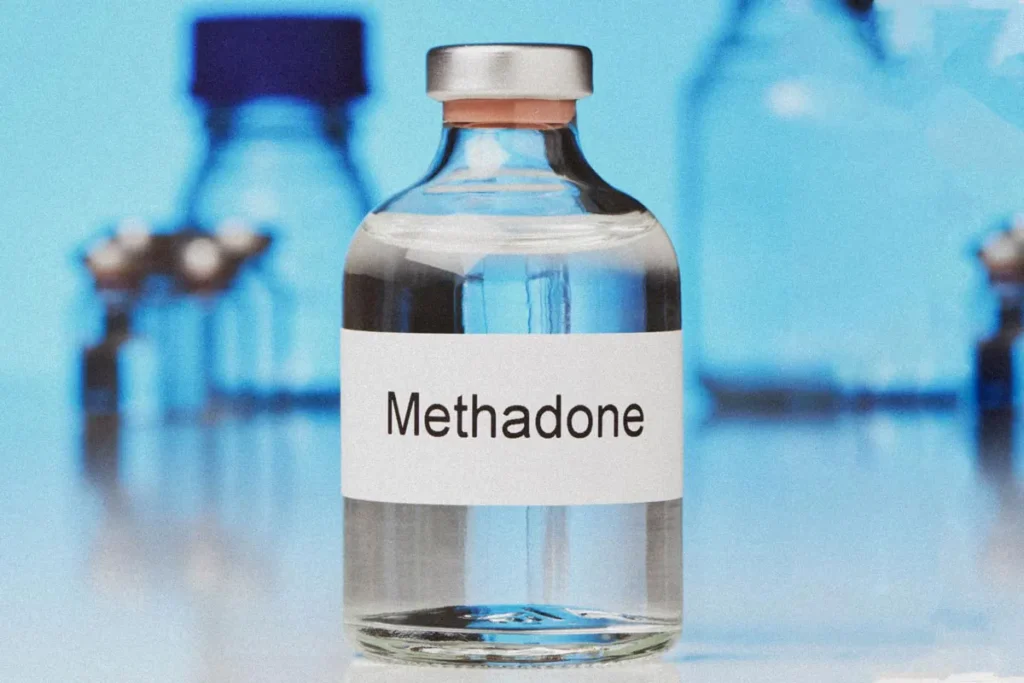
Methadone hydrochloride is a key drug in treating opioid addiction and chronic pain. It was made in Germany during World War II as a morphine substitute. The FDA approved it in 1947, making it a vital part of medical treatment.
Known chemically as (RS)-6-(dimethylamino)-4,4-diphenylheptan-3-one, methadone hydrochloride works like other opioids on brain receptors. Its long-lasting effects help in reducing withdrawal symptoms and cravings in opioid users.
Knowing methadone hydrochloride is a synthetic opioid shows its importance in medicine. It comes in tablets and oral solutions, making it easy to use. As a synthetic opioid, it’s a key option for those fighting opioid addiction.
Key Takeaways
Methadone hydrochloride is a synthetic opioid used for managing opioid addiction and chronic pain.
It was developed in Germany during World War II as an alternative to morphine.
Methadone hydrochloride acts on opioid receptors, reducing withdrawal symptoms and cravings.
Its long-acting nature makes it valuable in clinical settings.
Various formulations are available, including tablets and oral solutions.
The Origin and Development of Methadone Hydrochloride

Methadone hydrochloride was first made in Germany in the 1930s. It was created as a possible substitute for morphine. This was important because of World War II and the need for good pain relief.
Historical Development in Germany During WWII
In the 1930s, Germany was working on new pain medicines. They wanted something safer than morphine. Methadone was seen as a good choice because it worked well for a long time.
Creating methadone was a big challenge during World War II. But, it was tested and showed promise. This was the start of its use in medicine.
FDA Approval and Introduction to Clinical Practice
In 1947, the FDA approved methadone hydrochloride. This was a big step. It made methadone available in the US for the first time.
At first, methadone was used for pain and cough relief. But, it soon became important for treating opioid addiction too. It helps with withdrawal symptoms and cravings.
Understanding Methadone Hydrochloride as a Synthetic Opioid

Methadone hydrochloride is classified as a synthetic opioid. This is because it is made in a lab and works by binding to opioid receptors. Knowing this helps us understand how it works and its uses in medicine.
Chemical Structure and Synthetic Classification
Methadone hydrochloride is made in a lab, unlike natural opioids from opium. Its lab-made nature lets doctors tailor its effects. This makes it useful for treating opioid addiction and chronic pain.
Chemical Characteristics:
Synthetic opioid agonist
Mu-opioid receptor agonist activity
Complex molecular structure allowing for diverse pharmacological effects
Pharmacological Properties and Half-Life
Methadone hydrochloride has a long half-life, lasting from 8 to 59 hours. This long half-life means it can be taken once a day. This helps patients stick to their treatment plan and get better results.
Key Pharmacological Features:
Long half-life supporting once-daily dosing
Analgesic effects through mu-opioid receptor agonism
Variable metabolism affecting duration of action
Available Formulations and Brand Names
Methadone hydrochloride comes in tablets, oral solutions, and injectable forms. It’s sold under names like Methadose and Dolophine. This variety shows how flexible and widely used it is in medicine.
Formulations and Brands:
Methadose: Available in tablet and oral solution forms
Dolophine: Known for its use in managing opioid dependence
Generic formulations: Providing different dosing options
Clinical Applications and Mechanism of Action
Methadone hydrochloride is used for more than just pain relief. It’s also key in treating opioid use disorder. This medication helps manage both opioid dependence and chronic pain, making it a vital part of patient care.
Treatment of Opioid Use Disorder
Methadone maintenance therapy is a mainstay in treating opioid use disorder (OUD). It helps reduce withdrawal symptoms and cravings. This makes it easier for people to recover. Effective management of OUD with methadone requires careful dosing and monitoring to ensure patient compliance and minimize the risk of diversion.
Management of Chronic Pain
Methadone hydrochloride is also used for chronic pain, when other pain relievers don’t work. It offers long-lasting pain relief, improving patients’ quality of life. Chronic pain management with methadone needs a detailed treatment plan, including regular pain assessments and dosing adjustments.
How Methadone Works: Receptor Binding and CNS Effects
Methadone works by binding to mu-opioid receptors in the central nervous system (CNS). This action is why it helps with pain and reduces opioid withdrawal symptoms. Knowing how methadone works is key to understanding its benefits and risks.
Methadone’s effectiveness in treating opioid use disorder and chronic pain makes it very important in medicine. By modulating the opioid receptors, methadone offers a double benefit. It’s a valuable tool in the fight against opioid dependence and chronic pain.
Conclusion: The Significance of Methadone in Modern Medicine
Methadone hydrochloride is key in modern medicine, mainly for treating opioid addiction and managing chronic pain. Its synthetic makeup and long-lasting effects make it a valuable asset for doctors.
Methadone’s role in opioid treatment is clear. It helps reduce withdrawal symptoms and cravings. As the opioid crisis grows, methadone stays a vital drug for treating opioid use disorder.
Methadone is also used for pain management, showing its wide range of uses. Knowing its benefits and risks is vital for better patient care and treatment success.
As medicine keeps improving, methadone’s importance in treating opioids and pain will remain. Its role shows the progress made in tackling opioid addiction and chronic pain.
FAQ
What is methadone hydrochloride?
Methadone hydrochloride is a synthetic opioid. It helps manage opioid addiction and chronic pain.
Is methadone a synthetic opioid?
Yes, methadone is a synthetic opioid. This is because of its chemical structure and how it works in the body.
What is the origin of methadone hydrochloride?
Methadone hydrochloride was first made in Germany in the 1930s. It was created as a safer alternative to morphine.
When was methadone approved by the FDA?
The FDA approved methadone in 1947. This was when it started being used in the U.S. for medical purposes.
What are the primary clinical applications of methadone hydrochloride?
Methadone hydrochloride is mainly used for treating opioid use disorder (OUD). It also helps manage chronic pain.
How does methadone work in the treatment of opioid use disorder?
Methadone maintenance therapy reduces withdrawal symptoms and cravings. This helps people with opioid use disorder recover.
What is the mechanism of action of methadone?
Methadone binds to mu-opioid receptors in the brain. This action produces its therapeutic effects.
What are the available formulations of methadone hydrochloride?
Methadone hydrochloride comes in different forms. These include tablets, dispersible tablets, oral solutions, and injectable liquids.
What are some brand names for methadone hydrochloride?
Methadone hydrochloride is sold under the brand names Methadose and Dolophine.
What is the significance of methadone’s long half-life?
Methadone’s long half-life means it can be taken once a day. This makes it easier for patients to take.
Is methadone hydrochloride used for chronic pain management?
Yes, methadone hydrochloride is used for chronic pain. It’s often used when other treatments have failed.
References
National Center for Biotechnology Information. Evidence-Based Medical Insight. Retrieved from https://www.ncbi.nlm.nih.gov/books/NBK562216/[6


