Hair loss due to menopause is a common concern for many women entering midlife, yet it often goes unnoticed until noticeable thinning occurs. As estrogen levels decline, the balance between hair‑growth and hair‑shed cycles shifts, leading to diffuse thinning, increased shedding, and sometimes visible bald patches. Understanding why this happens, how to recognize the early signs, and which interventions work best can empower you to take control of your hair health.
Statistically, up to 40 % of women report noticeable hair thinning during the menopausal transition, making it one of the most frequent cosmetic complaints alongside hot flashes and mood changes. The emotional impact can be significant, affecting self‑esteem and social confidence. This article breaks down the hormonal mechanisms, identifies the types of alopecia most often seen in this stage of life, and outlines both medical and lifestyle‑based treatment pathways.
We will also discuss practical steps you can adopt today to slow down the process, and how Gold City Medical Center’s integrative approach combines expertise in medical treatments, cosmetic procedures, and hair‑transplant technology to deliver personalized solutions.
Understanding Hormonal Changes and Hair Health
The menopausal transition is characterized by a steady decline in estrogen and progesterone, hormones that play a protective role in hair follicle longevity. When estrogen drops, the relative influence of androgens such as testosterone becomes more pronounced, potentially triggering androgenic alopecia—a pattern of hair loss traditionally associated with men but increasingly recognized in women.
Key hormonal shifts include:
- Reduced estrogen → shorter anagen (growth) phase.
- Increased dihydrotestosterone (DHT) binding to hair follicles.
- Altered thyroid function, which can exacerbate hair thinning.
These changes affect the scalp’s blood flow and nutrient delivery, leading to a condition often described as telogen effluvium, where a larger proportion of hairs enter the resting phase and shed simultaneously. While telogen effluvium is usually temporary, prolonged hormonal imbalance can evolve into chronic alopecia patterns.
Beyond hormones, lifestyle factors such as stress, diet, and sleep quality interact with the endocrine system, influencing the severity of hair loss. For instance, chronic stress elevates cortisol, which can further disrupt the hair growth cycle.
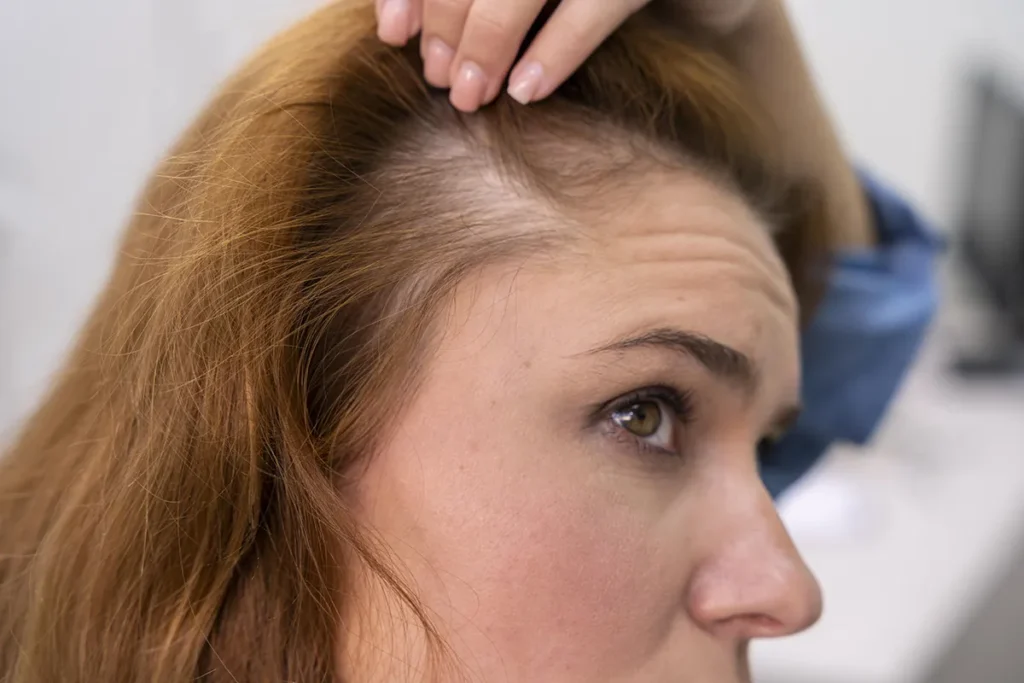
Common Types of Hair Loss in Menopausal Women
Not all hair loss during menopause looks the same. Recognizing the pattern helps clinicians choose the most effective treatment.
Androgenetic Alopecia (Female Pattern)
This is the most prevalent form, presenting as diffuse thinning over the crown while the frontal hairline generally remains intact. It is driven by increased DHT activity on susceptible follicles.
Telogen Effluvium
Often triggered by sudden hormonal shifts, severe stress, or nutritional deficiencies, telogen effluvium leads to a noticeable increase in shedding across the entire scalp.
Diffuse Alopecia Areata
Although less common, autoimmune attacks can cause patchy or diffuse hair loss, sometimes misdiagnosed as simple thinning.
Below is a quick comparison of these three conditions:
| Condition | Typical Pattern | Primary Cause | Common Triggers |
|---|---|---|---|
| Androgenetic Alopecia | Thinning crown, preserved frontal line | Androgen sensitivity | Hormonal decline, genetics |
| Telogen Effluvium | Uniform shedding | Shift to telogen phase | Stress, diet, rapid weight loss |
| Diffuse Alopecia Areata | Patchy or diffuse loss | Autoimmune response | Genetic predisposition, infections |
Understanding whether you are dealing with hair loss in women caused by hormonal imbalance, stress‑related shedding, or an autoimmune process guides the selection of targeted therapies.
Diagnosing Hair Loss Due to Menopause
A thorough diagnosis begins with a detailed medical history and physical examination. Clinicians at Gold City Medical Center assess hormone levels, nutritional status, and scalp health to pinpoint the underlying cause.
Key diagnostic steps include:
- Blood tests: estrogen, testosterone, DHT, thyroid panel, iron, and vitamin D.
- Scalp biopsy (when alopecia areata is suspected).
- Trichoscopy: a dermatoscopic examination revealing follicular miniaturization.
- Hair‑pull test: to quantify active shedding.
These investigations help differentiate between hair thinning due to menopause and other causes such as nutritional deficiencies or medication side effects. Early detection allows for timely intervention, which can halt progression and, in many cases, stimulate regrowth.
Patients are also asked about lifestyle habits—dietary patterns, stress levels, and sleep quality—because these factors can amplify hormonal effects. A holistic assessment ensures that any recommended hair loss treatment for women addresses both internal and external contributors.
Treatment Options: Medical, Cosmetic, and Lifestyle Approaches
Effective management of hair loss due to menopause often requires a multimodal strategy that blends medical therapy, cosmetic procedures, and lifestyle modification.
Medical Therapies
First‑line pharmacologic options include:
- Topical minoxidil (2 % or 5 % solution) – promotes follicular blood flow and prolongs the anagen phase.
- Oral anti‑androgens such as spironolactone – block DHT receptors on hair follicles.
- Low‑dose hormone replacement therapy (HRT) – restores estrogen balance, which can improve hair density for some women.
For patients with autoimmune involvement, topical or intralesional corticosteroids may be prescribed to calm the immune response.
Cosmetic Procedures
When medical therapy alone is insufficient, cosmetic solutions can fill the gap:
- Platelet‑rich plasma (PRP) injections – concentrate growth factors to stimulate follicle activity.
- Low‑level laser therapy (LLLT) – non‑invasive light treatment that enhances cellular metabolism.
- Hair transplantation – Follicular Unit Extraction (FUE) performed by experienced surgeons, offering permanent restoration for stable loss areas.
Lifestyle & Nutritional Support
Adjunctive measures that support hair health include:
- Balanced diet rich in protein, iron, zinc, and omega‑3 fatty acids.
- Stress‑reduction techniques: mindfulness, yoga, or regular aerobic exercise.
- Proper scalp care: gentle shampoos, avoiding tight hairstyles that cause traction alopecia.
Combining these approaches often yields the best outcomes. For example, a patient might start with minoxidil and HRT, supplement with PRP sessions, and adopt a nutrient‑dense diet, resulting in noticeable regrowth within six months.
Preventive Strategies and Long‑Term Hair Care
While some degree of change is inevitable with aging, several preventive strategies can mitigate the severity of hair loss due to menopause and preserve hair vitality for years to come.
Key recommendations:
- Regular hormone monitoring – annual blood work helps adjust HRT or other treatments proactively.
- Maintain a hair‑friendly diet – include leafy greens, lean meats, nuts, and seeds for essential micronutrients.
- Protect the scalp from UV damage with hats or sunscreen‑infused hair products.
- Avoid harsh chemical treatments (bleaching, excessive heat) that can exacerbate follicular stress.
- Schedule periodic scalp assessments with a dermatologist or trichologist to catch early signs of thinning.
Incorporating gentle scalp massage stimulates blood circulation, while using sulfate‑free shampoos reduces irritation. For women who notice sudden shedding, a short course of topical minoxidil combined with stress‑management techniques often stabilizes the condition.
Long‑term success hinges on consistency. Small daily habits, when combined with professional guidance, create a resilient environment for hair follicles, allowing many women to retain a fuller appearance well beyond the menopausal years.
Why Choose Gold City Medical Center
Gold City Medical Center offers an integrative approach that blends cutting‑edge medical treatments, advanced cosmetic procedures, and personalized lifestyle coaching. Our team of experienced dermatologists, endocrinologists, and hair‑transplant surgeons works together to create a tailored plan that addresses the unique hormonal and aesthetic needs of each patient. With state‑of‑the‑art facilities and a commitment to evidence‑based care, we provide safe, effective solutions that restore confidence and improve quality of life.
Ready to reclaim fuller, healthier hair? Contact Gold City Medical Center today to schedule a comprehensive consultation and discover the personalized treatment plan that’s right for you.
FAQ
What causes hair loss during menopause?
Hair loss during menopause is mainly driven by declining estrogen and rising androgen activity, which shorten the growth phase of hair follicles.
How can I tell if my hair loss is due to menopause or another condition?
A doctor will evaluate pattern, timing, blood tests, and scalp examinations to differentiate menopausal hair loss from other causes.
What medical treatments are effective for menopausal hair loss?
Topical minoxidil, oral anti‑androgens, and low‑dose hormone replacement therapy are first‑line options.
Are cosmetic procedures like PRP or hair transplant suitable for menopausal women?
Yes, PRP and hair transplantation are viable options when medical therapy alone is insufficient.
What lifestyle changes can help prevent hair loss during menopause?
A balanced diet, stress reduction, proper scalp care, and regular hormone monitoring are key preventive steps.
Is hormone replacement therapy beneficial for hair health?
Low‑dose HRT can improve hair density for many women by restoring estrogen balance, but it must be individualized.





