Many wonder, does hormonal imbalance cause hair loss, and the answer lies in the complex communication between the endocrine system and hair follicles. Hormones act as messengers that regulate the growth cycle of each strand, and when their balance is disturbed, the result can be noticeable shedding, thinning, or even bald patches.
Hair loss affects up to 40 % of women and 50 % of men at some point in their lives, making it one of the most common dermatological concerns worldwide. While genetics and lifestyle play significant roles, hormonal fluctuations are often the hidden trigger that amplifies the problem.
In this article we will explore the scientific mechanisms behind hormone‑driven hair loss, identify the most common types linked to hormonal changes, discuss diagnostic approaches, and present evidence‑based treatment options. Whether you are experiencing diffuse thinning or localized bald spots, understanding the hormonal roots can guide you toward the most effective solution.
By the end of the reading, you will be equipped with practical knowledge to discuss your condition confidently with a specialist and to make informed decisions about prevention and therapy.
The Hormonal Mechanisms Behind Hair Growth and Loss
Hair follicles operate on a cyclical pattern consisting of anagen (growth), catagen (regression), and telogen (rest). Hormones influence each phase, either promoting robust growth or accelerating the transition to shedding. The most influential hormones include androgens, estrogen, thyroid hormones, and cortisol.
Key Hormones Involved
- Dihydrotestosterone (DHT) – a potent androgen that shortens the anagen phase, leading to miniaturized follicles.
- Estrogen – prolongs the growth phase and can counteract DHT effects, which is why many women notice improved hair density during pregnancy.
- Thyroid hormones (T3, T4) – essential for metabolic regulation; both hypothyroidism and hyperthyroidism can disrupt the hair cycle.
- Cortisol – chronic stress elevates cortisol, pushing follicles prematurely into telogen, a condition known as telogen effluvium.
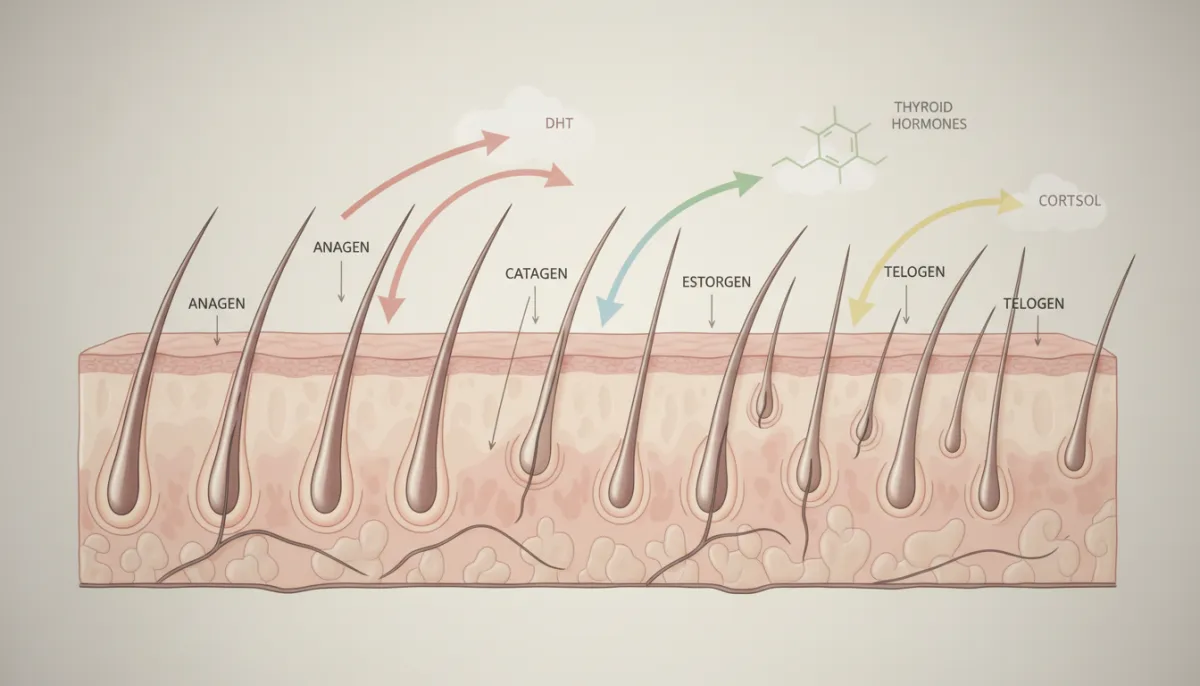
When the delicate balance among these hormones is disturbed, the hair follicle receives conflicting signals. For example, an excess of DHT can dominate over estrogen, causing the follicle to shrink—a hallmark of androgenetic alopecia. Conversely, low thyroid hormone levels can slow cellular metabolism, resulting in brittle, slow‑growing hair.
| Hormone | Effect on Hair | Typical Imbalance |
|---|---|---|
| DHT | Shortens growth phase, miniaturizes follicles | Elevated (often due to 5‑α‑reductase activity) |
| Estrogen | Extends growth phase, improves density | Reduced (menopause, ovarian dysfunction) |
| Thyroid (T3/T4) | Regulates metabolism of follicular cells | Low (hypothyroidism) or high (hyperthyroidism) |
| Cortisol | Triggers premature telogen entry | Chronically high (stress, Cushing’s) |
Understanding these pathways clarifies why the simple question does hormonal imbalance cause hair loss has a nuanced answer: the specific hormone, its level, and the individual’s genetic sensitivity all matter.
Common Types of Hair Loss Linked to Hormonal Changes
Hormonal disturbances manifest in several recognizable patterns of alopecia. While each type has distinct clinical features, they often share an underlying endocrine trigger.
- Androgenetic alopecia – the most prevalent form, driven primarily by DHT in genetically predisposed scalp areas. It appears as a receding hairline in men and diffuse thinning on the crown in women.
- Telogen effluvium – a sudden shedding of 30–100 hairs per day, commonly triggered by acute stress, postpartum hormonal shifts, or thyroid dysfunction.
- Alopecia areata – an autoimmune condition that can be exacerbated by hormonal fluctuations, leading to round patches of hair loss.
- Female pattern hair loss – a diffuse thinning that mirrors male pattern but is often linked to estrogen decline during menopause.
- Hormone‑related traction alopecia – caused by chronic tension on hair shafts, worsened when hormonal changes weaken follicular anchorage.
Recognizing the pattern helps clinicians narrow down the hormonal culprit. For instance, a woman with diffuse thinning on the top of the head and a history of irregular periods may be experiencing estrogen‑related androgenetic alopecia, whereas a sudden, uniform shedding after a major illness often points to telogen effluvium.
Identifying Hormonal Imbalance: Symptoms and Diagnostic Tests
Before addressing hair loss, it is essential to confirm whether a hormonal imbalance is present. Patients should be aware of accompanying systemic signs that may indicate an endocrine issue.
- Unexplained weight gain or loss
- Irregular menstrual cycles or menopausal symptoms
- Fatigue, hair texture changes, and dry skin
- Rapid heart rate, heat intolerance, or tremors (hyperthyroid clues)
- Cold intolerance, constipation, and sluggishness (hypothyroid clues)
Diagnostic work‑up typically includes:
| Test | What It Measures | Relevance to Hair Loss |
|---|---|---|
| Serum Testosterone & DHT | Androgen levels | High levels suggest androgenetic alopecia |
| Thyroid Panel (TSH, Free T4) | Thyroid function | Abnormalities correlate with telogen effluvium |
| Estrogen & Progesterone | Female sex hormones | Low estrogen can accelerate follicular miniaturization |
| Cortisol (AM/PM) | Stress hormone | Elevated cortisol links to chronic shedding |
| Complete Blood Count (CBC) | Overall health | Identifies anemia, which can worsen hair thinning |
These investigations, combined with a thorough scalp examination, allow specialists to pinpoint the hormonal drivers behind the hair loss, thereby tailoring an effective treatment plan.
Treatment Options for Hormone‑Related Hair Loss
When the link between hormones and hair loss is established, a multi‑modal approach yields the best outcomes. Treatment strategies fall into three broad categories: medical therapy, lifestyle modification, and procedural interventions.
Medical Therapies
- 5‑α‑reductase inhibitors (finasteride, dutasteride) – lower DHT production, slowing androgenetic alopecia.
- Topical minoxidil – prolongs the anagen phase and improves follicle size, useful for both men and women.
- Thyroid hormone replacement (levothyroxine) – normalizes thyroid function, reversing telogen effluvium.
- Anti‑androgen creams (spironolactone) – block androgen receptors, especially effective in women.
- Cortisol‑modulating agents – stress‑reduction medications or adaptogens to lower chronic cortisol levels.
Procedural Interventions
- Platelet‑rich plasma (PRP) therapy – injects growth factors that stimulate follicular activity.
- Hair transplant surgery – relocates healthy donor follicles to balding zones, a permanent solution for stable hormonal alopecia.
- Low‑level laser therapy (LLLT) – non‑invasive light treatment that enhances cellular metabolism in the scalp.
Choosing the right combination depends on the specific hormonal profile, severity of loss, and patient preferences. A personalized plan often starts with correcting the endocrine imbalance, followed by adjunctive therapies to restore density.
Preventive Strategies and Lifestyle Adjustments
While medical treatment is essential for many, proactive lifestyle choices can mitigate hormonal disruptions and support ongoing hair health.
- Balanced Nutrition – adequate protein, iron, zinc, and omega‑3 fatty acids sustain follicular metabolism.
- Stress Management – mindfulness, yoga, and regular exercise lower cortisol and improve overall hormonal balance.
- Sleep Hygiene – 7–9 hours of quality sleep each night regulates growth hormone and cortisol cycles.
- Avoid Harsh Styling – limit tight ponytails, heat tools, and chemical treatments that can aggravate traction alopecia.
- Regular Health Check‑ups – annual hormone panels help catch imbalances early before noticeable hair loss occurs.
Adopting these habits not only reduces the risk of future shedding but also enhances the effectiveness of any therapeutic interventions you may pursue.
Why Choose Gold City Medical Center
Gold City Medical Center combines integrative medicine with state‑of‑the‑art cosmetic expertise. Our multidisciplinary team evaluates hormonal health, scalp condition, and aesthetic goals to create a customized plan that addresses the root cause of hair loss. With advanced diagnostics, proven medical treatments, and leading‑edge hair transplant techniques, we deliver results that are both natural‑looking and long‑lasting.
Ready to restore your confidence and stop hair loss at its source? Contact Gold City Medical Center today for a comprehensive hormonal assessment and personalized treatment plan.
Call us or book an online consultation now and take the first step toward healthier, fuller hair.
FAQ
Can hormonal imbalance really cause hair loss?
Yes, imbalances in hormones like DHT, estrogen, thyroid hormones, and cortisol can disrupt the hair growth cycle and lead to shedding or thinning.
What types of hair loss are linked to hormones?
Androgenetic alopecia, telogen effluvium, female pattern hair loss, and hormone‑related alopecia areata are the main hormone‑linked types.
How do doctors diagnose hormonal hair loss?
Through a combination of medical history, physical scalp exam, and blood tests measuring testosterone, DHT, thyroid hormones, estrogen, progesterone, and cortisol.
What medical treatments are effective for hormone‑related hair loss?
5‑α‑reductase inhibitors, topical minoxidil, thyroid hormone replacement, anti‑androgen creams, and cortisol‑modulating strategies are commonly used.
Are there non‑medical ways to prevent hormone‑induced hair loss?
Yes, balanced nutrition, stress management, adequate sleep, and gentle hair care can support hormonal balance and hair health.





