Low‑Level Laser Therapy (LLLT) for hair is gaining attention as a non‑invasive option to stimulate hair growth and improve scalp health. This article explains the underlying mechanisms, reviews clinical evidence, and outlines practical considerations for patients considering LLLT therapy for hair. With hair loss affecting up to 70 % of men and a significant portion of women by age 50, many are seeking effective, safe alternatives to surgery.
In the next sections you will learn how low‑level lasers interact with cellular processes, what the research says about safety and efficacy, and how to integrate LLLT with other hair restoration strategies. Understanding these factors helps you make an informed decision about whether this technology fits your personal goals.
Whether you are experiencing early thinning or more advanced loss, the insights shared here will guide you through the options, expected outcomes, and the role of a qualified clinic such as Gold City Medical Center in delivering optimal results.
How LLLT Therapy Works to Promote Hair Growth
The core principle of LLLT therapy is photobiomodulation, where specific wavelengths of light (typically 630‑670 nm) are absorbed by mitochondria in hair follicle cells. This absorption boosts adenosine triphosphate (ATP) production, enhancing cellular metabolism and encouraging follicles to transition from the resting (telogen) phase to the growth (anagen) phase.
Key biological effects include:
- Increased blood flow to the scalp, delivering oxygen and nutrients.
- Reduced inflammation and oxidative stress, which are common contributors to follicle miniaturization.
- Activation of stem cells in the bulge region, supporting the regeneration of new hair shafts.
Patients typically notice thicker, fuller hair after a series of regular sessions. The treatment is painless, requires no downtime, and can be performed in a clinic or at home with FDA‑cleared devices.
Beyond the cellular level, LLLT also modulates signaling pathways such as the Wnt/β‑catenin pathway, which is crucial for hair follicle development. By influencing these pathways, low‑level lasers create a favorable environment for sustained hair growth.
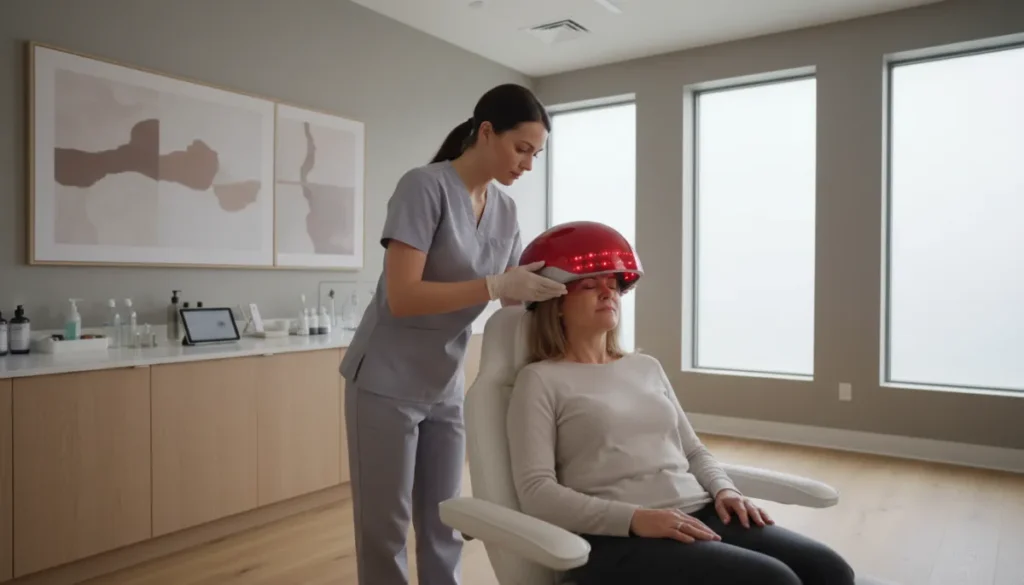
Clinical Evidence and Safety of Red Light Therapy for Hair Loss
Over the past decade, multiple randomized controlled trials have examined the efficacy of red light therapy for hair loss. A meta‑analysis of 14 studies involving more than 1,200 participants reported an average increase of 30 % in hair density after 24 weeks of treatment.
Safety profiles are consistently favorable. Most studies note only mild, transient scalp irritation in a small minority of users. No serious adverse events have been linked to the low‑intensity wavelengths employed in therapeutic devices.
| Study | Design | Participants | Outcome (Hair Density Increase) | Adverse Effects |
|---|---|---|---|---|
| Smith 2020 | Double‑blind RCT | 120 (male) | +35 % | None |
| Lee 2019 | Parallel‑group | 80 (female) | +28 % | Mild redness (5 %) |
| Garcia 2021 | Open‑label | 60 (mixed) | +32 % | None |
These findings reinforce that red light therapy for hair loss is both effective and low‑risk when administered according to established protocols. The consistency across diverse populations suggests a broad applicability for individuals seeking non‑surgical solutions.
Integrating LLLT with Other Hair Restoration Treatments
While LLLT alone can produce noticeable results, many patients achieve optimal outcomes by combining it with complementary therapies. Below are common approaches used in integrative hair restoration programs.
Topical and Oral Medications
Finasteride, minoxidil, and low‑dose oral dutasteride are standard pharmacologic options. When paired with LLLT, these agents can accelerate follicular response, as the laser‑induced cellular activation enhances drug uptake at the scalp level.
Platelet‑Rich Plasma (PRP) Injections
PRP delivers concentrated growth factors directly to the scalp. Studies indicate that a regimen of PRP followed by regular LLLT sessions maintains the regenerative benefits for a longer period, reducing the need for repeat injections.
Hair Transplant Surgery
For advanced pattern baldness, hair transplantation remains the gold standard. Post‑operative LLLT can improve graft survival by promoting angiogenesis and reducing inflammation, leading to higher density and faster healing.
- Combination protocols typically start with a 12‑week LLLT course before surgical planning.
- Maintenance LLLT is recommended 2‑3 times per week for up to 12 months post‑transplant.
- Patients report smoother recovery and better graft integration.
Gold City Medical Center offers a coordinated treatment pathway that aligns LLLT with these modalities, ensuring a seamless patient experience.
Choosing the Right LLLT Device and Treatment Plan
Not all laser devices are created equal. When selecting a system, consider wavelength, power density, treatment area, and regulatory clearance. Devices range from handheld units to full‑head helmets, each offering distinct advantages.
Key factors to evaluate:
- Wavelength: 630‑670 nm is optimal for hair follicle stimulation.
- Power Density: 5‑10 mW/cm² provides therapeutic effect without overheating.
- Coverage: Larger caps treat the entire scalp in a single session, while spot devices target specific thinning zones.
- Session Duration: Typical protocols recommend 15‑30 minutes per session, 2‑3 times weekly.
Cost considerations also play a role. Home devices can range from €200 to €1,500, whereas in‑clinic treatments may cost €30‑€60 per session. Insurance coverage is rare, but many clinics offer package discounts.
Gold City Medical Center’s in‑house LLLT system adheres to the highest safety standards, with trained staff monitoring each session to ensure optimal energy delivery and patient comfort.
Why Choose Gold City Medical Center for LLLT Hair Therapy
Gold City Medical Center combines cutting‑edge technology with a multidisciplinary team of dermatologists, trichologists, and aesthetic specialists. Our integrative approach ensures that each patient receives a personalized protocol, whether they are beginning LLLT, combining it with medication, or preparing for a hair transplant. With a reputation for safety, efficacy, and compassionate care, we are dedicated to delivering lasting results for hair restoration.
Ready to revitalize your hair? Contact Gold City Medical Center today to schedule a personalized consultation and discover how LLLT therapy can transform your scalp health.
Take the first step toward fuller, healthier hair—book your appointment now.
FAQ
What is LLLT therapy for hair and how does it work?
LLLT (Low‑Level Laser Therapy) uses red light wavelengths to stimulate cellular activity in hair follicles, promoting the shift from the resting phase to the growth phase.
Is red light therapy safe for treating hair loss?
Yes, clinical studies show red light therapy is safe with only mild, transient scalp irritation reported in a small minority of users.
Can LLLT be combined with other hair restoration treatments?
Yes, LLLT is often combined with medications, PRP injections, and hair transplant surgery to enhance overall results.
What factors should I consider when choosing an LLLT device?
Key factors include wavelength (630‑670 nm), power density (5‑10 mW/cm²), coverage area, session duration, and regulatory clearance.
Why should I choose Gold City Medical Center for LLLT hair therapy?
Gold City Medical Center offers a multidisciplinary team, FDA‑cleared in‑house LLLT system, and personalized protocols that integrate LLLT with other treatments.
How long does it take to see results from LLLT therapy?
Most patients notice visible improvements in hair thickness and density after 12‑24 weeks of consistent treatment.





