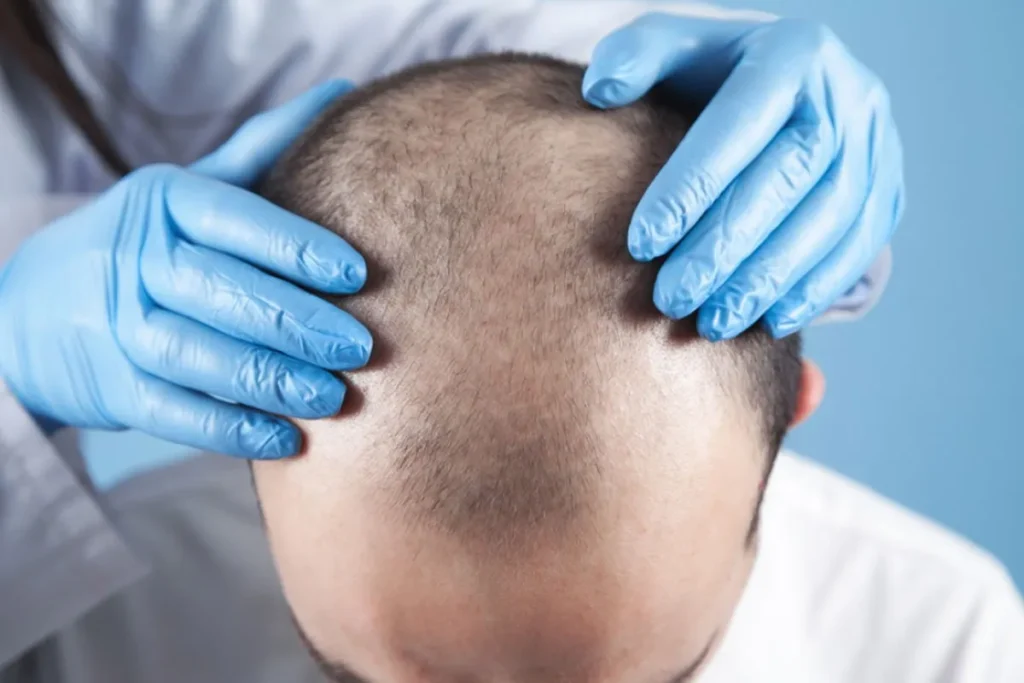
Many people worry about hair on scalp scars after injuries or surgery. Medical Expert, “Hair loss on scarred areas is tough, no matter the cause.”
Hair doesn’t grow on scars because they lack hair follicles. But, hair follicle transplantation is a hopeful fix. This piece will dive into why hair doesn’t grow on scars and how transplantation works.
Key Takeaways
Hair loss on scarred areas presents unique challenges.
Hair follicle transplantation can remodel scars at the genetic level.
Advanced techniques offer promising solutions for regrowing hair.
Scalp scars can be caused by surgery, injury, or burns.
Hair restoration can transform outcomes for patients with scalp scars.
Why Hair Doesn’t Grow on Scars

Hair doesn’t grow on scars because of how they are different from normal skin. Scars form when the body heals from injuries. They don’t have the structures needed for hair to grow, like hair follicles.
The Structure of Scar Tissue
Scar tissue is made of dense, fibrous material. It’s not like healthy skin, which has a mix of collagen and other stuff. This makes it hard for hair to grow.
Key characteristics of scar tissue include:
Dense collagen fibers
Lack of hair follicles and sebaceous glands
Different pigmentation compared to surrounding skin
Missing Hair Follicles in Scarred Areas
Hair follicles are key for hair growth. They’re missing in scar tissue, which is why hair can’t grow there. When skin gets injured, the healing process often creates scar tissue without these follicles.
The absence of hair follicles in scar tissue is due to:
The destruction of follicles during the initial injury
The body’s focus on repairing the damaged area, not regenerating hair follicles
Different Types of Scars and Their Healing Potentials
Scars vary in type and severity, affecting their healing and hair growth chances. Each scar type has its own traits that impact hair growth.
Knowing these differences helps in finding treatments to help hair grow on scars.
Do Scars Grow Hair? The Science Explained
The science behind hair growth on scars is complex. It involves hair follicle transplantation and skin remodeling. Recent advancements have shown promising results, giving hope to those wanting to regrow hair on scars.
Research on Hair Follicle Transplantation
Hair follicle transplantation is a viable solution for growing hair on scars. Research has shown that transplanting healthy hair follicles into scarred areas can improve hair growth and skin health. Studies in reputable journals have highlighted this technique’s promise.
For example, a study in NPJ Regenerative Medicine found that six months after transplant, the skin’s thickness and cell counts doubled. Blood vessel levels also improved. This shows a significant remodeling of the scar tissue, making it better for hair growth.
Skin Remodeling After Follicle Transplants
Skin remodeling after hair follicle transplants is key to success. As the transplanted follicles integrate, they stimulate the skin, promoting healing and regeneration. This leads to healthier-looking skin and new hair growth.
Success Rates and Patient Satisfaction
The success of hair follicle transplantation on scars is seen in patient satisfaction and success rates. With improvements in techniques like Micro FUE and Implanter Pen, satisfaction has increased. Some studies show satisfaction ratings averaging 4.6 out of 5.
These numbers show the effectiveness of modern hair follicle transplantation techniques. They offer a reliable solution for those dealing with hair loss on scars.
Natural Methods to Stimulate Hair Growth on Scars
While hair follicle transplantation works, natural methods can also help. They improve blood flow, boost collagen, and make the scalp healthier. This makes them a good choice for many.
Massage and Circulation Techniques
Scalp massage is a simple yet powerful way to grow hair. It boosts blood flow, feeding the hair follicles. This leads to healthier hair growth. Massage your scalp daily with your fingertips in circular motions.
Microneedling and Dermarolling
Microneedling and dermarolling create tiny injuries to boost collagen and blood flow. For more details, check out Cosmedica’s guide on fixing scar hair. They work well on dense scars with poor blood flow.
Essential Oils and Natural Remedies
Essential oils like rosemary, lavender, and peppermint can help hair grow. Use them with carrier oils or in shampoos. Aloe vera and coconut oil also nourish the scalp, supporting hair health.
Nutrition and Supplements
Eating a balanced diet is key for hair growth. Foods rich in biotin, vitamin D, and omega-3s are important. Supplements can help fill nutritional gaps, supporting hair health and growth on scars.
Conclusion
Regrowing hair on scars is a challenge that needs patience and the right techniques. Understanding scar tissue is key. Advanced treatments and natural methods can help improve hair health and confidence.
Medical Expert, “Even scarred areas can grow healthy, natural-looking hair with the right approach.” As research grows, so do the chances of restoring hair on scars. This brings new hope to those with scars.
Exploring different hair growth solutions can help unlock your full beauty. Whether it’s through new treatments or natural remedies, the journey is towards reclaiming your natural beauty. It’s a step towards a more vibrant life.
FAQ
Do hair grow on scars?
Hair usually doesn’t grow on scars because scars don’t have hair follicles. But, advanced methods like hair follicle transplantation can help grow hair again.
Can hair grow over scar tissue?
Hair can’t naturally grow over scar tissue because it lacks hair follicles. Yet, treatments like hair follicle transplantation can change the scar tissue. This can help hair grow back.
Why doesn’t hair grow on scars?
Hair doesn’t grow on scars because scar tissue is too dense. It doesn’t have the structures needed for hair growth, like hair follicles.
Can scars grow hair?
Scars themselves can’t grow hair. But, treatments like hair follicle transplantation can help hair grow back in scarred areas.
How to regrow hair on scalp scar?
To regrow hair on a scalp scar, you can try hair follicle transplantation. Or, use natural methods like massage, microneedling, and essential oils. Also, taking nutritional supplements can help stimulate hair growth.
Does scar tissue grow hair?
Scar tissue naturally can’t grow hair. But, treatments like hair follicle transplantation can help restore hair growth in scarred areas.
Can hair grow on burn scars?
Hair can’t naturally grow on burn scars because the hair follicles are destroyed. But, hair follicle transplantation and other treatments can help grow hair again in these areas.
What are the natural methods to stimulate hair growth on scars?
Natural ways to stimulate hair growth on scars include massage and circulation techniques. Also, microneedling and dermarolling, using essential oils, and a balanced diet with supplements can help.
Will hair grow on a scar after transplantation?
Yes, hair can grow on a scar after a successful hair follicle transplantation. The transplanted hair follicles can help restore natural hair growth in the scarred area.
Can hair grow over scars with microneedling?
Microneedling can help stimulate hair growth by improving circulation and collagen production. It may not directly cause hair to grow over scars. But, it can create a good environment for hair regrowth when used with other treatments.
References
National Center for Biotechnology Information. Evidence-Based Medical Insight. Retrieved from https://pubmed.ncbi.nlm.nih.gov/36620839/

