
Experiencing thinning hair and hair loss can really hurt your confidence. If you think hormonal imbalance is causing your hair loss, you’re not alone. Millions of people worldwide face this issue.
Hormones play a big role in hair growth. Changes in estrogen, testosterone, and thyroid hormones can lead to thinning hair. At GoldCity Center, we know hormonal hair loss needs special care and understanding.
Finding out why you’re losing hair is key. Studies show that androgens, like dihydrotestosterone (DHT), make hair follicles work too hard. This results in shorter growth periods and thinner hair.
Key Takeaways
Understand the causes of hormonal hair loss
Recognize the impact of hormonal imbalance on hair growth
Explore personalized treatment options at GoldCity Center
Empower yourself with knowledge to reclaim your confidence
Discover the role of androgens in triggering hair loss
Understanding Hair Loss Due to Hormones
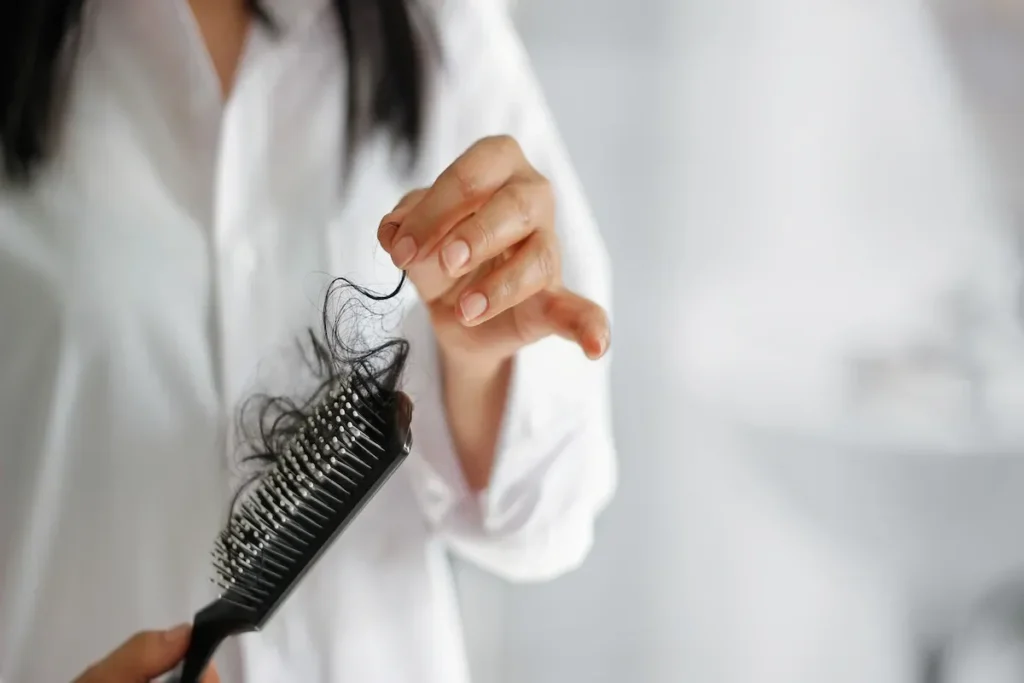
Hormones play a big role in hair loss. They help control hair growth. Any imbalance can cause hair to fall out.
Estrogen and androgens are important hormones for hair. Estrogen helps keep hair growing longer. Androgens can make hair thinner by shrinking hair follicles. Keeping these hormones in balance is key for healthy hair.
Key Hormones That Affect Hair Growth
Estrogen and androgens are the main hormones affecting hair. Women often lose more hair after menopause because estrogen levels drop. For more on hormonal hair loss, check out our guide on hormonal imbalance and hair loss.
Common Conditions Triggering Hormonal Hair Loss
Some medical conditions can cause hormonal hair loss. Polycystic ovary syndrome (PCOS) is one, leading to hormonal imbalances and hair loss. Thyroid problems also affect hormone levels, causing hair to thin.
Knowing how hormones affect hair loss is the first step to solving it. By identifying the causes and getting the right treatment, you can get your hair back to being healthy and full.
Effective Treatments to Combat Hormonal Hair Loss
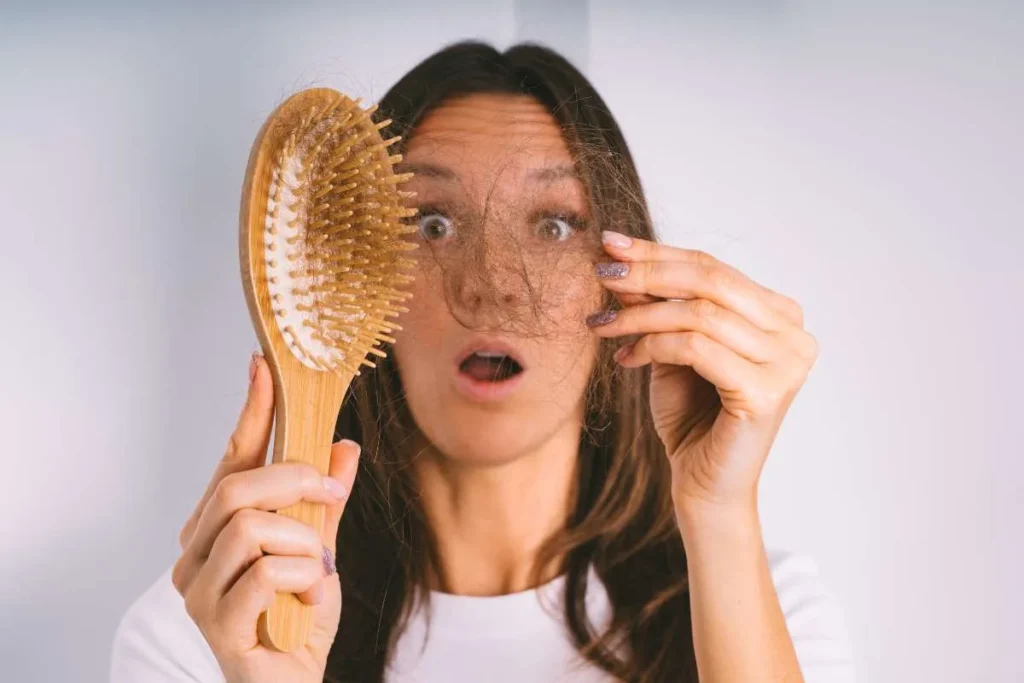
To fight hormonal hair loss, it’s key to try different treatments. This includes both medical options and natural methods. Issues like polycystic ovary syndrome, thyroid problems, and hormonal swings can cause hair loss. So, a detailed treatment plan is vital.
Medical Solutions
Medical treatments aim to boost hair growth or lessen hair loss caused by hormones. Minoxidil and finasteride are proven to help. They are used to grow hair and slow down loss.
Minoxidil: Applied topically, minoxidil stimulates hair growth and slows down hair loss.
Finasteride: This oral medication reduces the levels of dihydrotestosterone (DHT), a hormone that contributes to hair loss.
These treatments are a good starting point for those fighting hormonal hair loss.
Natural Approaches
For those preferring natural methods, there are effective options. Saw palmetto blocks DHT, helping to prevent hair loss. Low-level laser therapy (LLLT) boosts hair growth by improving scalp blood flow.
Saw Palmetto: Blocks DHT, reducing hair loss.
Low-Level Laser Therapy (LLLT): Stimulates hair growth through increased blood flow.
Platelet-rich Plasma (PRP) Therapy: Uses the body’s healing to revitalize hair follicles.
Exploring these treatments can start a journey to better hair health and confidence. Whether it’s through medicine or natural methods, there’s a way to overcome hormonal hair loss.
Conclusion
Understanding hormonal hair loss helps people take care of their hair. It’s caused by many hormonal factors. Knowing these can help make better choices for hair health.
There are ways to treat hormonal hair loss, both medical and natural. These methods can help fix hair loss problems. They can make hair look better and feel healthier.
Addressing hormonal imbalances is key to fixing hair loss. This can lead to a more beautiful and radiant look. It’s all about understanding how hormones affect hair.
Hormonal imbalances can cause hair loss, but it can be treated. With the right approach, people can overcome hair loss. This leads to a lasting and beautiful look.
FAQ
What is hormonal hair loss and how does it occur?
Hormonal hair loss happens when hormones, like DHT, are out of balance. This imbalance causes hair follicles to shrink. As a result, hair becomes thinner and grows for shorter periods.
How do hormones affect hair growth?
Hormones are key to hair growth. Estrogen keeps hair in the growth phase. Androgens, on the other hand, can shrink hair follicles. Knowing how hormones work is important for fighting hair loss.
What are the common conditions that trigger hormonal hair loss?
PCOS and menopause are common causes of hormonal hair loss. These conditions change hormone levels, leading to hair loss. It’s important to recognize these triggers to start fighting hair loss.
What are the effective treatments for hormonal hair loss?
Effective treatments include medicines like minoxidil and finasteride. Natural options like saw palmetto and low-level laser therapy also help. These treatments aim to grow hair and reduce androgen effects on follicles.
Can hormonal imbalance cause hair loss?
Yes, an imbalance of hormones, mainly androgens, can cause hair loss. It’s vital to understand and fix these imbalances to regain hair health and confidence.
How can I stop hormonal hair loss?
To fight hormonal hair loss, you need a mix of medical and natural treatments. Exploring these options can start a journey to improve hair health.
Are there any natural remedies for hormonal hair loss?
Yes, natural remedies like saw palmetto and low-level laser therapy can help. They stimulate hair growth and lessen androgen effects on follicles.
How do I know if my hair loss is due to hormonal imbalance?
If you’re losing hair, finding the cause is key. Hormonal imbalances, like too much androgen, can lead to hair loss. A healthcare professional can help figure out why you’re losing hair.
References
National Center for Biotechnology Information. Advanced medical treatments for hair loss. Retrieved from https://pmc.ncbi.nlm.nih.gov/articles/PMC12553935/





