

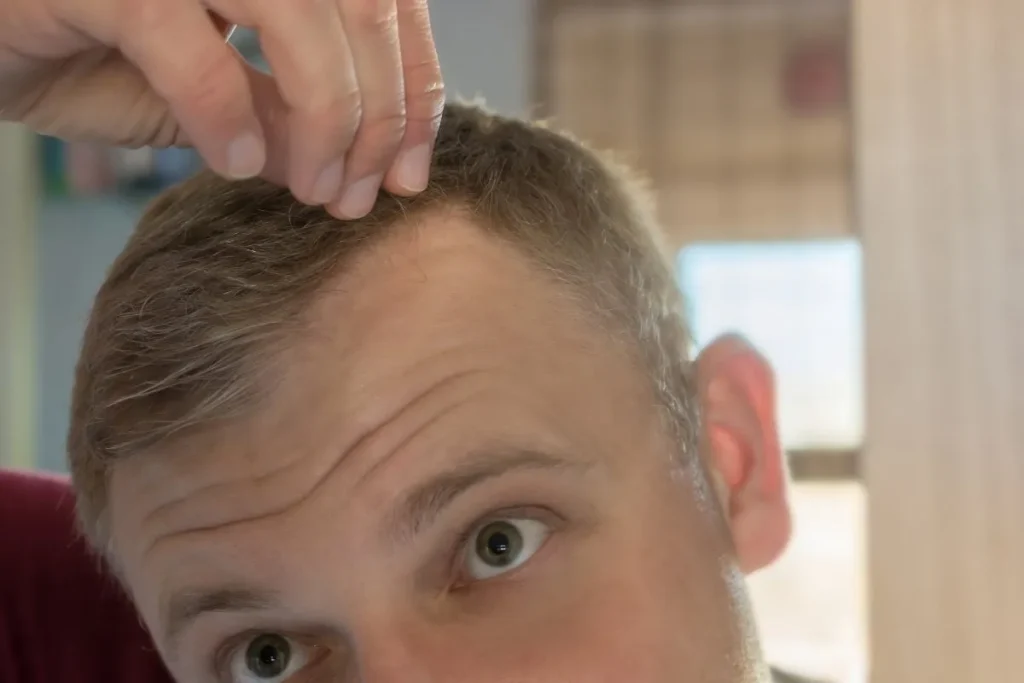
Changes in your hairline can worry you. But knowing if it’s just aging or balding is key. A maturing hairline is normal with age. On the other hand, a receding hairline might signal male pattern baldness.
About 25% of men start noticing hair loss by 21, and 50% by 50. It’s important to tell if your hairline is just aging or actually receding. This helps you tackle hair loss worries.
Receding hairline vs balding: get the shocking truth. Use our powerful guide to identify your loss type and find amazing ways to fix it.
Key Takeaways
Understanding the difference between a maturing and receding hairline is essential.
A maturing hairline is a natural aging process, while a receding hairline may indicate male pattern baldness.
Early identification can help determine the best course of action.
Understanding Hairline Changes

It’s important to know the difference between a maturing hairline and a receding one. As we age, our hairline changes. These changes can be due to aging or hair loss.
The Juvenile vs. Adult Hairline
A juvenile hairline is seen in teens and young adults. It’s lower and doesn’t recede much. On the other hand, an adult hairline is higher and may recede a bit. This usually happens between 17 and 27.
Experts say a mature hairline is a natural part of aging. It moves back and stabilizes, often without much balding. This is different from the hair loss seen in balding.
Hair Loss Statistics: How Common Is Early Balding?
Hair loss is common and affects many people. By 30, about 30% of men start to lose hair. By 50, this number jumps to around 50%. Early balding is caused by genetics, hormones, and the environment.
By age 30, about 30% of men experience hair loss.
By age 50, this figure rises to around 50%.
Hormonal factors, like dihydrotestosterone (DHT), play a big role in male pattern baldness.
Knowing these stats and causes helps us understand our hairline changes. It tells us if we’re just aging or if we’re losing hair.
Mature Hairline: A Natural Part of Aging

A mature hairline is a natural part of aging. It shows changes that differ from hair loss due to balding. As we age, our hairline changes, but it’s hard to know what’s normal.
One key sign of a mature hairline is the “one-inch rule.” This rule says a hairline that has moved back about one inch is normal for a mature hairline. But what does this really mean?
The One-Inch Rule: How Far Back Is Normal?
The “one-inch rule” helps figure out if a hairline recession is normal or a sign of balding. A recession of up to one inch is generally considered normal. It shows the natural maturation of the hairline.
To understand this better, consider the following:
A hairline that has receded slightly, keeping a smooth, even curve, is likely a mature hairline.
If the recession is more pronounced or uneven, it could be a sign of balding.
Age Timeline: When Mature Hairlines Typically Develop
Mature hairlines usually start in late twenties to early thirties. This process can go on into the forties and beyond. The timeline varies a lot among individuals, due to genetics and health.
It’s important to remember that while a mature hairline is natural, the rate and extent of recession can change. This is influenced by genetics and hormonal changes.
Visual Characteristics: Even Recession Across the Forehead
A mature hairline has an even recession across the forehead, keeping a symmetrical look. This evenness is a key difference between a mature hairline and a receding one, which often has uneven or patchy recession.
In conclusion, a mature hairline is a natural part of aging, marked by gradual and even recession. Knowing the “one-inch rule” and the typical age timeline helps understand hair health. It helps tell the difference between normal aging and balding.
Receding Hairline vs Balding: Spotting the Warning Signs
The difference between a maturing hairline and balding can be tricky. But, there are signs that can help you tell them apart. Knowing the difference is key when dealing with hair loss.
The M-Shaped Pattern: A Key Indicator
An M-shaped hairline is a clear sign of a receding hairline. It happens when hair at the temples starts to fall back, forming an ‘M’ shape. “The M-shaped hairline is a classic indicator of male pattern baldness,” says Dr. [Last Name], a top hair restoration expert. This shape is caused by hormonal changes, like the conversion of testosterone to DHT, which shrinks hair follicles.
Progression Patterns: Stability vs. Continued Loss
Watching how your hairline changes is also important. A mature hairline usually stops moving, but a receding one keeps going. “Monitoring the progression of your hair loss is vital in understanding whether you’re dealing with a receding hairline or balding,” advises Dr. [Last Name]. If your hair keeps falling, mainly at the crown or temples, it might be balding.
Hormonal Factors Behind Male Pattern Baldness
Hormones play a big part in male pattern baldness. The change of testosterone to DHT is a major cause of hair loss.
explains Dr. [Last Name]. Knowing about these hormonal changes can help you fight hair loss.
By spotting the signs of a receding hairline and understanding balding, you can manage your hair loss. This way, you can find good treatments.
Conclusion: Managing Your Changing Hairline
It’s important to know the difference between a mature and receding hairline. This knowledge helps you make better choices for your hair. By understanding your hairline, you can find the best way to care for it.
It can be hard to tell if your hairline is receding or maturing. But, knowing the signs can help you take charge of your hair’s future. Look at pictures of mature vs receding hairlines to see the differences.
Embracing your natural beauty boosts your confidence. Understanding your hairline and its changes is the first step. With the right advice, you can look and feel luxurious and elegant.
FAQ
What is the difference between a mature hairline and a receding hairline?
A mature hairline is a natural sign of aging. It recedes evenly across the forehead. On the other hand, a receding hairline is often a sign of male pattern baldness. It has an M-shaped pattern and uneven hair loss.
How can I tell if my hairline is receding or just maturing?
Look at your hairline. If it’s receding evenly, it might be maturing. But if it’s forming an M-shaped pattern, it could be receding. A mature hairline usually recedes about one inch from the original hairline.
What is the typical age range for a mature hairline to develop?
A mature hairline usually appears in men between 30 to 50 years old. It’s a natural part of aging.
Is a receding hairline a sign of balding?
Not always, but it can be a warning sign. A receding hairline might be a sign of male pattern baldness, caused by hormones. If you notice your hairline receding, watch it closely.
How common is hair loss among men?
Hair loss is common among men. Up to 80% of men will experience hair loss by age 80.
Can a mature hairline be distinguished from a balding hairline?
Yes, you can tell them apart. A mature hairline recedes evenly. A balding hairline has an M-shaped pattern and uneven hair loss. Knowing these differences can help you understand why your hairline is changing.
What are the hormonal factors behind male pattern baldness?
Male pattern baldness is often caused by hormones. The conversion of testosterone to dihydrotestosterone (DHT) leads to hair follicle shrinkage and hair loss.
How can I manage a changing hairline?
Embracing your natural beauty is key. Understanding why your hairline is changing helps. You can also try different hair care and styling techniques to look your best.
References
National Center for Biotechnology Information. Evidence-Based Medical Insight. Retrieved from https://pubmed.ncbi.nlm.nih.gov/17783348/


