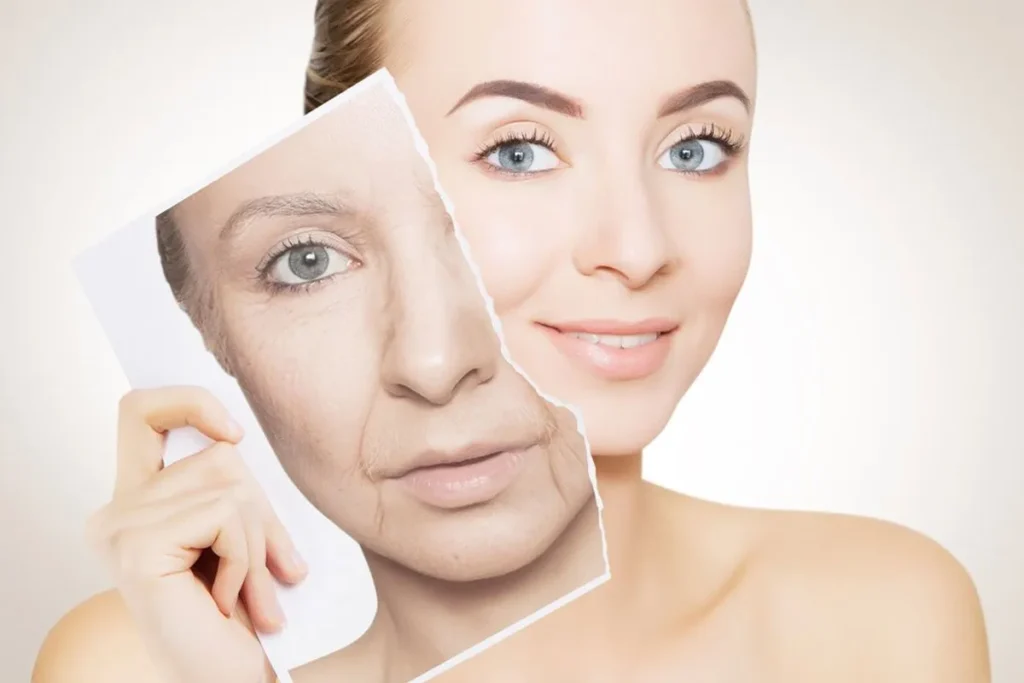
Did you know your skin starts showing aging signs in your twenties? Most changes become clear in your forties and later. It’s important to know these changes to keep your skin healthy and looking good.
The body’s biggest organ changes a lot as we get older. This includes losing collagen and elastin and getting more damage from the environment. As we age, our skin gets thinner, paler, and less stretchy. This can cause fine lines, wrinkles, and age spots.
Knowing about these age-related skin changes is the first step to keeping your skin healthy and glowing. In this article, we’ll look at the seven main signs of aging skin and what they mean for your skin’s health.
See as a person ages what happens to their skin in this vital guide. Learn how to fight painful wrinkles and achieve brilliant, glowing results.
Belangrijkste opmerkingen
Understand the changes that occur in your skin as you age
Learn about the seven key signs of aging skin
Discover how to maintain healthy, radiant skin
Explore the effects of aging on skin structure and function
Find out how to address common signs of aging skin
As a Person Ages What Happens to Their Skin
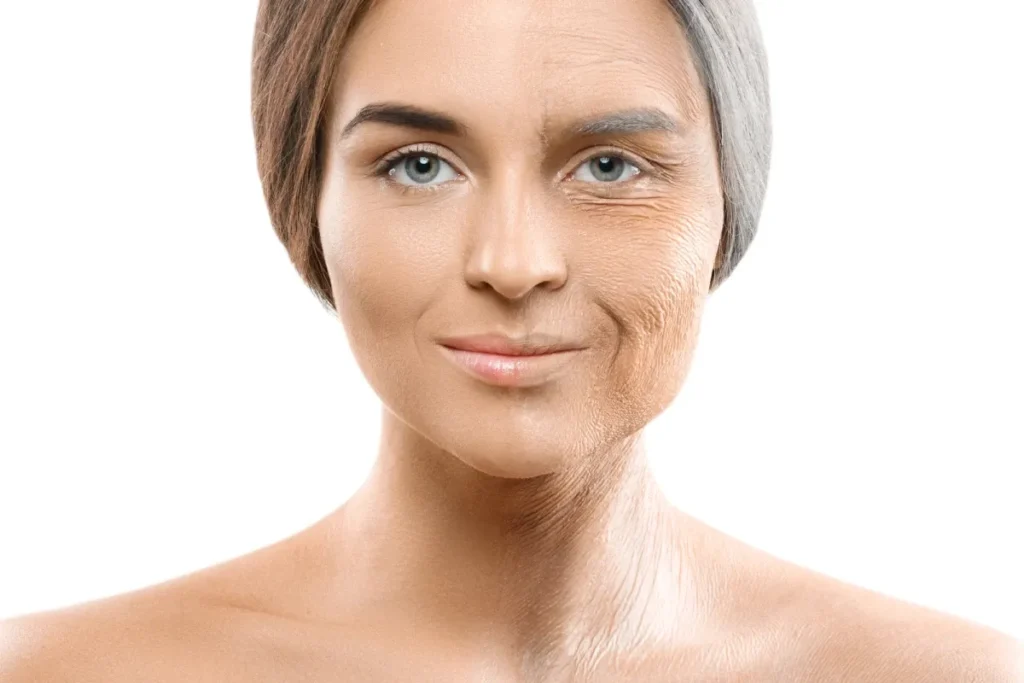
As we get older, our skin changes a lot. These changes affect how our skin looks and feels. Knowing about these changes helps us take better care of our skin.
Breakdown of Collagen and Elastin
Collagen and elastin are key for our skin’s strength and flexibility. But, as we age, our body makes less of these proteins. This leads to breakdown of collagen and elastin.
Our skin then loses its elasticity and firmness. It starts to sag and wrinkle. Medical sources say that losing elastic fibers and collagen makes our skin look older and more fragile.
Changes in Skin Structure and Function
With age, our skin’s structure and function change a lot. The outer layer gets thinner, paler, and less elastic. This makes our skin lose its plumpness and smoothness.
Our skin also regenerates itself slower with age. This makes it harder for our skin to fix itself. These changes can cause fine lines, wrinkles, and age spots to appear.
Understanding these changes helps us take care of our skin better. We can use skincare products that help our skin stay healthy and glowing. This includes using antioxidants and hydrating ingredients.
The 7 Key Signs of Aging Skin
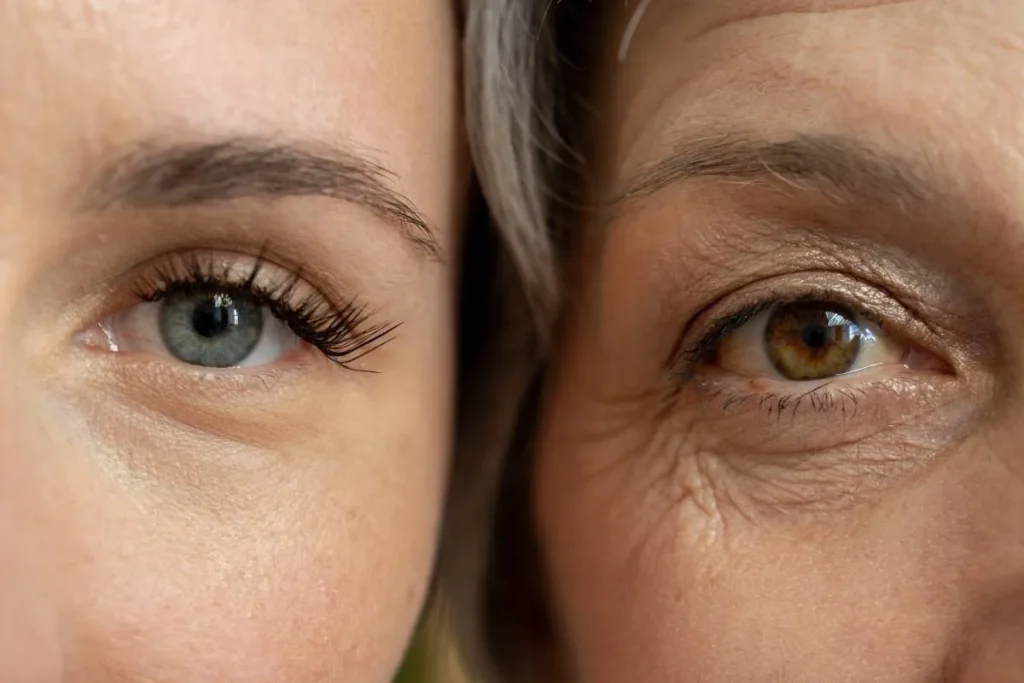
As we age, our skin changes in ways that can worry us. But knowing these changes helps us keep our skin looking bright. The breakdown of collagen and elastin, key proteins for skin health, is a big part of aging signs.
1. Thinning and Loss of Plumpness
One early sign of aging is when skin loses its plumpness and thins. This happens because our bodies make less collagen and hyaluronic acid. This leads to skin that looks less radiant and more fragile.
2. Decreased Elasticity and Sagging
When we age, our skin’s elasticity drops, causing it to sag. This is seen most around the eyes, mouth, and jaw. Keeping skin elastic is key to looking young.
3. Wrinkles and Fine Lines
Wrinkles and fine lines are clear signs of aging. They come from sun damage, smoking, and aging itself. Knowing why they happen helps us pick the right treatments.
4. Age Spots and Uneven Pigmentation
Age spots, or “liver spots,” are flat, brown marks from sun exposure. They, along with uneven skin color, make skin look older and uneven.
Spotting these signs is the first step to tackling them. By knowing why our skin ages, we can choose better skincare and treatments.
Factors That Influence Skin Aging
Skin aging is a complex process. It is influenced by many factors, both inside and outside of us. As we get older, our skin changes in many ways. These changes can be sped up or slowed down by different things.
Unavoidable Factors: Age, Gender, and Ethnicity
Some things that affect skin aging are things we can’t change. Age is a big one, as skin aging is a natural part of life. Gender also matters, with studies showing that women’s skin ages differently than men’s. Ethnicity is another factor, as different ethnic groups have different skin tones and characteristics that affect how skin ages.
- Medisch deskundige, dermatoloog
Lifestyle Factors: Sun Exposure, Smoking, Pollution, and Nutrition
Lifestyle choices also play a big role in skin aging. Sun exposure is a major factor, as UV rays damage skin cells and cause wrinkles. Smoking is harmful, as it reduces blood flow and damages skin elasticity. Pollution and poor nutrition can also speed up skin aging by causing stress and inflammation.
By knowing these factors, we can take steps to protect our skin. We can live a healthy lifestyle, use good skincare, and avoid bad habits like smoking.
Conclusie
Understanding aging skin is key to keeping your skin healthy and glowing. As we’ve seen, aging skin changes a lot. This includes less collagen and elastin, changes in skin structure, and how lifestyle affects it.
To fight aging skin, a good skincare routine is vital. It should include strategies to protect and nourish your skin. Use sunscreen, wear protective clothes, and avoid tanning beds to prevent damage.
By taking care of your skin, you can keep it looking young and vibrant. With the right skincare, you can achieve a lasting beauty that grows with you.
FAQ
What are the main signs of aging skin?
Aging skin shows 7 key signs. These include thinning and losing plumpness, and sagging. Wrinkles, fine lines, and age spots also appear. Dryness, loss of firmness, and a dull tone are other signs.
How does the breakdown of collagen and elastin affect the skin?
It leads to wrinkles, sagging, and reduced firmness because the skin loses strength and elasticity.
What are the unavoidable factors that influence skin aging?
Genetics, natural aging, hormonal changes, and gravity all play a role.
How can lifestyle factors impact skin aging?
Sun exposure, smoking, poor diet, stress, lack of sleep, and dehydration can accelerate aging.
What can be done to maintain healthy, youthful-looking skin?
Use sunscreen daily, moisturize, eat a balanced diet, stay hydrated, and follow a consistent skincare routine.
How does skin change with age?
Skin becomes thinner, drier, less elastic, and slower to repair itself.
What are age-related skin changes?
Wrinkles, fine lines, age spots, uneven tone, dryness, and loss of firmness.
How can I mitigate the effects of aging on my skin?
Protect from sun damage, avoid smoking, use antioxidants and retinoids, and maintain a healthy lifestyle.
Referenties
Nationaal Centrum voor Biotechnologie-informatie. Evidence-Based Medisch Inzicht. Opgehaald van https://pmc.ncbi.nlm.nih.gov/articles/PMC3840548/