
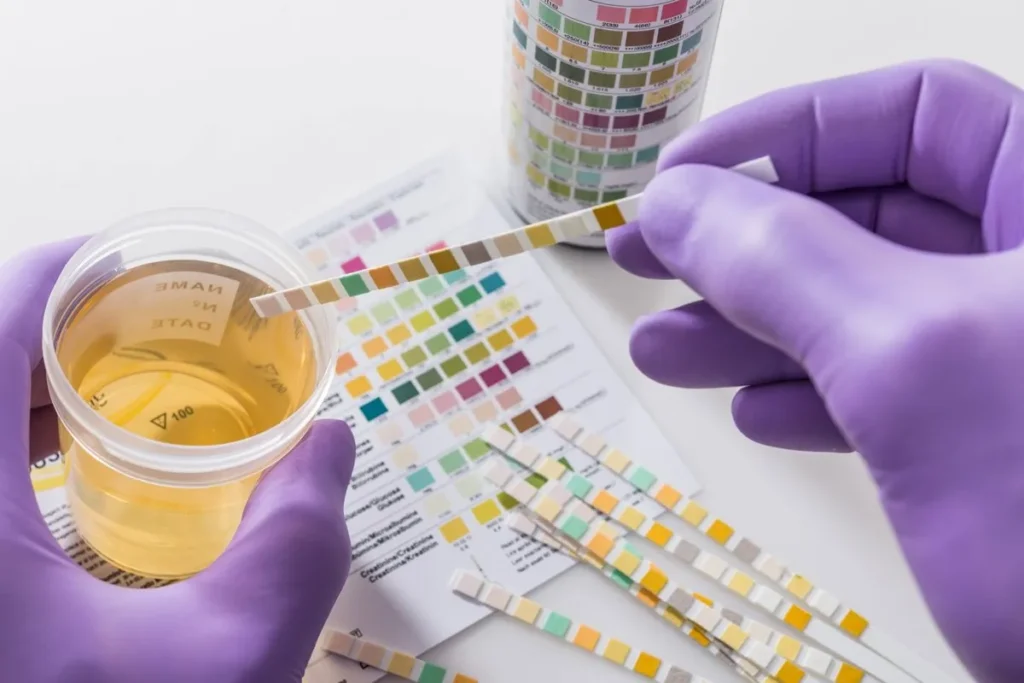
Many people wonder if drug testing through urine tests can show how much they’ve used. The answer is not a simple yes or no.
Urine drug tests aim to find drug metabolites above certain levels. They don’t measure how much you took. At GoldCity Center, we focus on health services with a strong ethics commitment.
It’s important to know what urine drug tests can and can’t do. These tests look for metabolites, not the drugs themselves. They can’t always tell you exactly how much you took.
Belangrijkste opmerkingen
Urine drug tests detect the presence of drug metabolites, not the actual drugs themselves.
These tests measure metabolites above specific cutoff thresholds.
The results cannot pinpoint exact dosage amounts with perfect accuracy.
Understanding test limitations is key for those facing drug testing.
Drug testing is used for many reasons, like employment and treatment monitoring.
How Urine Drug Tests Actually Work
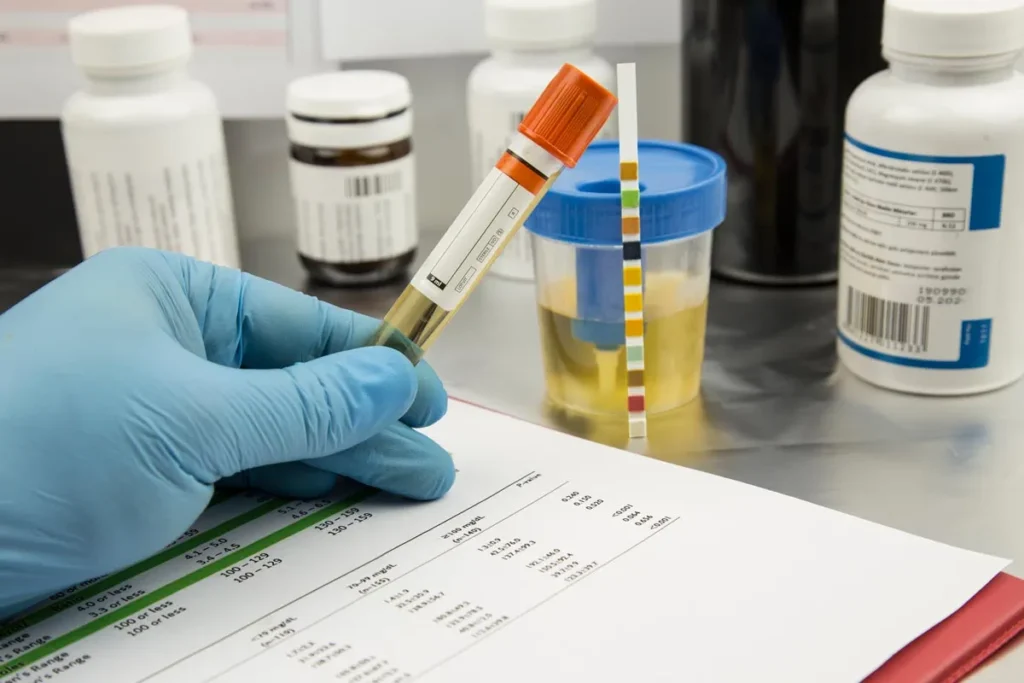
Urine drug testing is a complex process. It looks for drug metabolites in urine. To understand it, we need to know the science and steps involved.
The Science Behind Metabolite Detection
Drugs are broken down into metabolites in our bodies. These are then passed out through urine. A urine drug test checks for these metabolites. It compares them to set levels to find out if drugs were used.
For a standard test, about 30-45 mL of urine is needed. This amount is enough for the first test and any follow-up tests.
Metabolites are found through our body’s metabolic processes. How fast drugs are broken down varies. Things like how much water we drink and how often we use drugs can affect how long they stay in our urine.
Two-Step Testing Procedures
Urine drug tests have two steps. The first uses immunoassay tests to find drug metabolites. These tests are quick but can sometimes give false positives.
If the first test shows drugs were used, a second test is done. This uses liquid chromatography-tandem mass spectrometry (LC-MS). It’s very accurate and can tell exactly what drugs are in the urine. This two-step process makes sure the results are reliable.
Knowing how urine drug tests work helps us understand what they measure. It shows how much urine is needed and what happens to the sample. This knowledge helps us understand the results and what they mean.
Can a Urine Drug Test Show How Much You Take?
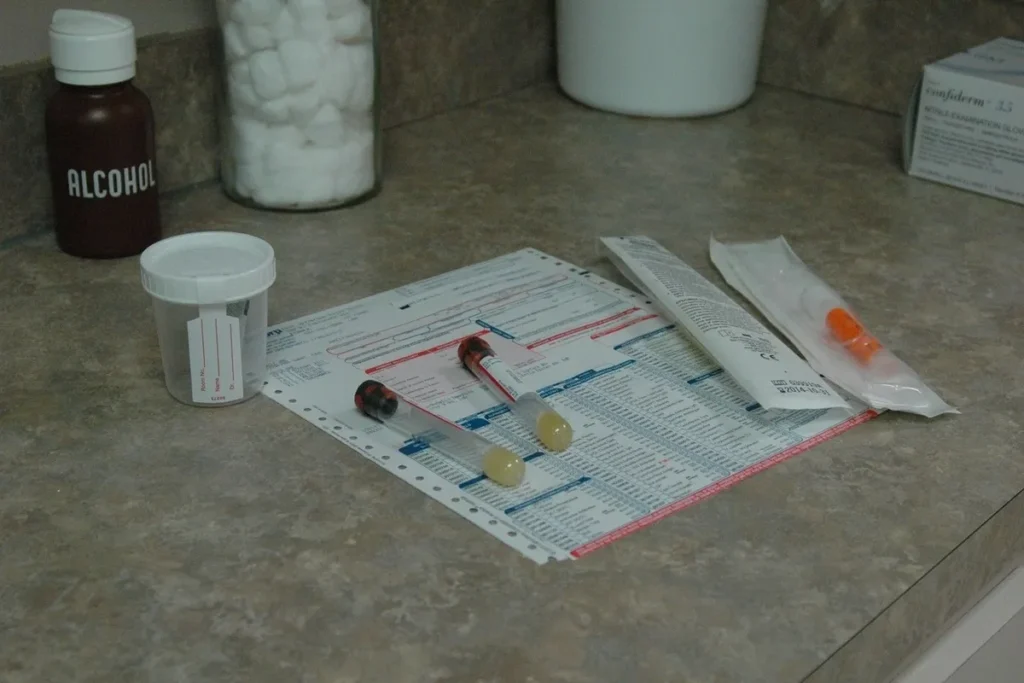
Urine drug tests can show if you’ve used drugs, but they can’t tell how much. These tests are common, used in over 90 percent of workplace drug screenings.
Qualitative vs. Quantitative Results
Urine tests can give you either qualitative or quantitative results. Qualitative results just say if a drug is there or not. Quantitative results tell you how much is there. Most tests at work are qualitative, but labs can give you exact amounts.
Knowing the difference is key. A qualitative test might say you’ve used a drug, but it won’t say how much.
Cutoff Levels and Their Significance
Cutoff levels are important in urine tests. They help decide if a test is positive or negative. If you have more of a drug than the cutoff, the test is positive.
Here’s a list of common cutoff levels:
Usually, 30-45 mL of urine is needed for a test. Knowing these levels and what kind of test you’re taking is key to understanding your results.
In summary, urine drug tests are good for spotting drug use. But they can’t tell you exactly how much you’ve used because of their design and results.
Practical Aspects of Urine Drug Testing
Knowing how urine drug tests work is key for both those giving the test and those taking it. This knowledge ensures fair testing and accurate results.
Sample Requirements and Collection
One important part of urine drug tests is the amount of urine needed. Most tests require 30 to 45 milliliters of urine, or 1 to 1.5 ounces. This is enough to detect drugs or their byproducts.
How you collect the urine is also important. It should go into a clean, dry container to avoid contamination. The container must be sealed and labeled with your ID to keep the sample safe. Handling and storing the sample right is key to getting accurate results.
Detection Windows for Common Substances
How long drugs stay in urine varies a lot. It depends on how your body works, how much you drink, and your health. For example, THC can stay in urine for weeks in heavy users.
The time drugs can be detected in urine varies from person to person. The type of drug, how much you use, and your body’s metabolism all affect this. So, if you’re wondering “how long will drugs show on a urine test”, it really depends on these factors.
Conclusie
Urine drug testing is used in many places, like jobs, courts, and health care. Knowing how urine drug tests work helps people feel more confident during tests.
How long drugs show up in urine tests varies. Some drugs can be found for just a few days. Others might stay detectable for weeks. Understanding how long a urine test detects drugs helps people prepare and know what the results mean.
It’s important to understand test results correctly. Many things can affect how long drugs are found in urine. Knowing the science behind these tests helps people make sense of the results and make good choices.
In the end, urine drug tests are helpful when used right. Knowing their strengths and weaknesses helps people know what to expect during tests.
FAQ
How does a urine drug test work?
A urine drug test looks for drug byproducts in your urine, not the drugs themselves. It has two steps: a first test and a second test to confirm the results.
Can a urine drug test show the exact amount of a drug taken?
No, it can’t. A urine drug test just says if a drug is there or not. It doesn’t tell how much was taken.
What are cutoff levels in urine drug tests?
Cutoff levels are set points to decide if a test is positive or negative. They help avoid false positives and ensure accurate results.
How much urine is required for a drug test?
For a drug test, you need at least 45ml of urine. But, some tests might need more or less, based on the test.
How long do drugs stay detectable in urine?
How long drugs stay in urine tests varies. It depends on how your body processes the drug, how much water you drink, and how often you use it. Most drugs can be found in urine for a few days. But, some might stay longer.
What factors influence detection times in urine drug tests?
Several things can affect how long drugs show up in urine tests. These include how your body breaks down the drug, how much water you drink, and how often you use it. The type of drug also plays a role.
How does the frequency of drug use affect detection times?
Using drugs often can make them harder to detect. This is because it takes longer for your body to get rid of the drug and its byproducts.
Can hydration levels impact urine drug test results?
Yes, how much water you drink can change your urine’s concentration. Drinking too much water can make your urine too diluted. This might lead to false negatives.
What is the difference between qualitative and quantitative urine drug test results?
Qualitative results just say if a drug is present or not. Quantitative results show how much of the drug is there. Urine drug tests usually give qualitative results.
How do metabolites in urine tests relate to drug use?
Metabolites are what your body makes from drugs. Urine tests find these metabolites. They show if you’ve used drugs.
Referenties
Nationaal Centrum voor Biotechnologie-informatie. Evidence-Based Medisch Inzicht. Opgehaald van https://pmc.ncbi.nlm.nih.gov/articles/PMC4920965/