Your body’s ability to heal wounds is complex and can be greatly influenced by the nutrients you give it. At GoldCity Center, we think that optimal nutrition is key to speeding up wound healing through many biological ways. Studies show that certain vitamins and minerals are vital in all three stages of healing: inflammatory, proliferative, and remodeling.
Feeding your body the right nutrients can make your healing journey better, helping with tissue repair and growth. By focusing on important nutrients, you can unlock your body’s natural healing power. This can help you look radiant from the inside out.
Foods good for wound healing accelerate the body’s repair process. Discover the best vitamins and proteins to help your skin heal perfectly and fast.
Belangrijkste opmerkingen
Proper nutrition is essential for wound healing.
Specific vitamins and minerals play critical roles in the healing process.
A well-balanced diet can support tissue repair and regeneration.
Nourishing your body with the right nutrients can accelerate healing.
A complete nutritional approach can lead to the best wound healing results.
The Science Behind Wound Healing
Wound healing is a complex process that needs good nutrition. It involves many cell types, growth factors, and nutrients working together. Good nutrition is key for each phase of healing, from the start to the end.
Three Critical Phases of Healing
Wound healing has several phases: hemostasis, inflammation, and proliferation followed by remodeling. Hemostasis stops bleeding by forming clots. The inflammatory phase clears debris and infection. The proliferation phase creates new tissue and covers the wound.
Nutritional support is vital in these phases. The body needs nutrients to heal well. For example, vitamin C helps make collagen, and zinc aids in cell growth.
How Nutrients Support Tissue Repair
Nutrients are key for tissue repair in wound healing. Vitamins and minerals help in many ways. Vitamin A aids in covering the wound, and vitamin E reduces stress and helps healing.
Enough protein is also important for repair. Zinc and vitamin C are directly involved in collagen production and immune support.
So, good nutrition is essential for wound care. It helps the body heal naturally and recover well.
6 Essential Vitamins and Minerals for Foods Good for Wound Healing
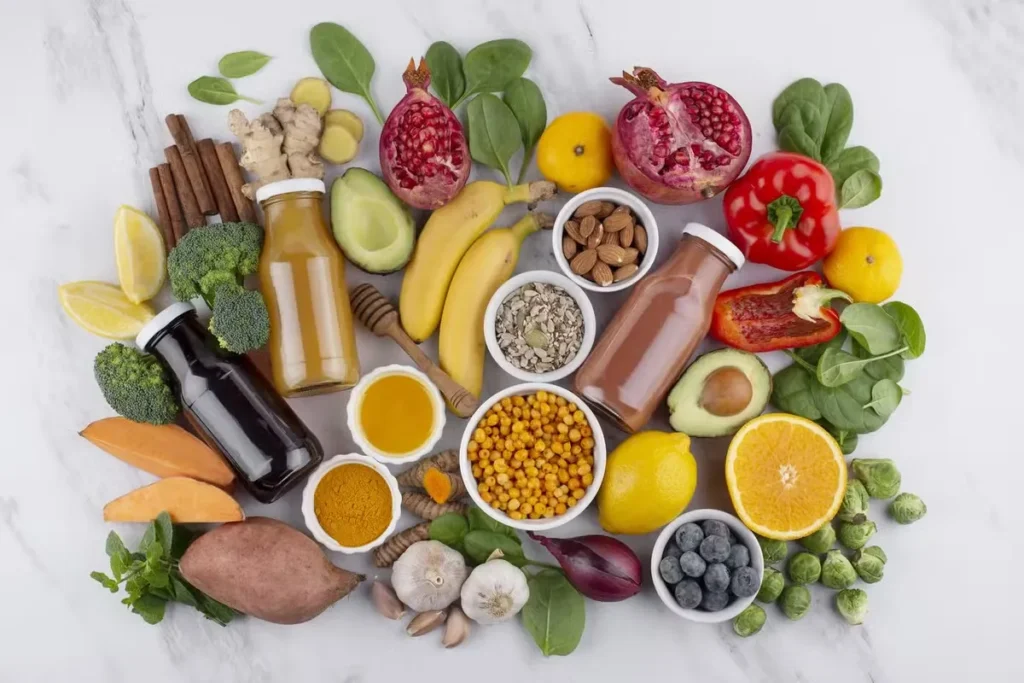
Getting the right nutrients is key for quick wound healing. Some vitamins and minerals are very important in this process. Eating foods rich in these nutrients can help your body heal faster.
Vitamine C: De collageenbouwer
Vitamin C is very important for healing wounds. It helps make collagen, which is needed to fix tissues. Eating foods like citrus fruits and bell peppers can help make more collagen, speeding up healing.
Zinc: The Cell Proliferation Catalyst
Zinc is key for growing new cells and making them work right. Foods like oysters and lean meats have a lot of zinc. They help your body heal wounds faster.
Vitamin A: The Epithelial Growth Stimulator
Vitamin A helps your skin grow back healthy. Eating foods like sweet potatoes and carrots, which are full of vitamin A, can help your skin heal faster.
Vitamin E: The Inflammation Reducer
Vitamin E is an antioxidant that fights inflammation and helps healing. Foods like nuts, seeds, and vegetable oils are full of vitamin E. They can help your body heal wounds better.
Eating foods rich in these vitamins and minerals can really help your body heal wounds. By choosing nutrient-rich foods, you support your body’s natural healing. This can help you recover faster.
Vitamin C: Supports collagen synthesis
Zinc: Essential for cell proliferation
Vitamin A: Stimulates epithelial growth
Vitamin E: Reduces inflammation
Knowing how these vitamins and minerals work can help you make better food choices. This can improve your wound healing journey.
6 Power-Packed Foods That Accelerate Healing
Discover the healing power of nature’s foods. These foods are full of nutrients that help wounds heal faster. Eating a balanced diet is key to giving your body what it needs to fix and grow tissues.
Citrus Fruits and Bell Peppers
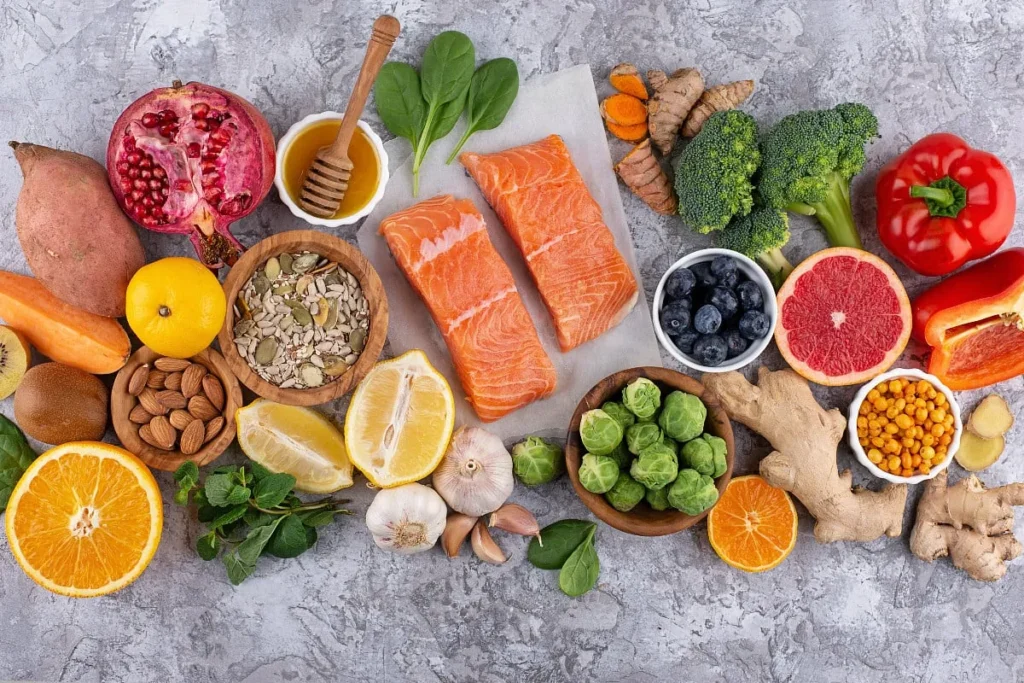
Citrus fruits like oranges and grapefruits, and bell peppers, are rich in Vitamin C. Vitamin C is important for making collagen and fixing tissues. These foods also have antioxidants that protect the wound from damage, helping it heal better.
Oysters and Lean Meats
Oysters and lean meats are exceptional sources of zinc. Zinc is key for cell growth and healing wounds. It also boosts the immune system, fighting off infections and helping wounds heal faster.
Enjoy oysters or a grilled lean steak to get zinc’s healing benefits.
Sweet Potatoes and Carrots
Sweet potatoes and carrots are packed with Vitamin A. Vitamin A helps wounds heal by growing new skin cells. It also keeps the skin healthy, making it stronger against damage.
Roast sweet potatoes or snack on carrot sticks to help your skin and speed up healing.
Nuts, Seeds, and Vegetable Oils
Nuts, seeds, and vegetable oils are rich in Vitamin E. Vitamin E fights inflammation and protects wounds from harm. It’s vital for healthy skin and helps the body heal naturally.
Snack on almonds or walnuts, or use olive oil on salads for Vitamin E’s benefits.
Adding these foods to your diet gives your body the nutrients it needs for faster wound healing. This ensures a quicker and more effective recovery.
Conclusion: Creating Your Wound-Healing Nutrition Plan
To “Glow like you mean it,” you need the right nutrients for healing. A good nutrition plan can really help your body recover. Knowing which vitamins help heal is key.
Vitamins like vitamin C, zinc, and vitamin A are important for fixing tissues. Eating foods high in these vitamins can speed up healing. For example, citrus fruits, oysters, sweet potatoes, and nuts are great choices.
Getting advice from a healthcare professional can help make a nutrition plan just for you. This way, you can make sure you’re getting the right foods for your body.
With the right diet, your body can heal faster. So, take charge of your nutrition. “Own your beauty” by choosing foods that make you feel good.
FAQ
What are the best vitamins for wound healing?
Vitamins C, A, and E are key for healing wounds. Vitamin C helps make collagen. Vitamin A boosts epithelial growth. Vitamin E fights inflammation. Together, they help repair tissues and improve health.
How does nutrition impact wound healing?
Nutrition gives the body what it needs to heal. It supports the body’s natural repair process. Good nutrition can speed up healing and boost overall health.
What foods are good for healing wounds?
Foods high in vitamins C, A, and E, zinc, and protein are great. Think citrus fruits, bell peppers, oysters, lean meats, sweet potatoes, carrots, nuts, seeds, and vegetable oils. These foods help repair tissues.
Can supplements support wound healing?
While foods are best, supplements can help too. Talk to a healthcare professional to find the right ones for you. Make sure they won’t clash with your meds.
How can I create a personalized wound-healing nutrition plan?
To make a plan, think about your nutritional needs, health, and what you like to eat. A healthcare professional or dietitian can help. They’ll create a plan that’s just right for you.
Are there any specific nutrients that promote wound healing?
Yes, protein, vitamin C, zinc, vitamin A, and vitamin E are vital. They help with collagen, cell growth, and reducing inflammation. This supports tissue repair and health.
How long does it take to see the benefits of proper nutrition on wound healing?
Proper nutrition can show benefits quickly. Wounds heal faster, and health improves in days or weeks. It depends on your health and the wound’s severity.
Referenties
National Center for Biotechnology Information. Evidence-Based Medical Insight. Retrieved from https://pmc.ncbi.nlm.nih.gov/articles/PMC3900114/