
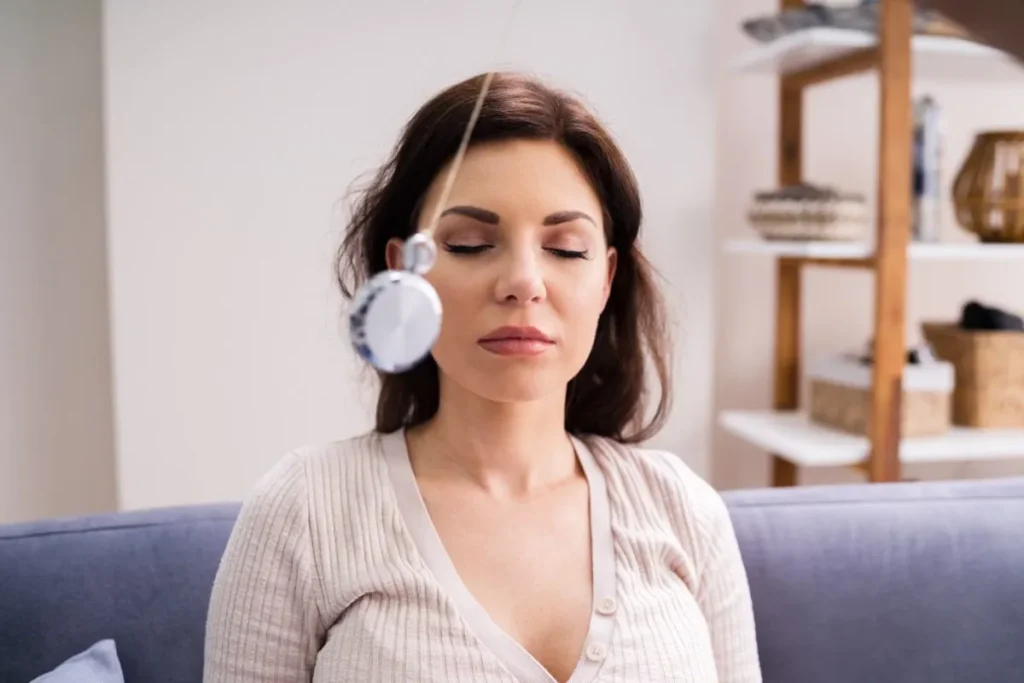
For centuries, hypnosis has been shrouded in mystery. It’s often misunderstood because of its portrayal in stage shows and fiction. But the truth about hypnotism is much more interesting and based on science.
Recent studies have shown that hypnosis is a state of consciousness. It’s marked by focused attention and heightened suggestibility. It’s not about losing control but tapping into the subconscious mind. As science digs deeper into hypnotism, its uses in medicine and therapy are becoming clearer.
Belangrijkste opmerkingen
Hypnosis is a scientifically recognized state of consciousness.
It involves focused attention and heightened suggestibility.
Hypnotism is not about losing control but accessing the subconscious.
Recent studies have validated the effectiveness of hypnosis in various medical applications.
Hypnosis has the power to change pain management and reduce anxiety.
Understanding Hypnosis: Definition and Scientific Basis

Hypnosis is a state of focused attention and heightened suggestibility. The American Psychological Association (APA) says it’s a state of consciousness with focused attention and reduced awareness. It also makes people more open to suggestions.
The State of Focused Attention and Enhanced Suggestibility
In hypnosis, people concentrate more and are more open to suggestions. It’s not about controlling someone’s mind. Research shows hypnosis changes brain activity in big ways.
The process includes:
Focused attention on the hypnotherapist’s suggestions
Reduced peripheral awareness, minimizing distractions
Enhanced suggestibility, allowing for deeper therapeutic impact
Decades of Scientific Research on Hypnotic Phenomena
For decades, scientists have studied hypnosis. They’ve found it changes brain activity and neurochemistry. Neuroimaging has shown how hypnosis affects the brain, showing its therapeutic value.
The evidence for hypnosis includes:
Neuroimaging studies showing changes in brain activity during hypnosis
Research on the neurochemical changes that occur during hypnotic states
Clinical applications of hypnosis in pain management, anxiety, and depression
Understanding hypnosis helps us see its value as a therapy. The future of hypnotherapy looks promising. Ongoing research will continue to reveal its benefits.
Is Hypnosis Real? Evidence From Neuroscience

Recent studies in neuroscience have shown that hypnosis is real. They found it has measurable effects on the brain. This section will look at the evidence, focusing on brain activity, neuroimaging studies, and neurochemical changes during hypnosis.
Measurable Effects on Brain Activity
Studies have found that hypnosis changes brain activity, mainly in areas related to attention and perception. Research shows hypnosis can change brain networks. This leads to how we process information and respond to suggestions differently.
A study in a reputable journal found hypnosis changes the brain’s default mode network. This network is for introspection and self-thinking. These changes make us more suggestible and focused, typical of hypnotic states.
Neuroimaging Studies and Brainwave Patterns
Tools like fMRI and EEG have helped us understand hypnosis. They show hypnosis is linked to specific brainwave patterns and activity changes.
A University of Zurich study used fMRI to look at brain activity during hypnosis. It found hypnosis changes brain networks, showing its real impact on brain function.
Neurochemical Changes During Hypnotic States
Hypnosis also changes the brain’s chemistry. Studies show changes in neurotransmitters during hypnosis. For example, hypnosis might affect dopamine levels, which is involved in rewards and motivation.
These chemical changes help explain hypnosis’s benefits, like less pain and better mood. By understanding these changes, researchers can create better hypnotherapies for different needs.
Clinical Applications and Effectiveness of Hypnotherapy
Hypnotherapy is becoming a key treatment for many health issues. It’s very effective in managing pain, helping with mental health, and treating anxiety and depression.
Meta-Analysis of Pain Management Studies
Many studies show hypnosis helps with pain. A big study looked at 85 controlled studies. It found hypnosis really helps people with chronic pain.
Key Findings on Hypnosis and Pain Relief:
Enhancing Cognitive Behavioral Therapy with Hypnosis
Hypnosis makes cognitive behavioral therapy (CBT) even better. It helps people focus and accept suggestions better. This makes therapy more effective.
The mix of hypnosis and CBT is a great way to treat mental health issues.
Treatment for Depression and Anxiety Disorders
Hypnotherapy also helps with depression and anxiety. It helps people relax and think less about worries. This makes it a good addition to other treatments.
Hypnotherapy is used in many ways and is getting more attention. It’s a helpful tool that can improve treatment results in many areas of health.
Conclusie
Hypnosis is a real and effective way to help people, backed by lots of scientific research. It can open new doors for treating many mental and physical issues. By understanding what hypnotism is, we can see its power.
Scientists have studied hypnosis a lot, and they’ve found it works well in hospitals. It can help with pain and make therapy more effective. This shows how useful hypnosis can be.
If you want to learn more about hypnosis, check out Wikipedia’s article on hypnosis. It explains how hypnosis works and its different uses. It’s a great place to start.
As more research comes out, hypnosis’s role in healthcare is becoming clearer. It’s a valuable tool that can help alongside other treatments. This makes hypnosis a key part of modern medicine.
FAQ
What is hypnosis?
Hypnosis is a state where you focus deeply and are more open to suggestions. It can be done by a therapist or yourself.
Is hypnosis real or just a myth?
Hypnosis is real. It’s supported by lots of scientific studies. These studies show it changes brain activity and chemistry.
Hoe beïnvloedt hypnose de hersenen?
Hypnosis changes brainwaves and neurochemistry. It also impacts areas of the brain related to attention, perception, and memory.
Can hypnosis be used for pain management?
Yes, hypnosis can help manage chronic pain. It can reduce pain and improve life quality.
Is hypnotherapy a recognized form of therapy?
Yes, hypnotherapy is recognized. It’s used to improve cognitive therapy, treat depression and anxiety, and boost well-being.
Can anyone be hypnotized?
Most people can be hypnotized. But, how well you respond can vary. Some people are more open to suggestions than others.
What is the difference between hypnosis and hypnotherapy?
Hypnosis is a state or condition. Hypnotherapy uses hypnosis to help make positive changes and improve well-being.
Is hypnosis the same as mind control?
No, hypnosis is not mind control. It’s a team effort between the hypnotherapist and the person. It aims to help and empower.
Can hypnosis be used for self-improvement?
Yes, using self-hypnosis can help improve yourself. It can boost confidence and support personal growth.
Referenties
Nationaal Centrum voor Biotechnologie-informatie. Evidence-Based Medisch Inzicht. Opgehaald van https://pubmed.ncbi.nlm.nih.gov/25564548/