
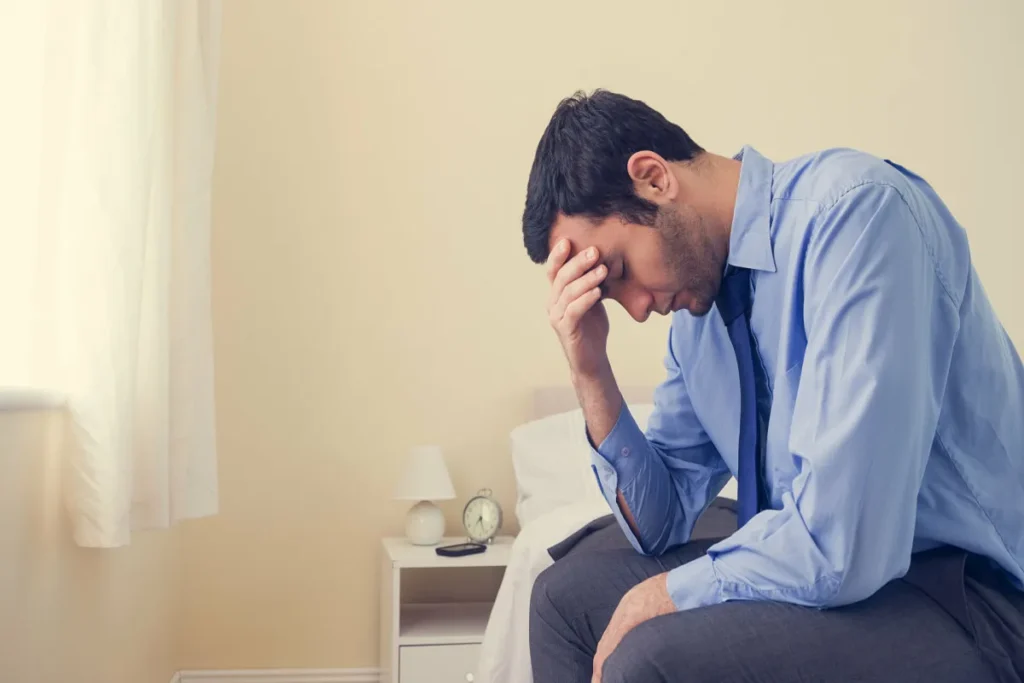
Depression in men is a big health issue that often isn’t seen or treated. Unlike the common idea of depression being sadness, men show symptoms as anger, aggression, and risky actions. This makes it hard for them and doctors to notice.
Depression in men can change how they feel and their body. This includes anger or irritability, sleep issues, feeling tired, and acting recklessly. Spotting these signs is key to getting help and feeling better.
Belangrijkste opmerkingen
Depression in men often shows differently than in women.
Common symptoms include anger, aggression, and physical complaints.
Men with depression may exhibit reckless behavior or have sleep problems.
Loss of interest in daily activities is a significant indicator.
Recognizing these signs is vital for early help.
Understanding Male Depression: A Hidden Crisis

It’s key to understand male depression because it shows differently than in women. This can lead to late diagnosis and treatment. Male depression is a big public health problem that needs our focus and understanding.
Depression in men often shows as anger, irritability, and aggression, not sadness or hopelessness. This makes it hard for doctors to spot depression in men.
Manifestation Differences
Men with depression might seem irritable or aggressive, seen as bad traits, not symptoms. They might talk about physical issues like fatigue, sleep problems, and losing interest in things they love.
Men are less likely to talk about feeling bad about themselves or hopeless. Instead, they show symptoms like anger or aggression, which are seen as okay for men.
The Concerning Statistics
The numbers on male depression are scary. Studies show men are less likely to get help for depression. When they do, it’s often when the problem is worse.
These numbers show we need to know more about male depression. We must also make sure men feel safe to get help without being judged.
Signs and Symptoms of Depression to look for in Males
Depression in men can be hard to spot. About 3 million men deal with anxiety and phobias. Half of them have both anxiety and depression. It’s key to know these signs to help them.
Anger, Irritability, and Aggressive Behavior
Men with depression might seem angry or irritable. This can look like they have a bad temper. It’s a big sign that something’s wrong.
This behavior can hurt relationships. It makes it hard for others to see the depression.
Risk-Taking Behavior and Substance Abuse
Some men might take risks or abuse substances to cope. This could mean reckless driving, being too promiscuous, or drinking too much.
These actions are often a sign of deeper emotional problems. They’re a way to ask for help.
Physical Complaints: Fatigue, Pain, and Digestive Issues
Depression can also show up physically. Men might feel tired, have unexplained pains, or have digestive problems. These symptoms can be confusing, as they might seem like other health issues.
It’s important to think about these physical signs along with other changes in behavior.
Social Withdrawal and Loss of Interest
A big sign of depression in men is pulling away from social activities. They might lose interest in hobbies, social events, or even sex.
This withdrawal can make them feel even more alone. It makes it harder for them to ask for help.
Knowing these signs helps us support men with depression. It encourages them to get professional help.
Depression and Anxiety Across Different Age Groups
Men face different challenges as they age, leading to unique symptoms of depression. It’s important to know that depression changes with age. This is due to a mix of biological, psychological, and social factors.
Depression in Young Men
Young men often struggle with depression due to various reasons. The need to succeed and societal expectations can weigh heavily. Signs of depression in young men might include irritability, anger, and risky behaviors. These can be mistaken for typical teenage or young adult traits.
It’s key for young men to see depression as a sign of needing help, not weakness. Talking openly about mental health can help them feel more at ease when seeking support.
Signs of Depression in Men Over 40
Depression in men over 40 can look different than in younger men. They might deal with aging parents, children leaving home, and health changes. Depression in men over 40 can show up as fatigue, pain, or digestive issues. These symptoms are often seen as signs of aging or other health problems.
Men in this age group should watch for signs of depression. If they feel sad, hopeless, or lose interest in activities, they should seek help.
Depression Challenges in Middle-Aged and Older Men
Middle-aged and older men face unique challenges that can lead to depression. These include retirement, declining health, and losing loved ones. Depression in older adults can be hard to spot, as it might be mistaken for grief or aging.
Depression signs in men over 60 include feeling numb, increased pain, dizziness, memory issues, and isolating themselves. It’s important for families and healthcare providers to look out for these signs. They should encourage older men to get professional help when needed.
Understanding how depression affects different age groups helps men recognize its signs. This knowledge empowers them to seek support. It’s a journey towards better mental health and well-being.
Conclusion: Breaking the Stigma and Seeking Help
Depression in men is a serious issue that often goes unnoticed. Recognizing the signs and symptoms is key to taking the first steps towards seeking help for depression.
Male depression can show differently than in women. It’s important to understand its unique signs. By breaking the stigma, men can feel more comfortable talking about their struggles.
Only 1 in 4 men get help for depression, despite big symptoms. This shows we need more awareness and support. By promoting a culture that encourages men to speak out, we can create a more supportive environment.
Seeking help is a sign of strength, not weakness. By taking control of their mental health, men can beat depression and live a healthier, happier life. Let’s work together to break the stigma and encourage those affected to seek the help they deserve.
FAQ
What are the common signs of depression in men?
Men with depression might show anger, irritability, or risk-taking. They might also complain about physical issues or pull back from social events. These signs are different from the usual sadness or hopelessness seen in depression.
How does depression manifest differently in men compared to women?
Men with depression might act aggressively or recklessly. Women are more likely to feel sad or emotionally distressed. Men might also turn to substance abuse or other ways to cope.
What are the signs of depression in men over 40?
Depression in men over 40 can be linked to aging, health problems, or big life changes. Signs include losing interest in activities, changes in appetite or sleep, and feeling tired or in pain.
Can depression and anxiety affect young men?
Yes, young men can suffer from depression and anxiety. They might show irritability, anger, or take risks. It’s important to recognize these signs and encourage them to get help.
How can men seek help for depression?
Men can talk to a healthcare professional, therapist, or a trusted friend or family member. Seeking help shows strength. There are many resources to support men with depression.
What is male depression, and how is it different from depression in general?
Male depression refers to how depression shows up in men, often with aggressive or external symptoms. The underlying issue is the same, but the symptoms and ways to cope can differ.
Are there any specific challenges men face when dealing with depression?
Men often struggle with societal expectations of masculinity. This can make it hard to admit and seek help for depression. Men might feel pressured to be strong or stoic, hiding their emotions and vulnerability.
Referenties
JAMA Network. Evidence-Based Medical Insight. Retrieved from https://jamanetwork.com/journals/jamapsychiatry/fullarticle/1740583





