
Stress is a big problem worldwide, affecting billions of people. In the U.S., nearly half of all adults say it affects their behavior. Globally, 37% of people deal with high stress every day. As health costs linked to stress keep going up, old ways to deal with it often don’t work.
Yoga has become a strong way to fight stress. It mixes physical activity, breathing methods, and meditation to calm the body’s stress response. By improving wellbeing yoga practices, people can start a journey to better health. GoldCity Center’s unique yoga approach helps on this journey, aiming for complete wellbeing.
Belangrijkste opmerkingen
Yoga is a scientifically-supported intervention for stress reduction.
Practicing yoga enhances overall wellbeing.
GoldCity Center offers a patient-centered approach to yoga.
Regular yoga practice can lead to better stress management.
Yoga combines physical movement, breathing, and meditation for holistic health.
The Critical Connection Between Stress and Wellbeing
Stress is a big problem in America today. It affects people and society in many ways. We need to know how stress impacts our wellbeing and the economy.
The Rising Stress Epidemic in America
Stress is everywhere in American life. It affects almost half of all U.S. adults, says the American Psychological Association. This stress problem is not just personal; it affects health, work, and the economy too.
The statistics are stark: chronic stress leads to health issues like heart disease and mental problems like anxiety and depression.
The Economic and Health Consequences of Chronic Stress
Stress costs a lot, with job stress alone costing U.S. employers over $300 billion a year. This shows how much stress affects both people and the economy.
Understanding the link between stress and wellbeing is key. By recognizing the stress problem, we can start to manage it. Yoga is one way to improve wellbeing and deal with stress.
Effective Yoga Practices for Stress Reduction
Yoga is a great way to reduce stress, backed by many studies. The International Journal of Yoga found that yoga boosts quality of life and lessens stress symptoms. Adding yoga poses and breathing techniques to your day can help you feel less stressed and more well.
Science-Backed Yoga Poses to Release Physical Tension
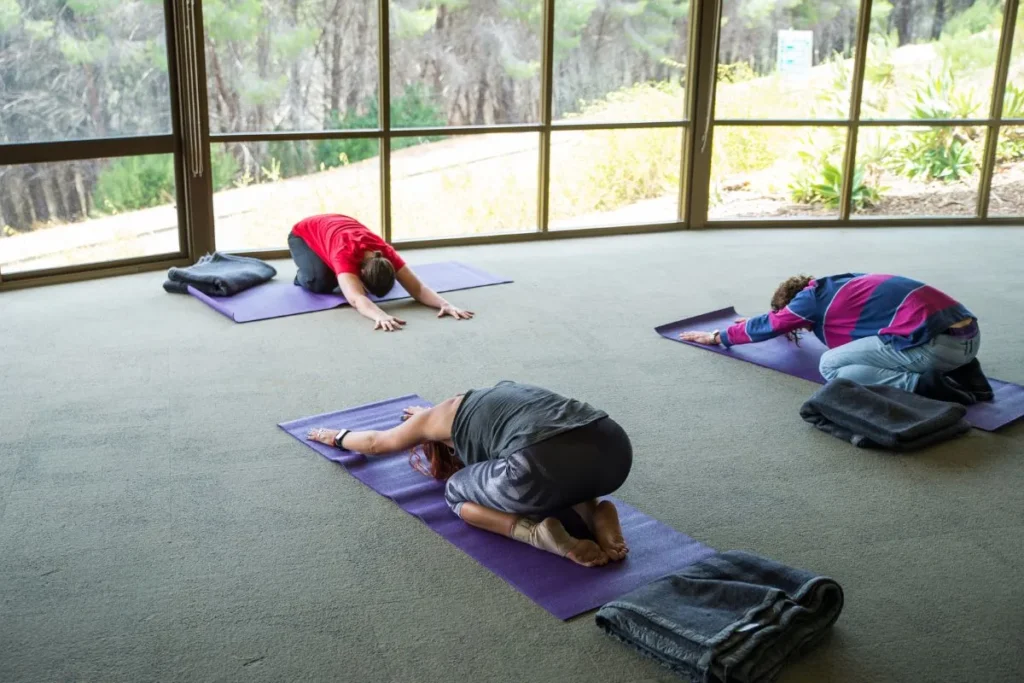
Some yoga poses are great for easing physical tension and stress. Child’s Pose (Balasana) is calming and stress-relieving. You kneel, sit back on your heels, stretch your arms out, and lower your forehead to the ground.
Cat-Cow Pose (Marjaryasana-Bitilasana) is also helpful. It stretches your spine and improves flexibility. You move slowly, arching and rounding your back, matching your breath to the movement.
Downward-Facing Dog (Adho Mukha Svanasana) stretches your back side and can calm your mind. It stretches from shoulders to heels, improving blood flow and reducing stress.
Breathing Techniques to Activate the Relaxation Response
Breathing techniques are key in yoga for stress relief. Diaphragmatic Breathing, or belly breathing, uses your diaphragm. It helps slow your heart rate and relaxes you.
Alternate Nostril Breathing (Nadi Shodhana) balances your breath and calms your nerves. You inhale through one nostril, then exhale through the other, switching sides.
Creating a 10-Minute Daily Yoga Routine
Creating a daily yoga routine is easy and rewarding. Start with a 10-minute practice. Begin with breathing exercises, then do gentle stretches like Cat-Cow Pose and Downward-Facing Dog.
Start with breathing exercises (2 minutes)
Move into gentle stretches (4 minutes)
Practice strengthening poses (2 minutes)
End with a relaxation or meditation technique (2 minutes)
Just a few minutes of yoga each day can greatly reduce stress. As you keep practicing, you’ll find you’re more resilient and better at handling life’s challenges.
Conclusion: Transforming Your Wellbeing Through Consistent Yoga Practice
Starting a consistent yoga practice can change your life for the better. It can make you sleep better, feel more emotionally stable, and understand yourself better. Yoga becomes a part of your daily life.
Effective yoga for stress relief includes poses backed by science, breathing exercises, and a daily routine. By sticking to it, you’ll feel a deep sense of wellbeing. This will make your life better in many ways.
Your yoga journey starts with just one step. By making yoga a regular part of your life, you’ll become more balanced and healthy. Yoga can truly transform your life, making you feel confident and in control of your wellbeing.
FAQ
What are the benefits of yoga for stress reduction and overall wellbeing?
Yoga combines physical movement, breathing, and meditation. It helps regulate stress in the body. This leads to better wellbeing and a calm state.
How does chronic stress impact mental health and behavior?
Chronic stress can cause anxiety and depression. It also changes behavior, making people more irritable and moody. It affects health in many ways.
What are some effective yoga poses for releasing physical tension?
Poses like Child’s Pose, Downward-Facing Dog, and Seated Forward Fold help release tension. They promote relaxation, reduce muscle strain, and improve flexibility.
How can breathing techniques be used to activate the relaxation response?
Diaphragmatic and Alternate Nostril Breathing calm the mind and body. They activate the relaxation response, reducing stress and anxiety.
How can I incorporate yoga into my daily routine for stress reduction?
Start with a daily yoga routine, even just 10 minutes. It can be tailored to fit your lifestyle. This promotes consistency and wellbeing.
What are some tips for getting started with yoga for wellbeing?
Begin with gentle yoga practices. Focus on your breath and listen to your body. Modify poses if needed. Consistency is key to yoga’s benefits.
Can yoga be practiced by anyone, regardless of age or fitness level?
Yes, yoga is adaptable for all ages and fitness levels. It’s accessible to everyone. Yoga promotes inclusivity and wellbeing for all.
Referenties
National Center for Biotechnology Information. Evidence-Based Medical Insight. Retrieved from https://pubmed.ncbi.nlm.nih.gov/40138057/