
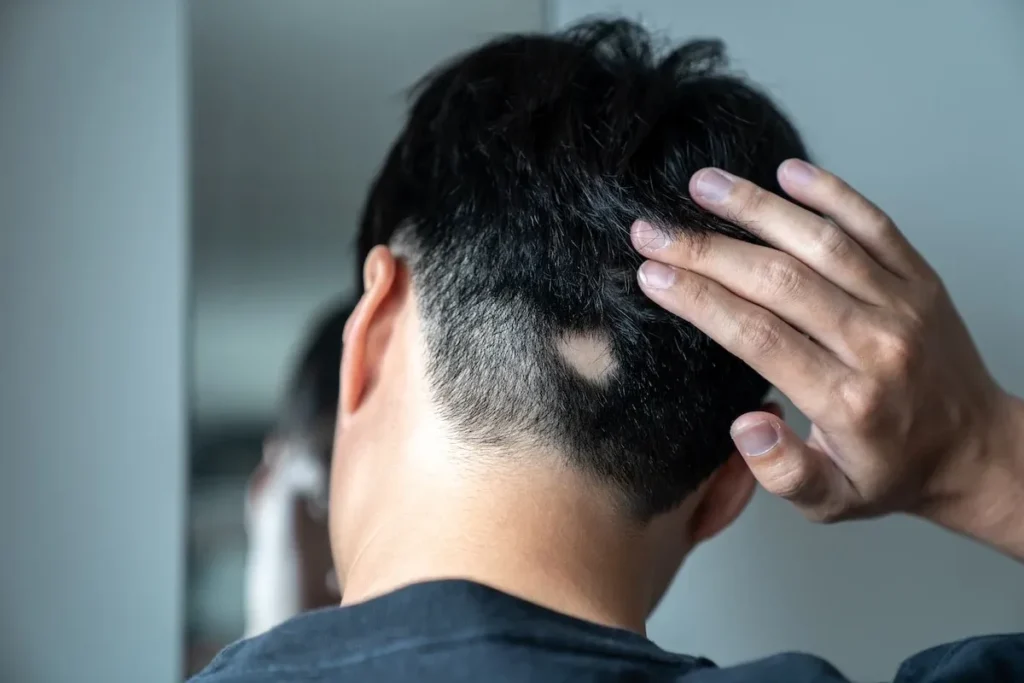
Alopecia areata is een auto-immuunziekte die de haarzakjes aanvalt, wat leidt tot haaruitval. Maar het goede nieuws is dat de haarzakjes intact blijven. Dit betekent dat er een kans is dat het haar teruggroeit.
Herstel is mogelijk en onderzoeken tonen aan dat bij 34-50% van de patiënten het haar binnen een jaar teruggroeit. Nieuwe behandelingen, zoals JAK-remmers, helpen mensen met matige tot ernstige gevallen.
Bij GoldCity Center stellen we jou centraal. We gebruiken de nieuwste medische technieken om je te helpen je innerlijke gloed te ontsluiten en je schoonheid te bezitten. Ons doel is om je een luxueuze transformatie te geven en je zelfvertrouwen een boost te geven.
Belangrijkste opmerkingen
Haarzakjes blijven intact, waardoor herstel mogelijk is.
Spontane haargroei treedt binnen een jaar op bij 34-50% van de patiënten.
Innovatieve behandelingen met JAK-remmers verbeteren de resultaten voor matige tot ernstige gevallen.
Een patiëntgerichte aanpak in het GoldCity Center combineert geavanceerde medische protocollen.
Herstel is mogelijk met de juiste behandeling en zorg.
Alopecia Areata en haarhergroei begrijpen
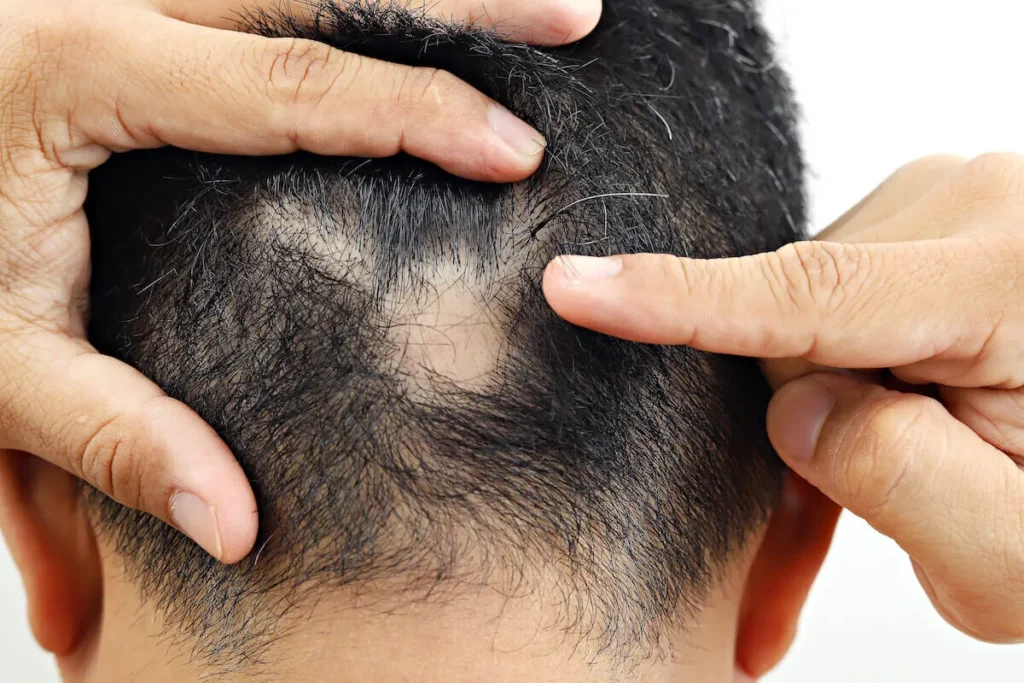
Alopecia areata is een auto-immuunziekte die haaruitval onvoorspelbaar maakt. Het verstoort de normale haargroeicyclus. Weten hoe het werkt is de eerste stap naar het terug laten groeien van haar.
De auto-immuun aard van Alopecia Areata
Alopecia areata ontstaat wanneer het immuunsysteem de haarzakjes aanvalt. Deze auto-immuunaanval stopt de haargroei tijdens de anagene fase. Dit weten helpt bij het vinden van behandelingen voor hergroei van alopecia areata haar.
Het kan overal voorkomen maar treft vaak de hoofdhuid. Studies tonen aan dat haarverlies een pauze is, geen permanent verlies. Dit geeft hoop voor haar om terug te groeien.
Waarom haarfollikels in staat blijven tot hergroei
Een goede eigenschap van alopecia areata is dat haarzakjes terug kunnen groeien. In tegenstelling tot andere vormen van haaruitval, slapen deze follikels gewoon. Dit is essentieel om te begrijpen hoe lang het duurt voordat alopecia teruggroeit en om het succes van de behandeling te begrijpen.
Studies tonen aan dat veel mensen hun haar vanzelf terugkrijgen. Dit toont aan dat geduld en het vermogen van het lichaam om te genezen belangrijk zijn.
Herstelstatistieken: Wat onderzoek aantoont
Onderzoek toont aan dat 34-50% van de mensen met vlekkerig haarverlies binnen een jaar beter wordt. Dit toont aan dat het lichaam zichzelf kan genezen. Maar het is ook belangrijk om te weten dat de aandoening terug kan komen.
Als mensen deze feiten kennen, kunnen ze beter met hun aandoening omgaan. Het motiveert hen om nieuwe behandelingen voor alopecia haargroei te vinden.
Hoe lang duurt Alopecia Areata: hersteltijdlijnen
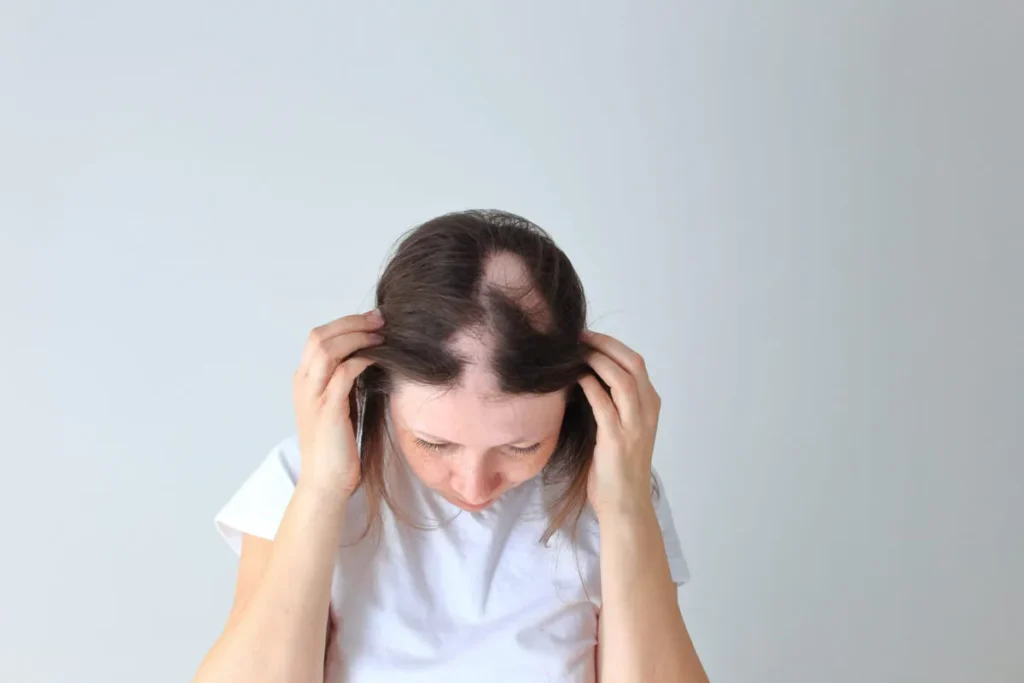
De hersteltijd van Alopecia areata kan sterk variëren. Dit hangt af van hoe ernstig de aandoening is. Als mensen weten wat het herstel beïnvloedt, kunnen ze beter plannen en de juiste behandeling kiezen.
Duurpatronen voor verschillende ernstniveaus
De tijd die nodig is voor het herstel van alopecia areata hangt af van de ernst van de aandoening. Mensen met milde gevallen, waarbij de haaruitval beperkt is, hebben meestal een betere kans op herstel. Studies tonen aan dat intralesionale triamcinolone injecties goed werken. Meer dan 80% van de patiënten zag het haar teruggroeien in 4-6 weken.
Degenen met ernstigere gevallen hebben mogelijk sterkere behandelingen nodig. Nieuwe behandelingen zoals JAK-remmers, zoals ruxolitinib en baricitinib, hebben goede resultaten laten zien. Ongeveer 75% van de patiënten ziet een significante haargroei.
Behandelopties die haargroei versnellen
Het kiezen van de juiste behandeling is de sleutel tot hoe snel alopecia areata kan herstellen. Mogelijkheden zijn onder andere intralesionale corticosteroïden injecties en JAK-remmers. Andere behandelingen zoals topische corticosteroïden, minoxidil en anthralin kunnen ook worden overwogen.
Responspercentages behandeling:
Intralesionale corticosteroïden: 80% effectief in milde gevallen binnen 4-6 weken
JAK-remmers: 75% effectief in matige tot ernstige gevallen
Topische behandelingen: Wisselende respons, vaak gebruikt in combinatie met andere therapieën
Omgaan met herhaling: De cyclische aard van Alopecia Areata
Alopecia areata is een chronische aandoening met periodes van remissie en terugkeer. Om recidief onder controle te houden, is het belangrijk om proactief te blijven met behandeling en monitoring. Inzicht in de cyclische aard van de aandoening helpt mensen zich voor te bereiden op opflakkeringen en hun behandelplan aan te passen.
Alopecia areata is voor velen een terugkerend probleem. Het gaat om episodes van haaruitval gevolgd door hergroei. Door nauw samen te werken met een zorgverlener en op de hoogte te blijven van behandelingen kun je de aandoening beter beheersen en het risico op toekomstige episodes verminderen.
Conclusie: Realistische verwachtingen voor herstel van Alopecia Areata
Alopecia areata kan moeilijk zijn, maar kennis erover en de behandelingen helpt. Het is moeilijk te zeggen hoe lang het duurt voordat een kale plek teruggroeit. Maar studies tonen aan dat minder dan 10% van de mensen hun haar voorgoed terugkrijgt.
Voor mensen die alopecia areata zien teruggroeien, is het belangrijk om realistische verwachtingen te hebben. Haar kan teruggroeien, maar dat kost tijd en is niet altijd zeker. Een dermatoloog, die verstand heeft van deze aandoening, kan veel helpen. Hij of zij kan advies geven over hoe je haar sneller kan groeien en hoe je kunt voorkomen dat het weer uitvalt.
Mensen met een kale plek met lang haar of een kale plek hebben veel manieren om hun haar te laten groeien. Weten dat alopecia areata een auto-immuunziekte is en de juiste behandelingen gebruiken kan helpen. Ook al is het een lange reis, er is hoop dat het haar teruggroeit. Met de juiste stappen kunnen mensen alopecia areata op een positieve manier laten teruggroeien.
Advies krijgen van een dermatoloog is heel belangrijk. Een telegezondheidsbezoek is een goede eerste stap. Maar een persoonlijk bezoek aan een specialist kan je een behandelplan geven dat bij je past. Dit kan vragen beantwoorden zoals alopecia areata groeit het haar terug.
FAQ
Hoe lang duurt alopecia areata?
De lengte van Alopecia areata varieert sterk van persoon tot persoon. Het volgt vaak een cyclus van haaruitval en hergroei.
Is alopecia areata blijvend?
Nee, het is niet permanent. Haarzakjes blijven leven en kunnen opnieuw haar laten groeien.
Groeit je haar terug als je alopecia hebt?
Ja, haar groeit vaak terug na alopecia areata. Maar hoe snel en hoeveel kan verschillen.
Hoe lang duurt het voordat alopecia teruggroeit?
De tijd dat het haar teruggroeit varieert. Het kan maanden tot jaren duren, afhankelijk van de ernst en individuele factoren.
Kan alopecia teruggroeien?
Ja, haar kan teruggroeien met of zonder behandeling. Behandelingen kunnen het proces versnellen.
Gaat alopecia areata vanzelf over?
Alopecia areata kan in remissie gaan. Maar het kan terugkomen, en voortdurende zorg kan nodig zijn.
Wat zijn de behandelingsmogelijkheden voor alopecia areata?
Behandelingen bestaan uit topische corticosteroïden, minoxidil, anthralin en soms systemische corticosteroïden of immunotherapie. Deze hebben als doel de haargroei te bevorderen en de symptomen te beheersen.
Hoe kan ik omgaan met het terugkeren van alopecia areata?
Om herhaling te beheersen, zijn medische behandelingen, veranderingen in levensstijl en stressmanagement nodig. Stress kan episodes uitlokken.
Bestaat er een behandeling voor alopecia areata?
Er is nog geen definitieve behandeling. Maar behandelingen kunnen de aandoening beheersen en helpen het haar terug te laten groeien.
Kan ik voorkomen dat alopecia areata terugkomt?
Het voorkomen van een herhaling is niet gegarandeerd. Maar een gezonde levensstijl, stressmanagement en het volgen van behandelplannen kunnen het risico verlagen.
Referenties
Nationaal Centrum voor Biotechnologie-informatie. Evidence-Based Medisch Inzicht. Opgehaald van https://pubmed.ncbi.nlm.nih.gov/19836680/





