
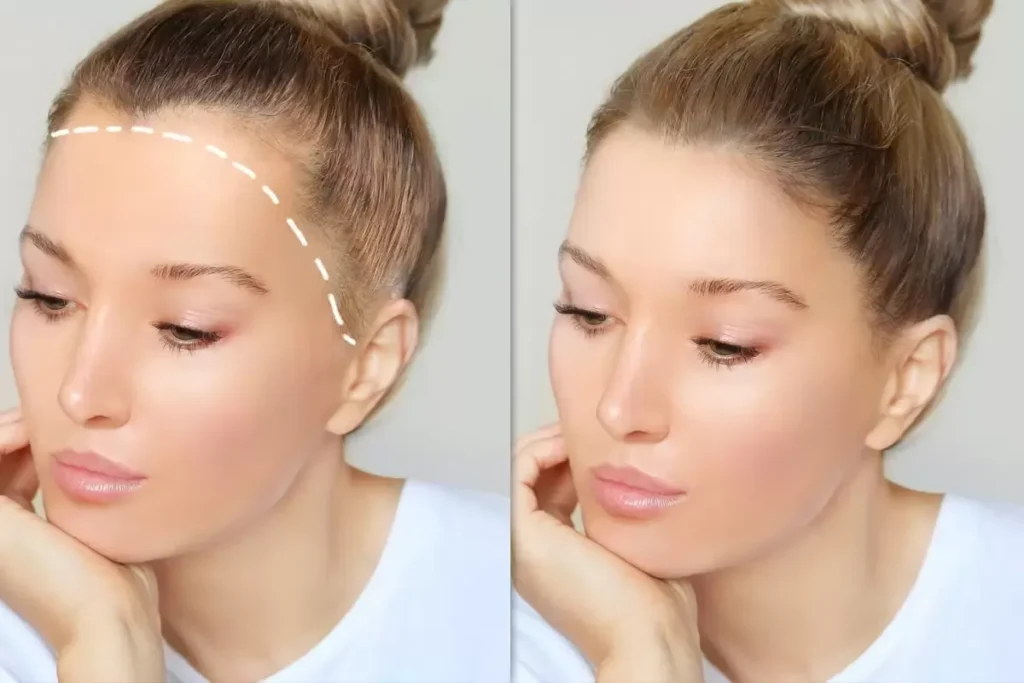
A receding hairline can really upset women, making them feel less confident and changing how they look. Studies show that by age 50, about 40 percent of women start to lose their hair. Female pattern hair loss (FPHL) is a big problem for many.
FPHL hits up to 52.2% of women after menopause, showing as thinning at the crown and a wider part line. Knowing why and how to fix a female receding hairline is key to feeling good about how you look again.
Belangrijkste opmerkingen
Female pattern hair loss affects a significant percentage of women by age 50.
Up to 52.2% of post-menopausal women experience FPHL.
Gradual thinning at the crown and widening of the part line are common symptoms.
Understanding the causes is key to addressing the condition.
Effective treatments can help regain confidence in one’s appearance.
Understanding Female Hair Loss and Receding Hairlines
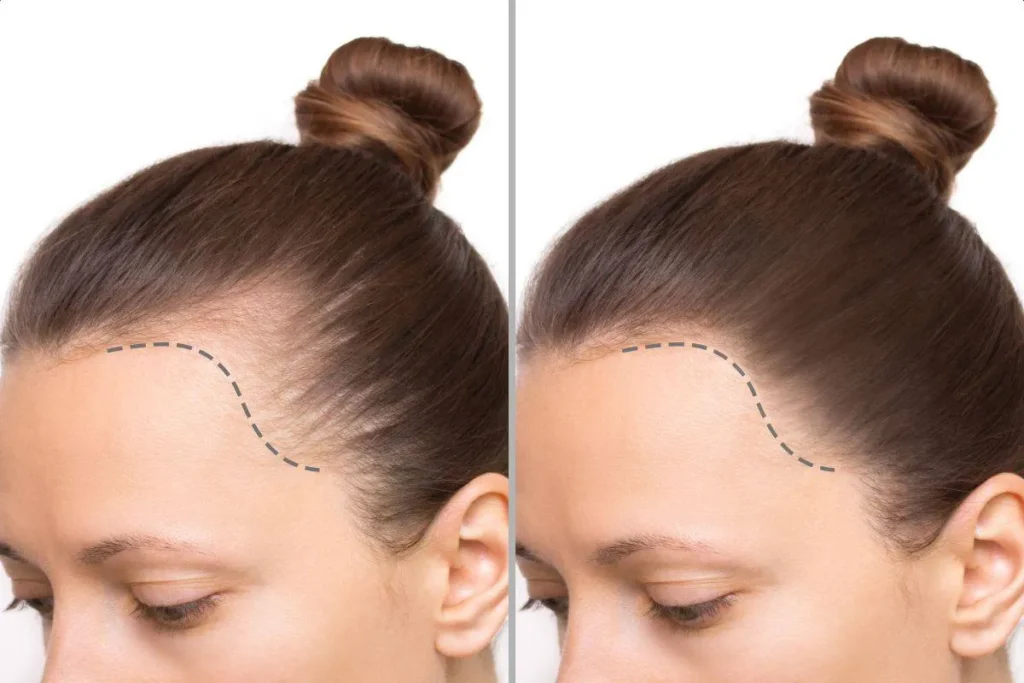
Female hair loss is different from male pattern baldness. Women often see thinning hair all over, not just a receding hairline. Knowing this helps find the right treatment.
De prevalentie van haaruitval bij vrouwen
Many women worldwide deal with hair loss. Studies show about 40% of women have hair loss by age 50. Hormonal changes, genetics, and hairstyles can cause it.
Hoe haaruitval bij vrouwen verschilt van kaalheid bij mannen
Female hair loss is not the same as male pattern baldness. Women usually see thinning hair all over, not just a receding hairline. This is because hormones affect hair growth differently in men and women.
Common Causes of Receding Hairlines in Women
Several things can lead to receding hairlines in women, including:
Hormonal changes from pregnancy, menopause, or thyroid issues
Genetic tendency to lose hair
Damage from tight hairstyles like braids or ponytails
Conditions like frontal fibrosing alopecia and traction alopecia
Understanding these causes is the first step for women to tackle hair loss. It helps find effective solutions.
How to Fix Hairline Female: Identifying Your Hair Loss Pattern
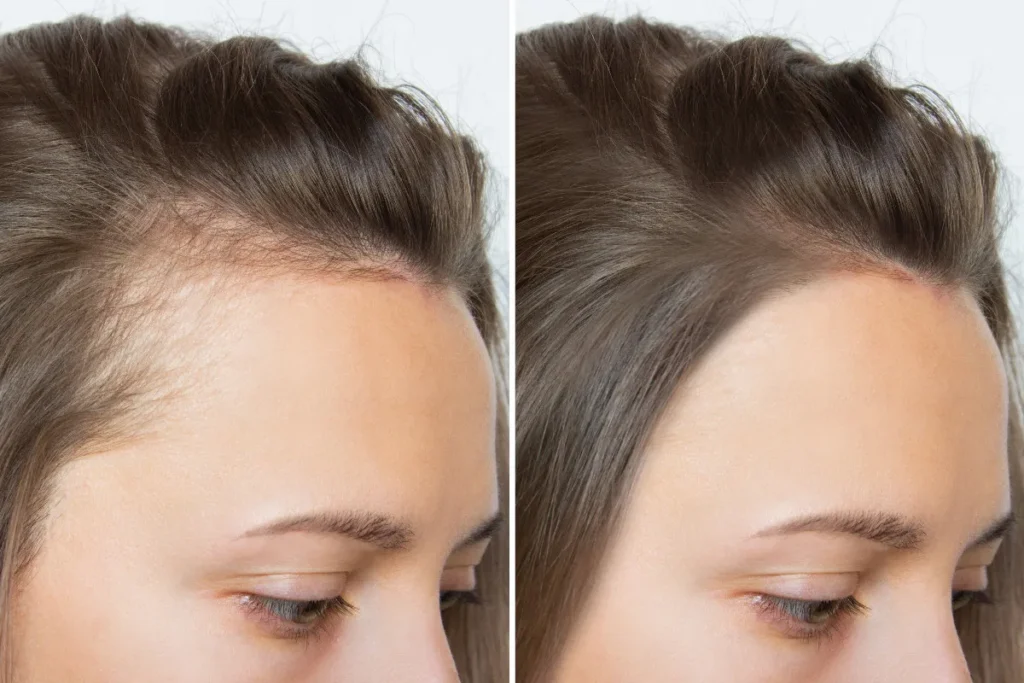
To fix a receding hairline, women must first understand the causes and patterns of hair loss. Knowing your hair loss pattern is key to getting a fuller head of hair. It involves spotting the signs of a receding hairline and figuring out if the loss is temporary or permanent.
Signs of a Receding Hairline in Women
A receding hairline in women can show up in several ways. You might notice a widening part line and thinning around the crown. These signs can be upsetting, but knowing the causes helps in finding the right solution. Women often see overall hair thinning, mainly on the scalp’s top.
Distinguishing Between Temporary and Permanent Hair Loss
It’s important to tell apart temporary and permanent hair loss. Temporary loss can be due to stress, poor nutrition, or some medical treatments. Permanent loss, like female pattern hair loss, is often inherited and harder to treat. Knowing the type of hair loss you have is key to choosing the right treatment.
Wanneer professionele hulp zoeken?
If you’re seeing your hairline recede, it’s wise to seek professional help. A healthcare professional or dermatologist can check your condition and suggest treatments tailored to you.
Diagnostic Tests for Female Hair Loss
Tests for female hair loss might include a scalp examination and a look at your medical history. These tests help find any conditions that might be causing your hair loss. Sometimes, blood tests are also suggested to check for health issues.
By understanding your hair loss pattern and getting professional advice when needed, you can start regrowing your hairline. This can help you regain your confidence.
Effective Treatments for Female Receding Hairlines
A receding hairline in women can be treated in many ways. This includes simple home remedies and advanced medical procedures. It’s important to know what options are available to choose the best one.
Thuisoplossingen
Many women start with at-home treatments. One top recommendation is minoxidil, a topical solution that helps hair grow and slows loss. Gentle hair care, like mild shampoos and less heat styling, also helps hair stay healthy.
Use gentle, sulfate-free shampoos to minimize hair damage.
Avoid excessive heat styling to reduce hair breakage.
Incorporate a balanced diet rich in vitamins and minerals that support hair health.
Professionele medische behandelingen
For more serious hair loss, professional treatments are needed. PRP (Platelet-rich Plasma) therapy is a favorite, using the patient’s own blood to boost hair growth. Hair transplant surgery is another option, moving healthy hair follicles to thinning areas.
Consult with a dermatologist or hair restoration specialist to determine the best course of treatment.
Consider PRP therapy for its minimally invasive nature and significant hair regrowth.
Hair transplant surgery is a more invasive option but can provide long-lasting results.
Lifestyle Changes to Support Hair Regrowth
Medical treatments aren’t the only way to help hair grow. Making lifestyle changes can also help. Reducing stress through meditation or yoga can prevent stress-related hair loss. A balanced diet full of nutrients like biotin, vitamin D, and omega-3 fatty acids is also key.
Practice stress-reducing techniques like meditation or yoga.
Eat a nutrient-rich diet that includes foods beneficial for hair health.
Avoid hairstyles that pull on the hair, such as tight braids or ponytails.
Exploring these treatment options and making informed choices can help women tackle a receding hairline. This way, they can work towards having a fuller, healthier head of hair.
Conclusion: Creating a Comprehensive Hair Restoration Plan
Fixing a receding hairline in women needs a detailed plan. It involves understanding why hair falls out, picking the right treatments, and making healthy lifestyle choices. Knowing the cause of hair loss is key to fixing a receding hairline.
A good hair restoration plan looks at different treatments. This includes things you can do at home and professional medical options. Women can find the best way to fix their hairline by exploring these choices.
Combining medical treatments with lifestyle changes is vital for hair regrowth. This approach helps women grow back their hair and feel more confident. Learning how to regrow hairline female patterns is the first step to a more youthful look.
For women with receding hairlines, a well-thought-out plan can help a lot. By tackling the root causes of hair loss and using effective treatments, women can overcome hair loss challenges. This leads to a fuller, healthier head of hair.
FAQ
What are the common causes of a receding hairline in women?
Hormonal changes, genetics, and bad hairstyles can cause a receding hairline. Knowing the cause is key to finding the right treatment.
How can I identify if my hair loss is temporary or permanent?
Look at your hair loss pattern. A wider part or thinning hair might mean a receding hairline. A pro can tell you if it’s temporary or not.
What are the available treatments for a receding hairline in women?
You can try minoxidil and gentle hair care at home. For more, there’s PRP therapy and hair transplants. Don’t forget stress management and a healthy diet for hair growth.
How can I regrow my hairline as a female?
First, figure out why you’re losing hair. Then, pick the right treatments and make lifestyle changes. Minoxidil, stress control, and a balanced diet can help your hair grow back.
Is a receding hairline in women a common issue?
Yes, many women face female pattern hair loss. This can show as a receding hairline or thinning at the crown.
Can I fix an uneven hairline?
Yes, you can fix an uneven hairline. Try at-home solutions or professional treatments. A pro can guide you on the best option.
What diagnostic tests are used to determine the cause of female hair loss?
Tests include blood work for hormones, scalp checks, and more. They help find why you’re losing hair.
Are there any lifestyle changes that can help support hair regrowth?
Yes, managing stress, eating well, and gentle hair care are key. They help your hair grow back.
How can I create a complete hair restoration plan?
Start by understanding your hair loss causes and pattern. Then, look at treatment options. Your plan should fit your needs, with medical treatments and lifestyle changes.
Referenties
National Center for Biotechnology Information. Evidence-Based Medical Insight. Retrieved from https://pubmed.ncbi.nlm.nih.gov/9865198/





