
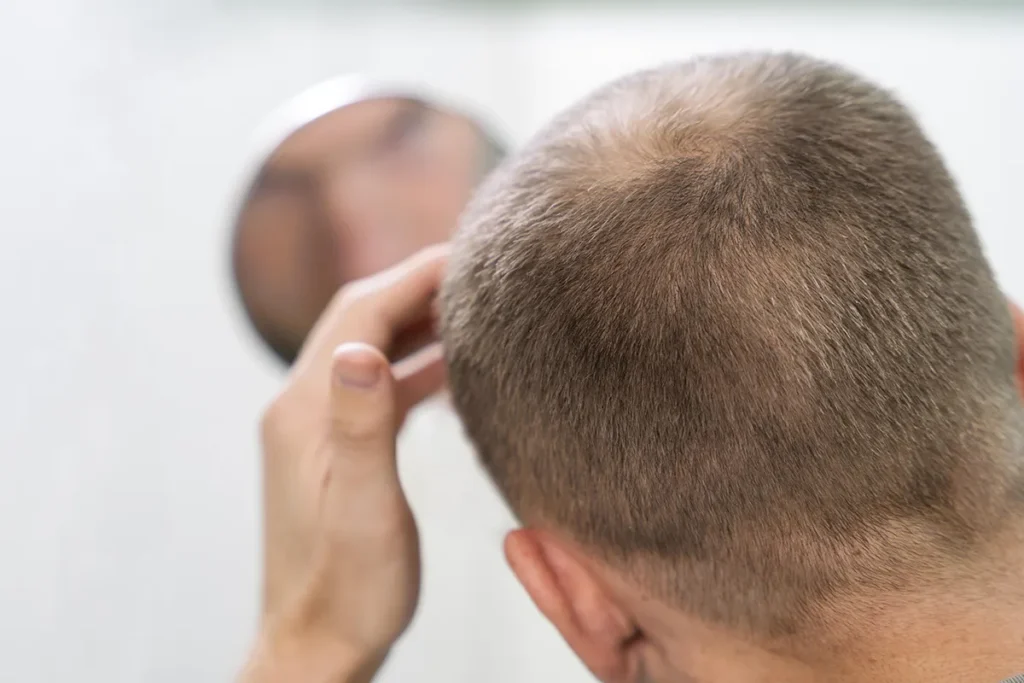
Ontdek de symptomen van haaruitval door stress in een vroeg stadium. Gebruik deze geweldige gids om krachtige manieren te vinden om het uitvallen te stoppen en op natuurlijke wijze haar te laten groeien.
Stress kan bij veel mensen plotselinge haaruitval veroorzaken. Dit is anders dan permanente haaruitval veroorzaakt door genen. Haaruitval door stress, of telogeen effluvium, kan beter worden als je goed met stress omgaat.
Telogeen effluvium is een veel voorkomende, tijdelijke haaruitval. Het tast tot 70% van het groeiende haar aan, waardoor het te snel uitvalt. Als je de oorzaken en symptomen kent, kun je beter voor je haar zorgen. Leer hoe je haaruitval door stress kunt herkennen en aanpakken om te schitteren.
Belangrijkste opmerkingen
Telogeen effluvium is een tijdelijke aandoening die haarverlies veroorzaakt door stress.
Tot 70% actief groeiend haar kan aangetast worden.
Stressvermindering en goed beheer kunnen leiden tot herstel.
Inzicht in de oorzaken en symptomen is de sleutel tot het omgaan met haaruitval.
Als je meer weet over haaruitval, kun je beter voor je haar zorgen.
Haaruitval door stress begrijpen
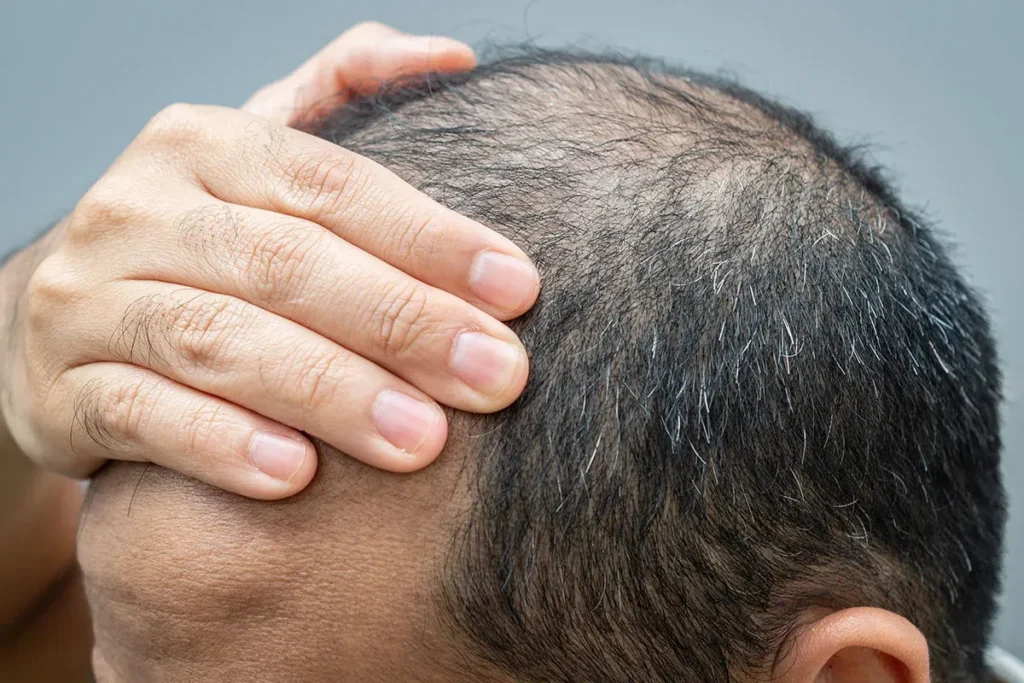
Stress kan ons lichaam diepgaand beïnvloeden, waaronder het veroorzaken van haaruitval. Dit gebeurt door de aandoening telogeen effluvium. Het treedt op wanneer stress de haargroeicyclus verstoort, waardoor er meer haar uitvalt dan normaal.
Wat is telogeen effluvium?
Telogeen effluvium is een aandoening van de hoofdhuid waardoor het haar dun wordt of uitvalt, vaak na een grote stress. Het gebeurt wanneer de haargroeicyclus wordt onderbroken. Hierdoor komen meer haren dan normaal in de telogene fase, een rustfase voordat ze uitvallen.
De haargroeicyclus heeft drie fasen: anageen (groei), katageen (overgang) en telogeen (rust). Normaal gesproken bevinden de meeste haren zich in de anagene fase. Maar als er stress optreedt, gaan meer haren naar de telogene fase. Dit leidt tot veel haaruitval een paar maanden later.
Hoe stress de haargroeicyclus verstoort
Stress zorgt ervoor dat het lichaam meer cortisol afgeeft, een hormoon dat de haargroeicyclus in de war kan sturen. Hoge cortisolniveaus duwen meer haren in de telogene fase. Dit resulteert in meer haaruitval.
De volgende tabel laat zien hoe stress de haargroeicyclus beïnvloedt:
Kennis over telogeen effluvium en hoe stress de haargroei beïnvloedt, kan mensen helpen hun haaruitval te begrijpen. Het kan hen ook helpen om de juiste behandelingen te vinden.
Symptomen van haaruitval door stress herkennen
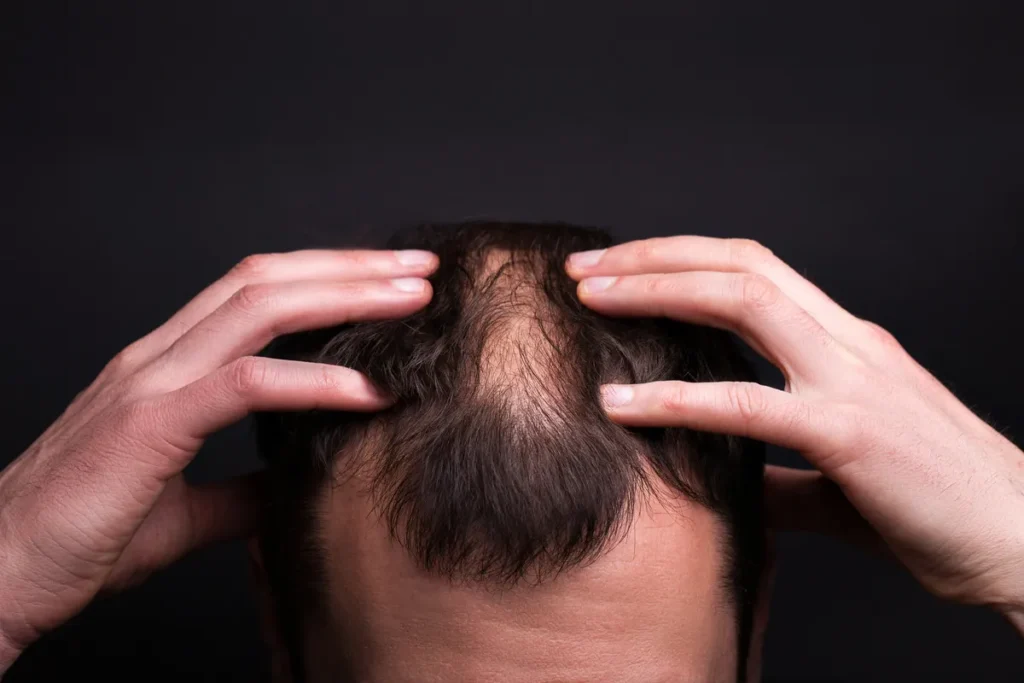
Het is belangrijk om de tekenen van haaruitval veroorzaakt door stress te kennen. Stress kan de haargroeicyclus verstoren, wat leidt tot haaruitval. Als je de tekenen vroeg opmerkt, kun je dit probleem aanpakken en herstellen.
Timing: De vertraging van 2-4 maanden
Haaruitval door stress treedt vaak 2 tot 4 maanden na de stressvolle gebeurtenis op. Medical Expert, een dermatoloog, legt uit: “Stress beïnvloedt de haargroei, maar de effecten zijn niet onmiddellijk merkbaar. Het is als een vertraagde reactie.”
Stress Haaruitval Patroon en Uiterlijk
Stresshaaruitval veroorzaakt meestal een dunner wordende bovenkant van het hoofd. Dit wordt telogeen effluvium genoemd en leidt tot veel uitvallen. De haaruitval verspreidt zich gelijkmatig, niet in vlekken. Het is belangrijk om dit patroon te herkennen om het te onderscheiden van andere vormen van haaruitval.
Veelvoorkomende tekenen van overmatig verharen
Overmatig verharen is een duidelijk teken van stresshaaruitval. Mensen kunnen veel haar zien uitvallen wanneer ze hun haar wassen of kammen.
Als je deze symptomen in een vroeg stadium opmerkt, kun je de juiste stappen nemen om de aandoening onder controle te krijgen.
Het begrijpen van de symptomen van haaruitval door stress is de eerste stap naar herstel. Het is belangrijk om de timing, het patroon en de tekenen van overmatig verharen te kennen. En aarzel niet om professioneel advies in te winnen als dat nodig is.
Stresshaaruitval onderscheiden van andere vormen
Weten waarom je haar verliest is de sleutel tot het oplossen ervan. Haaruitval kan het gevolg zijn van stress, genen of gezondheidsproblemen. Het is belangrijk om de oorzaak te achterhalen om de juiste behandeling te vinden.
Haaruitval door stress vs. genetische haaruitval
Stresshaaruitval en genetische haaruitval zijn verschillend. Genetische haaruitval volgt een patroon, zoals een terugwijkende haarlijn. Haaruitval door stress daarentegen laat het haar overal uitvallen zonder patroon.
Hier is een tabel die de verschillen laat zien:
Professionele diagnostische methoden
Om erachter te komen waarom je haar verliest, heb je de hulp van een arts nodig. Dermatologen gebruiken:
Medische voorgeschiedenis
Lichamelijk onderzoek van de hoofdhuid
Trektest om haaruitval te beoordelen
Bloedonderzoek om onderliggende aandoeningen uit te sluiten
Wanneer een dermatoloog raadplegen
Als je veel haar verliest, ga dan naar een dermatoloog. Zij kunnen de oorzaak achterhalen en behandelingen voorstellen. Vroegtijdig ingrijpen helpt om beter met haaruitval om te gaan.
Kortom, het is belangrijk om het verschil te weten tussen stresshaaruitval en genetische haaruitval. Inzicht in de oorzaken helpt je om je haaruitval te verhelpen.
Conclusie: Herstel en behandeling van stressgerelateerde haaruitval
Om te herstellen van haaruitval door stress is een totaalaanpak nodig. Dit omvat het beheersen van stress, zachte haarverzorging en een evenwichtige levensstijl. Weten hoe stress en kaal worden met elkaar in verband staan, helpt mensen actie te ondernemen om de impact ervan te verminderen.
Praktijken zoals yoga en meditatie kunnen helpen om stress te beheersen en haaruitval te verminderen. Deze methoden verlichten niet alleen stress, maar bevorderen ook de algehele gezondheid. Ze zorgen voor een natuurlijke gloed en bevorderen gezond haar.
Als je te maken hebt met stressgerelateerde haaruitval, is het een goede stap om je te verdiepen in behandelingen tegen haaruitval. Een dermatoloog kan persoonlijk advies geven over hoe je haaruitval kunt aanpakken. Hij of zij kan je helpen een herstelplan voor jou op te stellen.
Door stress haaruitval op een complete manier aan te pakken, kun je de gezondheid van je haar weer in eigen hand nemen. Een leven leiden dat gericht is op het verminderen van stress en het verzorgen van je haar kan het begin zijn van een reis naar blijvende schoonheid. Het kan leiden tot luxueuze, gezonde manen.
FAQ
Hoe ziet haaruitval door stress eruit?
Haaruitval door stress, of telogeen effluvium, is te zien als veel haar dat uitvalt. Het gebeurt 2-4 maanden na een stressvolle periode. De hele hoofdhuid kan dunner worden, waardoor het haar er minder dicht uitziet.
Hoe weet je of haaruitval genetisch is of stressgerelateerd?
Om erachter te komen of haaruitval het gevolg is van stress of van genen, moet je kijken wanneer en hoe het gebeurt. Haaruitval door stress treedt op na een stressvolle gebeurtenis. Genetische haaruitval volgt een vast patroon. Een dermatoloog kan je dit met zekerheid vertellen.
Kan door stress veroorzaakte haaruitval worden teruggedraaid?
Ja, je kunt stress haaruitval stoppen door stress te beheersen en je haar te verzorgen. Door dit te doen, kun je ervoor zorgen dat je haar weer groeit en er vol uitziet.
Wat zijn de meest voorkomende tekenen van overmatig verharen als gevolg van stress?
Tekenen van stresshaaruitval zijn onder andere veel haar dat uitvalt wanneer je het wast of kamt. Je kunt ook merken dat je haar dunner is. Veel haar vinden op je kussen of in de afvoer is een ander teken.
Is haaruitdunning door stress blijvend?
Nee, haaruitdunning door stress is meestal niet blijvend. Als je je stress onder controle houdt en je haar goed verzorgt, kan het teruggroeien. Je haar kan weer dik en gezond worden.
Hoe ga je om met stressgerelateerde haaruitval?
Probeer stress te verminderen om haaruitval door stress aan te pakken. Dit kun je doen met meditatie of yoga. Eet goed en gebruik zachte haarproducten. Een dermatoloog kan je ook advies op maat geven.
Komt haaruitval door stress terug na herstel?
Als je niet goed met stress omgaat, kan haaruitval terugkomen. Maar door gezond te leven en met stress om te gaan, kun je de kans op haaruitval verkleinen.
Kan stress plotselinge haaruitval veroorzaken?
Ja, stress kan leiden tot plotselinge haaruitval. Dit gebeurt meestal 2-4 maanden na een stressvolle gebeurtenis. Dat komt omdat stress de haargroeicyclus verstoort, waardoor veel haar uitvalt.
Wat is het verschil tussen stresshaaruitval en genetische haaruitval?
Stresshaaruitval is wanneer je veel haar verliest na stress. Het gebeurt na een stressvolle gebeurtenis. Genetische haaruitval volgt een patroon en wordt veroorzaakt door hormonen.
Referenties
Hoe stress haaruitval veroorzaakt. https://www.nih.gov/news-events/nih-research-matters/how-stress-causes-hair-loss





