Finding a reliable dark spot remover for face can feel overwhelming, especially when countless products promise quick results. Dark spots—often caused by excess melanin, sun exposure, or hormonal shifts—affect millions, leading many to seek safe, lasting solutions. According to dermatology surveys, over 60% of adults notice some form of skin discoloration by age 30, making effective treatment a top priority.
This article explains the science behind facial hyperpigmentation, highlights the most proven ingredients, and guides you in selecting a treatment that matches your skin type and lifestyle. Whether you prefer a topical serum, a professional clinic procedure, or an integrative approach, understanding the root causes will empower you to make informed decisions.
We’ll also explore how Gold City Medical Center combines medical expertise with personalized skincare, ensuring you receive comprehensive care that addresses both the visible spots and the underlying factors that cause them.
Understanding Dark Spots: Causes and Types
Dark spots, medically known as hyperpigmentation, appear when melanin—the pigment that gives skin its color—is produced in excess. Several triggers can disrupt the normal melanin balance, resulting in uneven patches on the face.
Common Causes
- Sun exposure: UV rays stimulate melanin production, leading to sunspots and age spots.
- Hormonal changes: Pregnancy, birth control, or thyroid issues can trigger melasma.
- Post‑inflammatory hyperpigmentation: Acne, cuts, or skin procedures leave lingering marks.
- Genetic predisposition: Some individuals are more prone to developing dark patches.
Types of Facial Dark Spots
| Type | Typical Appearance | Veelvoorkomende triggers |
|---|---|---|
| Solar lentigines (age spots) | Flat, brown to black patches | Chronic sun exposure |
| Melasma | Symmetrical brown patches, often on cheeks | Hormonale schommelingen |
| Post‑inflammatory hyperpigmentation | Darkened spots after acne or injury | Inflammatory skin events |
Recognizing the specific type of discoloration helps you choose a targeted dark spot remover for face that addresses the root cause rather than just the surface.
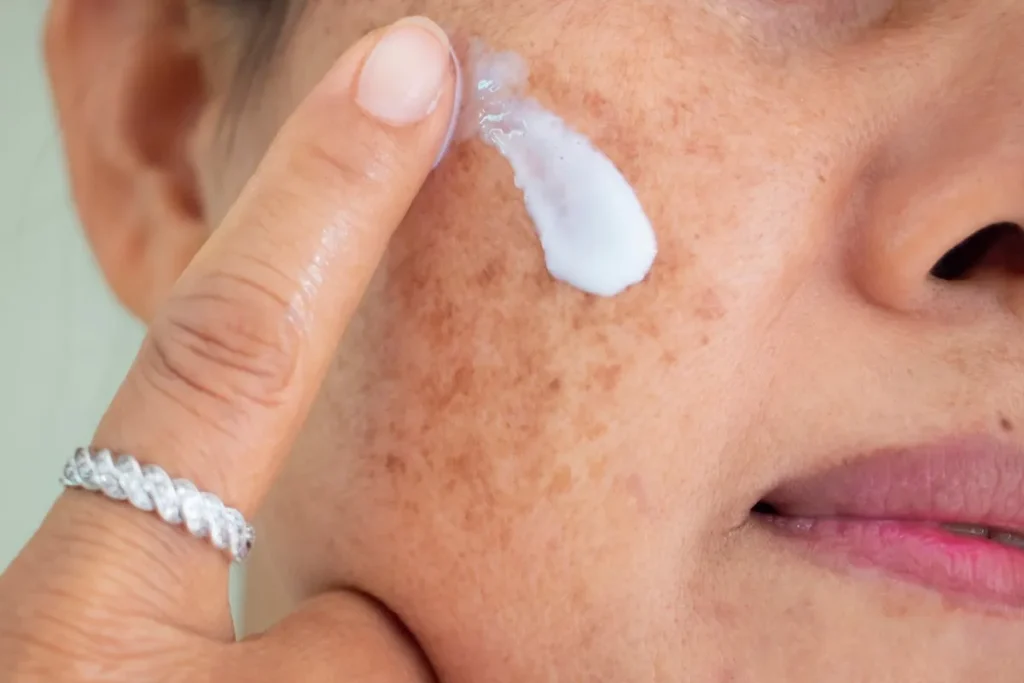
Top Ingredients in Professional Dark Spot Removers
Modern formulations rely on scientifically backed actives that inhibit melanin synthesis, accelerate cell turnover, or provide antioxidant protection. Below are the most effective ingredients frequently found in clinic‑grade dark spot correctors.
Vitamin C (Ascorbic Acid)
Vitamin C is a powerful antioxidant that interferes with the enzyme tyrosinase, reducing melanin formation. It also brightens existing spots and supports collagen production.
Niacinamide (Vitamin B3)
Niacinamide improves the skin barrier, reduces inflammation, and gently lightens hyperpigmented areas by limiting melanosome transfer.
Tranexamic Acid
Originally used to control bleeding, tranexamic acid has shown remarkable results in treating melasma and stubborn brown spots by blocking melanin‑stimulating pathways.
Hydroquinone (Prescription‑Only)
Considered the gold standard for severe hyperpigmentation, hydroquinone works by directly inhibiting tyrosinase. It should be used under professional supervision to avoid irritation.
| Ingredient | Primary Action | Typical Concentration | Best For |
|---|---|---|---|
| Vitamine C | Antioxidant, melanin inhibition | 10‑20% | Brightening, overall skin health |
| Niacinamide | Barrier support, inflammation reduction | 4‑10% | Sensitive or oily skin |
| Tranexamic Acid | Melasma control | 2‑5% | Persistent brown spots |
| Hydroquinone | Tyrosinase inhibition | 2‑4% (OTC) / 4‑6% (prescription) | Severe hyperpigmentation |
When selecting a dark spot remover for face, look for products that combine at least two complementary actives for synergistic effects.
How to Choose the Right Treatment for Your Skin Tone
Skin tone influences how hyperpigmentation appears and how it responds to treatment. Darker skin types (e.g., brown skin, black skin) may experience post‑inflammatory hyperpigmentation more readily, requiring gentler yet effective solutions.
Assess Your Skin Type
- Determine your Fitzpatrick skin type (I‑VI).
- Identify the predominant type of dark spot you have.
- Consider any sensitivities or existing skin conditions.
Match Ingredients to Skin Needs
- Fair to light skin (Types I‑II): Vitamin C and hydroquinone work well, but monitor for irritation.
- Medium skin (Types III‑IV): Niacinamide and tranexamic acid provide brightening with minimal risk.
- Darker skin (Types V‑VI): Focus on niacinamide, vitamin C, and low‑dose tranexamic acid; avoid high‑strength hydroquinone unless supervised.
| Skin Tone | Recommended Actives | Typical Products | Precautions |
|---|---|---|---|
| Fair (I‑II) | Vitamin C, Hydroquinone | Serum with 15% Vitamin C, 4% hydroquinone cream | Sun protection essential |
| Medium (III‑IV) | Niacinamide, Tranexamic Acid | Gel‑cream with 5% Niacinamide, 3% Tranexamic Acid | Patch test for sensitivity |
| Dark (V‑VI) | Niacinamide, Vitamin C | Lightweight serum with 10% Vitamin C, 4% Niacinamide | Avoid aggressive exfoliation |
Choosing the right formula ensures that your dark spot remover for face works efficiently without causing additional discoloration.
Integrative Approaches: Combining Medical Treatments with Skincare
For stubborn or extensive hyperpigmentation, integrating clinical procedures with topical regimens often yields the best outcomes. Gold City Medical Center offers a range of evidence‑based options that complement daily use of a dark spot remover.
Professionele procedures
- Laser Therapy (Q‑Switched Nd:YAG): Targets melanin deposits with precise light energy, suitable for all skin tones when calibrated.
- Chemical Peels (TCA, Glycolic Acid): Accelerate cell turnover, revealing fresh, evenly pigmented skin.
- Microneedling with Radiofrequency: Enhances product penetration and stimulates collagen remodeling.
- Intense Pulsed Light (IPL): Reduces sunspots and vascular lesions, often combined with topical agents.
| Procedure | How It Works | Ideale kandidaten | Recovery Time |
|---|---|---|---|
| Lasertherapie | Selective photothermolysis of melanin | All skin types, especially persistent age spots | 1‑3 days of mild redness |
| Chemical Peel | Exfoliation of superficial layers | Light to moderate hyperpigmentation | 3‑7 days of peeling |
| Microneedling + RF | Micro‑injuries stimulate repair | Post‑inflammatory hyperpigmentation | 2‑4 days of erythema |
| IPL | Broad‑spectrum light targets pigment | Sunspots, mild melasma | 1‑2 days of swelling |
After a procedure, using a high‑quality dark spot remover for face can maintain results, reduce recurrence, and support skin healing.
Maintenance and Prevention Tips for Long‑Term Clarity
Even after achieving noticeable improvement, consistent maintenance is essential to keep dark spots at bay. Simple daily habits can reinforce the work of any dark spot remover for face you choose.
Sun Protection is Non‑Negotiable
Broad‑spectrum sunscreen with at least SPF 30 should be applied every morning, re‑applied every two hours outdoors, and used year‑round.
Gentle Exfoliation
Incorporate a mild chemical exfoliant (e.g., 5% glycolic acid) 2‑3 times weekly to promote cell turnover without irritating the skin.
Consistent Skincare Routine
Follow a three‑step routine: cleanse, treat (your dark spot serum), and moisturize. Consistency beats occasional intensive treatments.
- Stay hydrated – water supports cellular health.
- Maintain a balanced diet rich in antioxidants (berries, leafy greens).
- Avoid smoking and excessive alcohol, which can worsen pigmentation.
By integrating these preventative measures, you’ll maximize the longevity of your results and reduce the likelihood of new dark spots forming.
Why Choose Gold City Medical Center
Gold City Medical Center combines cutting‑edge medical technology with personalized cosmetic care. Our team of dermatologists and aesthetic specialists creates integrative treatment plans that address both the visible dark spots and the underlying causes of hyperpigmentation. With a focus on safety, efficacy, and patient education, we ensure each client receives a tailored dark spot remover for face regimen supported by professional procedures when needed.
Choose us for a holistic approach that blends science‑backed skincare, state‑of‑the‑art laser and peel technologies, and ongoing support throughout your skin‑brightening journey.
Ready to restore a radiant, even complexion? Contact Gold City Medical Center today to schedule a personalized skin assessment and discover the most effective dark spot removal plan for you.
Call us or fill out our online form – your brighter future starts now.
FAQ
What causes dark spots on the face?
Dark spots form when excess melanin is produced due to sun exposure, hormonal changes, inflammation, or genetics.
How do Vitamin C and Niacinamide help reduce hyperpigmentation?
Vitamin C blocks tyrosinase to lower melanin production, while Niacinamide strengthens the skin barrier and reduces melanosome transfer.
Which dark spot remover ingredients are safe for darker skin tones?
Niacinamide, Vitamin C, and low‑dose tranexamic acid are generally safe for darker skin, while hydroquinone should be used only under supervision.
What professional procedures are available for treating hyperpigmentation?
Laser therapy, chemical peels, microneedling with radiofrequency, and intense pulsed light (IPL) are common clinic‑based options.
How often should I use sunscreen to prevent dark spots?
Apply broad‑spectrum SPF 30+ sunscreen every morning and reapply every two hours when outdoors.





