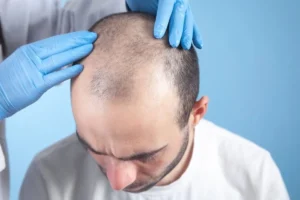
Are you worried about losing crown hair? Hair thinning at the crown is a common problem for men. It’s often linked to male pattern baldness or androgenetic alopecia. This issue affects millions of men globally, causing stress and affecting their self-confidence. Hair Thinning At Crown Male can be fixed! Discover the best results-driven treatments to restore your crown and achieve a full head of hair today.
It’s important to know the causes and treatments for this problem. The American Hair Loss Association says two-thirds of men will lose some hair by 35. Catching it early and treating it can stop more thinning and help hair grow back. For the best advice, talk to a reliable healthcare group, like Aventus Clinic. They offer effective treatments like finasteride and minoxidil.
Belangrijkste opmerkingen
Understand the causes of hair thinning at the crown.
Learn about available treatments, including non-surgical and surgical options.
Discover the importance of early detection and intervention.
Explore complete guidance from a trustworthy healthcare organization.
Consider innovative solutions like finasteride and minoxidil.
Understanding Hair Thinning at Crown in Males

The crown area of the scalp is a common spot for hair thinning in men. This can be upsetting, affecting how they feel about themselves. To find good solutions, it’s key to know why it happens and how common it is.
What is Vertex Baldness or Androgenetic Alopecia?
Vertex baldness, or androgenetic alopecia, is a common hair loss in men. It makes hair thin at the crown or vertex of the scalp. This is often called male pattern baldness. Knowing the signs can help spot it early.
This condition is linked to genetics and hormones, like testosterone. When testosterone turns into DHT, it shrinks hair follicles. This makes hairs thinner and shorter, and can lead to hair loss.
How Common is Crown Hair Thinning?
Crown hair thinning is more common than many men think. By 50, about 50% of men notice hair loss. This number goes up to 70% as they get older. Knowing this, we see why it’s important to take action early.
To grasp how common crown hair thinning is, let’s look at some numbers:
These numbers show hair thinning is a big issue for men as they age. Knowing this can help men take action and feel better about themselves.
Causes of Hair Thinning at Crown Male
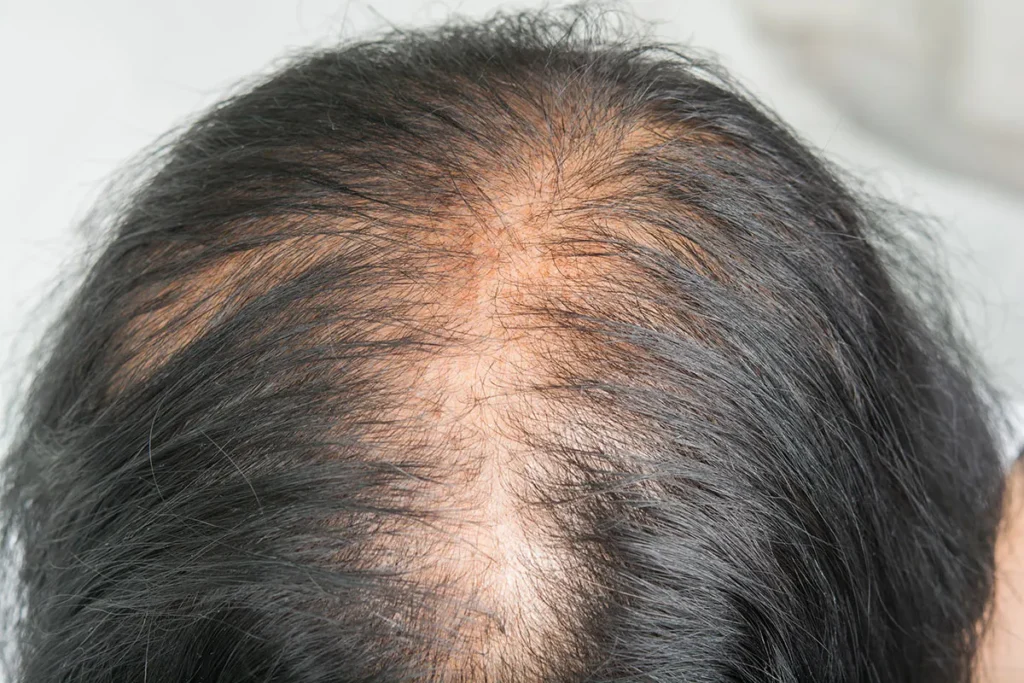
Men need to know why hair thins at the crown to fix it. It’s due to hormones, genes, and the environment. These factors work together to cause hair loss.
The Role of DHT in Follicle Miniaturization
Dihydrotestosterone (DHT) makes hair follicles smaller, leading to thinner hair. DHT is a strong form of testosterone that harms hair follicles. It’s a main cause of male pattern baldness.
Genetische aanleg en erfelijke factoren
Genetics play a big part in hair thinning at the crown. Studies show that baldness runs in families. Knowing this can help find the right treatments.
Environmental Triggers and Lifestyle Influences
Other things like stress, diet, and hairstyles can also cause hair thinning. A healthy lifestyle and avoiding these can help. It’s all about making smart choices.
Understanding hair thinning at the crown helps men find the right treatments. They can choose options that fit their needs.
Effective Treatments to Stop Crown Hair Loss
Stopping hair thinning at the crown requires looking into various treatments. It’s important to act early to slow down or stop hair loss. There are many options, from medical treatments to lifestyle changes and professional procedures.
Medische ingrepen
Medical treatments are often the first step against crown hair thinning. Minoxidil and finasteride are proven to slow down or stop hair loss. Minoxidil is applied topically to stimulate hair growth. Finasteride, taken orally, blocks DHT, a hormone that causes hair loss.
It’s essential to consult a healthcare professional before starting any medical treatment. They can discuss side effects and find the best treatment for you.
Lifestyle Changes and Natural Remedies
Along with medical treatments, lifestyle changes and natural remedies can help. Eating a balanced diet rich in vitamins and minerals is key. Foods like biotin, vitamin D, and iron support hair growth. Stress management techniques like meditation and yoga can also help by reducing stress.
Using gentle hair care practices is important too. This includes using mild shampoos and avoiding heat styling.
Professional Procedures and Advanced Solutions
For severe hair loss, professional procedures offer advanced solutions. Hair transplantation moves healthy hair follicles to thin areas. Laser therapy and platelet-rich plasma (PRP) therapy stimulate hair growth and improve scalp health.
These treatments can be used alone or together with medical interventions and lifestyle changes. Talking to a hair loss specialist can help find the best approach for you.
Conclusion: Taking Action Against Crown Thinning
Dealing with hair thinning at the crown needs a full plan. It’s important to know the causes and find good treatments. Understanding DHT, genetics, and environmental factors helps men fight crown thinning.
Seeing a dermatologist or healthcare expert is a big first step. They can suggest the best treatments for you. This could be medicine, changing your lifestyle, or professional hair treatments.
Knowing your options and taking action helps men feel better about themselves. It’s about getting a fuller, healthier head of hair. By exploring solutions, men can manage and even stop male hair thinning at the crown.
FAQ
What is the main cause of hair thinning at the crown?
Hair thinning at the crown often comes from male pattern baldness. This is mainly due to DHT, genetics, and environmental factors.
Is hair thinning at the crown a common issue among men?
Yes, it’s common for men to experience hair thinning at the crown. By age 50, about 50% of men notice hair loss. This number increases to about 70% as they get older.
How does DHT contribute to hair thinning at the crown?
DHT, a strong androgen hormone, makes hair follicles shrink. This leads to thinner, more fragile hair. It’s a key factor in hair thinning at the crown.
Can lifestyle changes help stop crown hair loss?
Yes, making lifestyle changes can help. Eating a balanced diet, managing stress, and gentle hair care support hair health. They can help stop crown hair loss.
What are the available medical treatments for crown hair thinning?
Medical treatments like minoxidil and finasteride can slow or stop hair loss. They are proven to work on crown hair thinning.
Are there any professional procedures that can help with crown hair loss?
Yes, professional procedures like hair transplantation, laser therapy, and PRP therapy offer advanced solutions. They promote hair regrowth and improve scalp health. They can effectively address crown hair loss.
Can balding on the crown be reversed?
Balding on the crown can’t always be completely reversed. But, treatments, lifestyle changes, and professional procedures can slow or stop hair loss. In some cases, they can even promote hair regrowth.
How can I determine if my crown hair is thinning?
If your hairline is receding or you notice less hair at the crown, it might be thinning. Seeing a healthcare professional can help figure out the cause and the best treatment.
Are there any natural remedies that can help with hair thinning at the crown?
Natural remedies can vary in effectiveness. But, a balanced diet, managing stress, and gentle hair care may support hair health. They might reduce the look of hair thinning.
Referenties
National Center for Biotechnology Information. Evidence-Based Medical Insight. Retrieved from https://pubmed.ncbi.nlm.nih.gov/11807446/