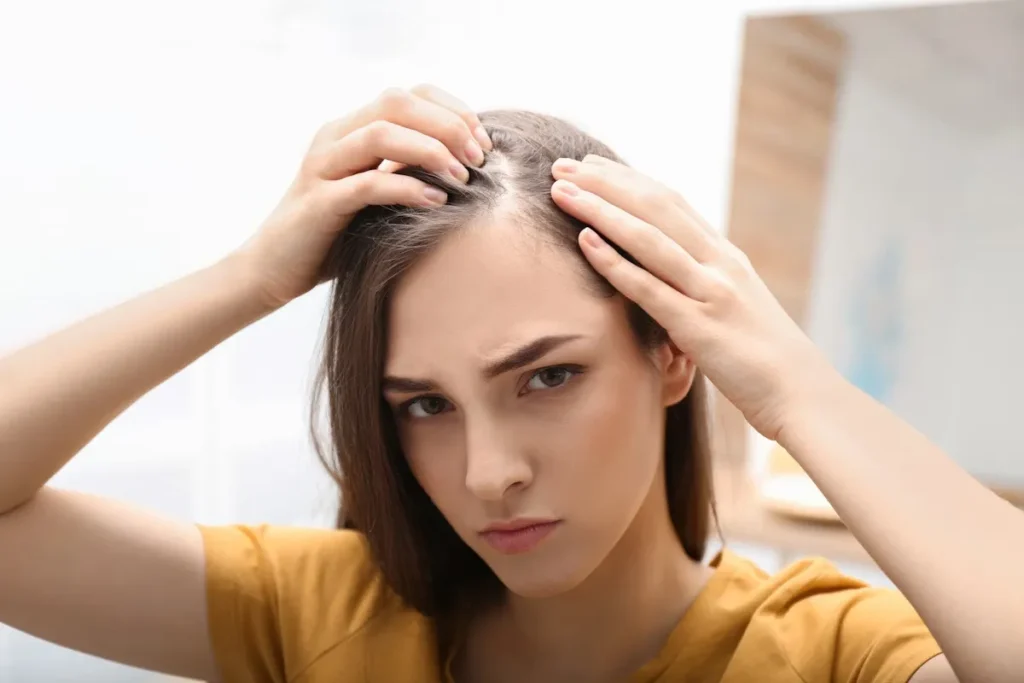
Millions of women worldwide face female androgenic alopecia, a hair loss condition that affects more than looks. It impacts self-confidence and quality of life. If you’re seeing thinning hair, wider parts, or scalp showing, you’re not alone. There are now effective treatments available, and knowing about the condition is the first step to getting your radiant glow back.
At GoldCity Center, we combine advanced medical care with a focus on the patient. We offer detailed evaluations and treatments tailored just for you. For women losing hair due to menopause or other reasons, we have treatments like medications that target the root causes. These options help women find their inner beauty and confidence.
Belangrijkste opmerkingen
Female androgenic alopecia affects up to 50% of women, causing progressive diffuse hair loss.
Minoxidil and spironolactone are evidence-based treatment options for women’s hair loss.
Understanding the condition is key for effective treatment and regaining confidence.
Personalized treatment strategies meet individual hair loss needs.
Early treatment is best for managing hair loss.
What is Female Androgenic Alopecia?
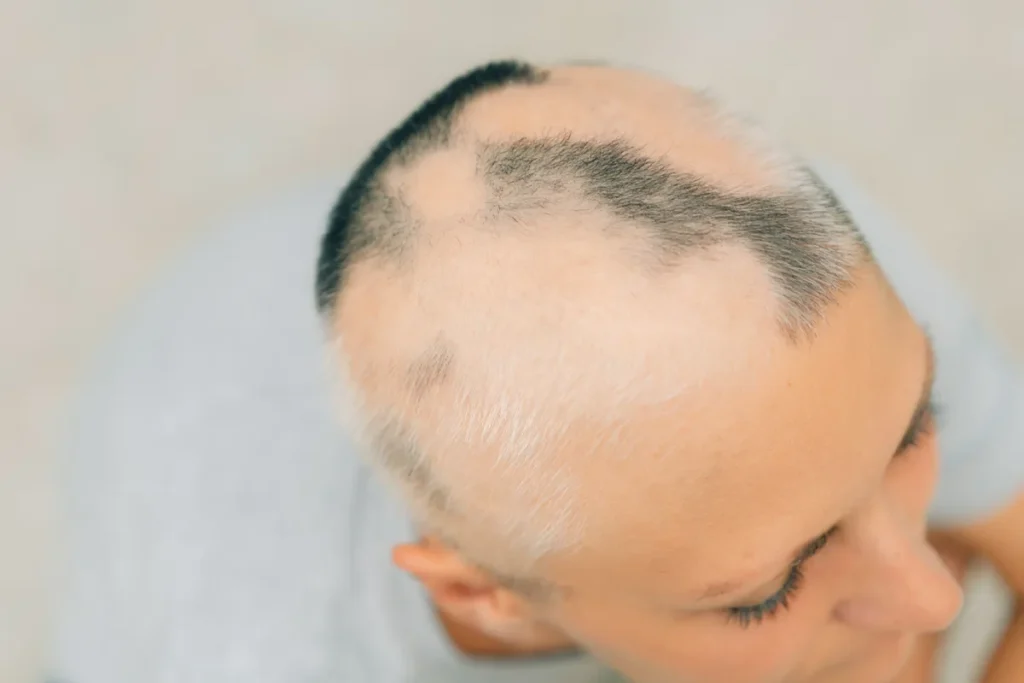
Learning about female androgenic alopecia is the first step to better hair health. “Your hair is a crown, and understanding its needs is key to maintaining its beauty,” says a renowned dermatologist. This condition, also known as pattern hair loss, affects millions of women. It causes hair to thin and fall out, mainly on the scalp.
Causes and Characteristics
Genetics, hormones, and aging all play a part in female androgenic alopecia. Hormonal imbalance, like too much dihydrotestosterone (DHT), is a big factor. DHT makes hair follicles shrink, leading to thinner, shorter hairs and hair loss.
This condition shows as thinning hair on the scalp, mainly on the top and crown. Unlike men, women don’t get a receding hairline. Instead, they see a general thinning of hair.
Prevalentie en risicofactoren
About 30 million women in the U.S. deal with female androgenic alopecia. The number goes up with age, and even more during menopause because of hormone changes. Genetic predisposition is a big risk factor. Women with a family history of hair loss are more likely to get it.
Other risks include hormonal changes, aging, and certain health issues. Knowing these risks helps with early diagnosis and treatment. This can slow down or even stop the condition.
By spotting the signs early, women can get the right treatment. This includes medicines and lifestyle changes to manage their condition well.
Proven Medications for Female Androgenic Alopecia
[Afbeelding hier toevoegen]
Several medications have shown to be effective in treating female androgenic alopecia. These treatments not only stop hair loss but also help hair to grow back. This offers a complete solution to this common problem.
Minoxidil Treatment Options
Minoxidil is a well-known and proven treatment for female androgenic alopecia. It makes hair follicles wider, which helps hair grow and slows down hair loss. Minoxidil comes in various forms, like solutions and foams, and is applied to the scalp.
Benefits of Minoxidil:
Clinically proven to stimulate hair growth
Available in different formulations for ease of use
Can be used in conjunction with other treatments
Hormone-Targeting Medications
Hormonal imbalances, like androgens, are key in female androgenic alopecia. Spironolactone is an anti-androgenic drug often used to counteract androgens’ effects on hair follicles. It helps reduce hair loss and promote growth by tackling hormonal issues.
Benaderingen voor combinatietherapie
For some, combining medications can lead to better results. Using minoxidil with spironolactone or finasteride (used off-label for post-menopausal women) can improve treatment outcomes. This method creates a personalized treatment plan that tackles both symptoms and causes of female androgenic alopecia.
Understanding the various medication options helps women make informed choices. It’s vital to talk to a healthcare professional to find the best treatment plan.
Non-Medication Solutions and Supportive Treatments
Women with androgenic alopecia can find many non-medication solutions to help their hair. These treatments improve hair health and boost confidence. They work well with medical treatments and help overall well-being.
Voedingsondersteuning en supplementen
Eating a balanced diet is key for healthy hair. Foods with omega-3 fatty acids, zinc, and biotin help hair grow and reduce shedding. Adding supplements like:
Biotin to strengthen hair follicles
Vitamin D to support hair growth cycles
Omega-3 fatty acids to nourish the scalp
It’s smart to talk to a healthcare professional before starting supplements. This ensures they are safe and work well.
Professionele behandelingen
Professional treatments can really help hair grow and become thicker. Some great options are:
Platelet-rich plasma (PRP) therapy, which boosts hair growth by injecting platelet-rich plasma into the scalp
Low-level laser therapy (LLLT), which uses low-level laser or light-emitting diodes to stimulate hair growth
These treatments can be used with other therapies for the best results.
Cosmetic Solutions and Hair Care Strategies
Cosmetic solutions can make hair look better right away and boost confidence. Some options are:
Hair fibers that cling to existing hair, making it look thicker
Wigs and hairpieces for a big change
Gentle hair care strategies, like using sulfate-free shampoos and avoiding heat styling
By adding these non-medication solutions and treatments to their routine, women with androgenic alopecia can have healthier, more resilient hair. They also gain more self-confidence.
Conclusie
Female androgenic alopecia needs a full treatment plan. This includes proven medicines like minoxidil and non-medical options like nutrition and professional treatments. There are many ways to treat thinning hair in women.
Dealing with female pattern baldness often means using a mix of these methods. Knowing the causes and signs helps people choose the best treatment for them. This includes finding the top hair loss treatments for women.
Take control of your hair loss journey. You can use medicine, change your lifestyle, or try cosmetic solutions. The path to healthier hair is open. Beauty that grows with you is not just a dream; it’s a goal you can achieve with the right care.
FAQ
What is the most effective treatment for female androgenic alopecia?
The best treatment for female androgenic alopecia combines medicines and non-medical options. Medicines like minoxidil and spironolactone are key. Also, eating right and using hair care products can help.
Does minoxidil work for women with androgenic alopecia?
Yes, minoxidil is proven to help women with androgenic alopecia. It makes hair grow and stops it from falling out.
What are the best medications for women’s hair loss?
Top medications for women’s hair loss include minoxidil and spironolactone. These can be used alone or together for better results.
How can I regrow my hair with female pattern baldness?
To regrow hair, use a mix of treatments. Minoxidil, good nutrition, and gentle hair care are key. Also, using hair products can help keep hair healthy.
Are there any natural remedies for female androgenic alopecia?
Natural remedies for female androgenic alopecia are not guaranteed. But, biotin, vitamin D, and saw palmetto might help. A balanced diet and gentle hair care are also important.
Can hormonal changes during menopause affect hair loss?
Yes, hormonal changes in menopause can make hair loss worse. It’s important to treat these changes as part of a full treatment plan.
What are the benefits of combination therapy for female androgenic alopecia?
Combination therapy, like using minoxidil and hormone-targeting medicines, can work better. It attacks the problem from different sides.
How can I support my hair health through diet and nutrition?
To support hair health, eat a balanced diet. Focus on vitamins and minerals like iron, zinc, and biotin. They help hair grow.
Referenties
Nationaal Centrum voor Biotechnologie-informatie. Evidence-Based Medisch Inzicht. Opgehaald van https://pubmed.ncbi.nlm.nih.gov/21980982/





