
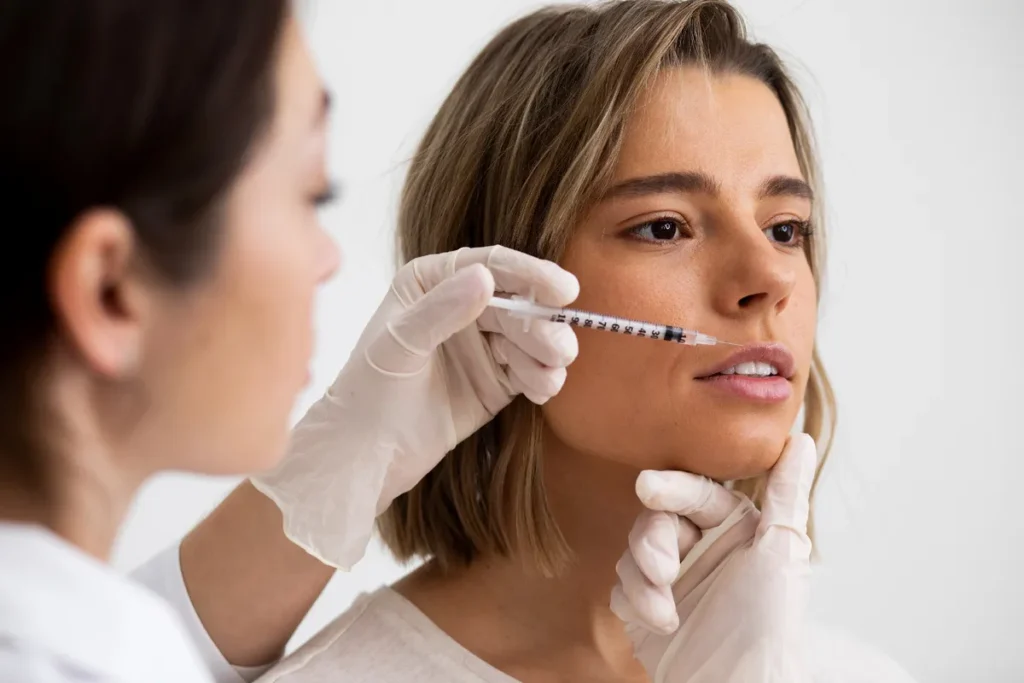
Dermale vullers zijn een populaire oplossing geworden voor het herstellen van jeugdig volume en het gladstrijken van gezichtsplooien. Als mensen nasolabiale plooien en lachrimpels willen aanpakken, is het belangrijk om de bijwerkingen van deze vullers te begrijpen. behandelingen is de sleutel.
Wangvullers herstellen verloren gegaan gezichtsvolume, verzachten rimpels en geven gelaatstrekken een oppepper zonder chirurgie. Hoewel ze veilig zijn en goedgekeurd door de FDA, kunnen ze zwelling, blauwe plekken en gevoeligheid op de injectieplaats veroorzaken.
Als je nadenkt over dermale vullers voor lachrimpels, is het van vitaal belang om de bijwerkingen en veiligheidsrichtlijnen te kennen. Dit zorgt voor een soepele en succesvolle behandeling.
Belangrijkste opmerkingen
De bijwerkingen van dermale vullers voor lachrimpels begrijpen
Lees meer over de veiligheidsrichtlijnen voor behandelingen met dermale vullers
Ontdek hoe je zwellingen en blauwe plekken kunt minimaliseren
Ontdek de voordelen van het herstellen van verloren gezichtsvolume met dermale vullers
Ontdek wat u kunt verwachten tijdens en na de behandeling
Inzicht in opvullingen voor lachrimpels
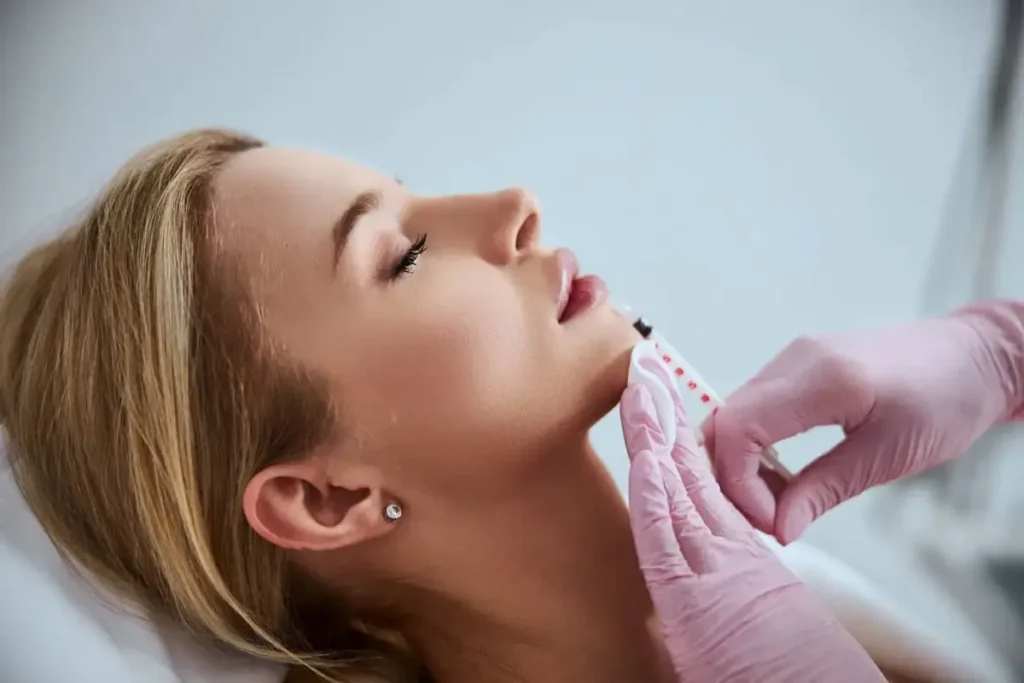
Leren over wangvullers is belangrijk voor mensen die hun uiterlijk willen opfrissen door lachrimpels aan te pakken. Deze fillers zijn een favoriete cosmetische behandeling. Ze helpen verloren volume terug te brengen en diepe plooien te egaliseren.
Wat zijn neuslippenplooien?
Nasolabiale plooien zijn de diepe lijnen van de neus naar de mond. Ze worden met de jaren dieper door verlies van gezichtsvolume en flexibiliteit van de huid. Dermale vullers zijn een geweldige oplossing. Ze laten het gezicht er gladder en jonger uitzien.
Hoe huidvullers werken (Juvederm en Restylane)
Dermale vullers, zoals hyaluronzuur in Juvederm en Restylane, vullen verloren volume in het gezicht op. Hyaluronzuur is een natuurlijke lichaamseigen stof. Het houdt vocht vast en maakt de huid glad en stevig.
Juvederm en Restylane zijn de beste keuzes. Ze zijn niet alleen effectief, maar ook veilig om te keren. Dit geeft gebruikers gemoedsrust bij het uitproberen van dermale vullers.
Vaak voorkomende bijwerkingen na de behandeling
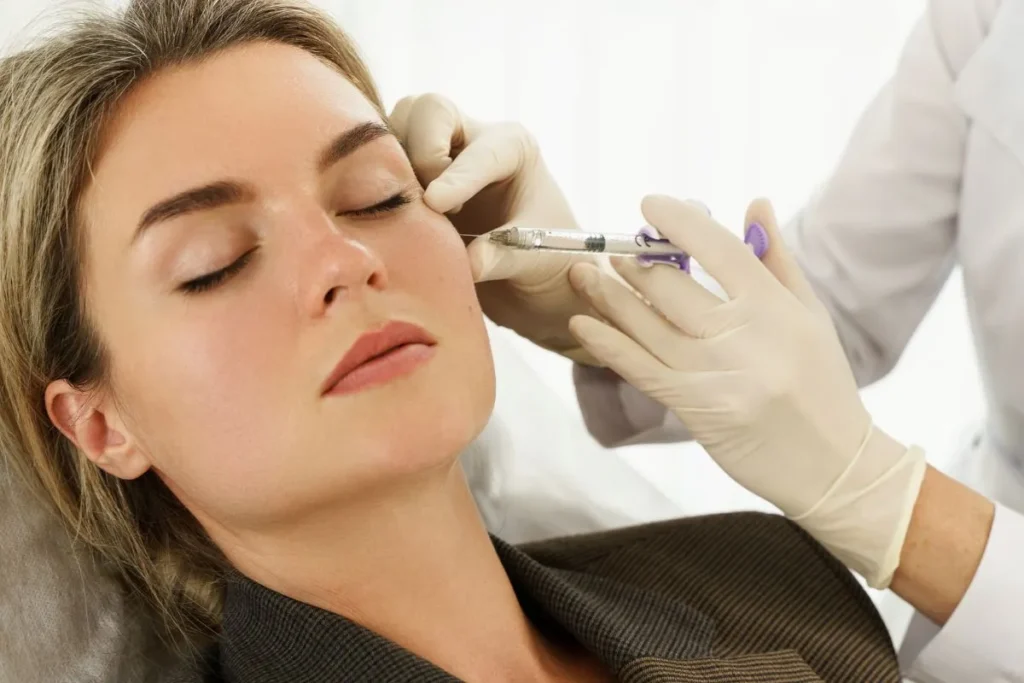
Kennis over de bijwerkingen van dermale vullers is essentieel voor een soepel herstel. Dermale vullers zijn meestal veilig, maar er kunnen enkele veelvoorkomende reacties optreden.
Direct na de behandeling kunt u enkele onmiddellijke reacties opmerken. Deze zijn meestal mild en verdwijnen na een paar dagen.
1. Zwelling en blauwe plekken op injectieplaatsen
Zwelling en blauwe plekken zijn vaak voorkomende bijwerkingen. De injectie kan de huid licht beschadigen, wat tot deze reacties kan leiden. IJskompressen aanbrengen en je hoofd hoog houden kan de zwelling tot een minimum beperken.
2. Roodheid en tederheid
Roodheid en gevoeligheid op de injectieplaats zijn normaal. De huid kan er licht ontstoken uitzien, maar dit verdwijnt meestal na een paar uur tot dagen. Het gebruik van zachte huidverzorgingsproducten en het vermijden van agressieve chemicaliën kan helpen om de huid te kalmeren.
3. Pijn en ongemak
Sommige mensen kunnen pijn of ongemak voelen na de ingreep. Dit is meestal licht en kan worden behandeld met vrij verkrijgbare pijnstillers. Het is essentieel om het advies van je arts over pijnbestrijding op te volgen.
4. Bultjes en asymmetrie
Bultjes en asymmetrie zijn mogelijke bijwerkingen, hoewel zeldzaam. Dit kan gebeuren als de filler niet gelijkmatig wordt verdeeld of als er sprake is van ongelijke absorptie. Zachtjes masseren van het gebied, zoals aangegeven door uw arts, kan helpen bij het oplossen van knobbels.
Hoewel deze bijwerkingen zorgwekkend kunnen zijn, zijn ze meestal tijdelijk. Als u weet wat u kunt verwachten, kunt u beter herstellen en genieten van de voordelen van uw dermale vullerbehandeling.
Ernstige complicaties van kaakvullers voor lachrimpels
Wangen laten opvullen voor een stralende lach is spannend. Maar het is belangrijk om op de hoogte te zijn van mogelijke ernstige bijwerkingen. Deze risico's zijn zeldzaam, maar als je ze kent, kun je slimme keuzes maken voor je schoonheidsbehandelingen.
Risico op vasculaire occlusie
Vasculaire occlusie is een ernstig risico bij dermale vullers. Dit gebeurt wanneer een bloedvat verstopt raakt. Dit kan huidbeschadiging veroorzaken of in zeldzame gevallen zelfs gezichtsverlies. Het is van vitaal belang om een vakkundige aanbieder te kiezen die de anatomie van het gezicht goed kent.
Preventie is de sleutel: Zorg ervoor dat je behandelaar ervaren is en de juiste techniek gebruikt. Het is ook belangrijk om de verzorgingsinstructies na de procedure zorgvuldig op te volgen.
Infectiemogelijkheden
Infectie is een ander risico van wangvullers. Hoewel het zelden voorkomt, kan het gebeuren als het gebied niet goed schoon wordt gehouden. Let op tekenen als roodheid, zwelling en pijn op de injectieplaats.
Snelle actie is noodzakelijk: Als je tekenen van infectie ziet, zoals meer roodheid of zwelling, bel dan meteen je arts. Snelle actie kan erger voorkomen.
Allergische reacties
Allergische reacties op dermale vullers zijn zeldzaam, maar kunnen voorkomen. Ze kunnen lichte roodheid en jeuk veroorzaken of ernstiger reacties. Hyaluronzuurvullers, zoals Juvederm en Restylane, zijn meestal veilig omdat ze biocompatibel zijn.
Ken uw vuller: Weten wat er in uw dermale vuller zit, helpt u en uw arts om allergieën te herkennen en te behandelen.
Door op de hoogte te zijn van deze ernstige complicaties en stappen te ondernemen om ze te vermijden, kunt u veilig genieten van de voordelen van wangvullers. Op deze manier kun je de glimlach krijgen die je wilt en tegelijkertijd veilig blijven.
Conclusie
Wangvullers voor lachrimpels zijn een veilige en effectieve keuze. Ze werken het beste als ze worden uitgevoerd door ervaren professionals. Het is belangrijk om de mogelijke bijwerkingen en complicaties te kennen.
Dermale vullers zoals Juvederm en Restylane hebben de manier veranderd waarop we lachrimpels behandelen. Ze geven een stralende gloed en tijdloze schoonheid. Als je de risico's kent en weet hoe je ze kunt vermijden, kun je stralen en je schoonheid bezitten.
De weg naar luxueuze transformatie begint met het begrijpen van de veiligheid van wangvullers. Het is belangrijk om een gekwalificeerde professional te kiezen en de bijwerkingen te kennen. Op deze manier krijg je geavanceerde schoonheidstechnologie die veilig is.
Je schoonheidsreis begint nu. Met dermale vullers kun je je zelfvertrouwen een boost geven. Laat je stralen en zie de verandering in jezelf.
FAQ
Wat zijn de meest voorkomende bijwerkingen van wangvullers?
Vaak voorkomende bijwerkingen van wangvullers zijn blauwe plekken, zwelling en roodheid. Je kunt ook een gevoelig gevoel hebben of bultjes zien op de injectieplaats. Deze effecten zijn meestal mild en verdwijnen binnen een paar dagen.
Zijn dermale vullers zoals Juvederm en Restylane veilig?
Ja, dermale vullers zoals Juvederm en Restylane zijn veilig als ze door een deskundige zorgverlener worden gebruikt. Ze zijn gemaakt van hyaluronzuur, een natuurlijke lichaamseigen stof, en worden na verloop van tijd afgebroken.
Kunnen dermale vullers worden opgelost als ik niet tevreden ben met het resultaat?
Ja, fillers gemaakt van hyaluronzuur kunnen worden opgelost met hyaluronidase. Dit is handig als je niet tevreden bent met het resultaat of als je problemen hebt.
Hoe lang duren de bijwerkingen van wangvullers?
Bijwerkingen zoals blauwe plekken en zwelling duren meestal een paar dagen tot een week. Soms kunnen ze langer duren, maar dit is zeldzaam.
Kan ik een infectie krijgen van wangvullers?
Ja, er is een risico op infectie met wangvullers, zoals bij elke invasieve behandeling. Door te kiezen voor een gekwalificeerde zorgverlener die strikte hygiëne in acht neemt, kan dit risico tot een minimum worden beperkt.
Zijn wangvullers geschikt voor iedereen?
Wangvullers zijn niet geschikt voor iedereen, vooral niet voor mensen met bepaalde gezondheidsproblemen of die specifieke medicijnen gebruiken. Praat altijd met een gekwalificeerde arts om te zien of ze geschikt zijn voor jou.
Hoe kan ik de risico's van wangvullers minimaliseren?
Om de risico's te beperken, moet je een deskundige zorgverlener kiezen, alle instructies voor en na de behandeling opvolgen en de mogelijke bijwerkingen en complicaties kennen.
Wat is vasculaire occlusie en wat is het verband met wangvullers?
Vasculaire occlusie is een zeldzaam maar ernstig probleem met wangvullers. Dit gebeurt wanneer de vuller een bloedvat blokkeert, wat weefselschade of zelfs blindheid veroorzaakt. Door een gekwalificeerde leverancier te kiezen, kan dit risico worden vermeden.
Kan ik allergische reacties krijgen van hyaluronzuurvullers?
Allergische reacties op hyaluronzuur fillers zijn zeldzaam omdat het een natuurlijke lichaamseigen stof is. Maar het is mogelijk om een allergische reactie of gevoeligheid voor de filler te krijgen.
Referenties
Nationaal Centrum voor Biotechnologie-informatie. Evidence-Based Medisch Inzicht. Opgehaald van https://pmc.ncbi.nlm.nih.gov/articles/PMC11311355/





