
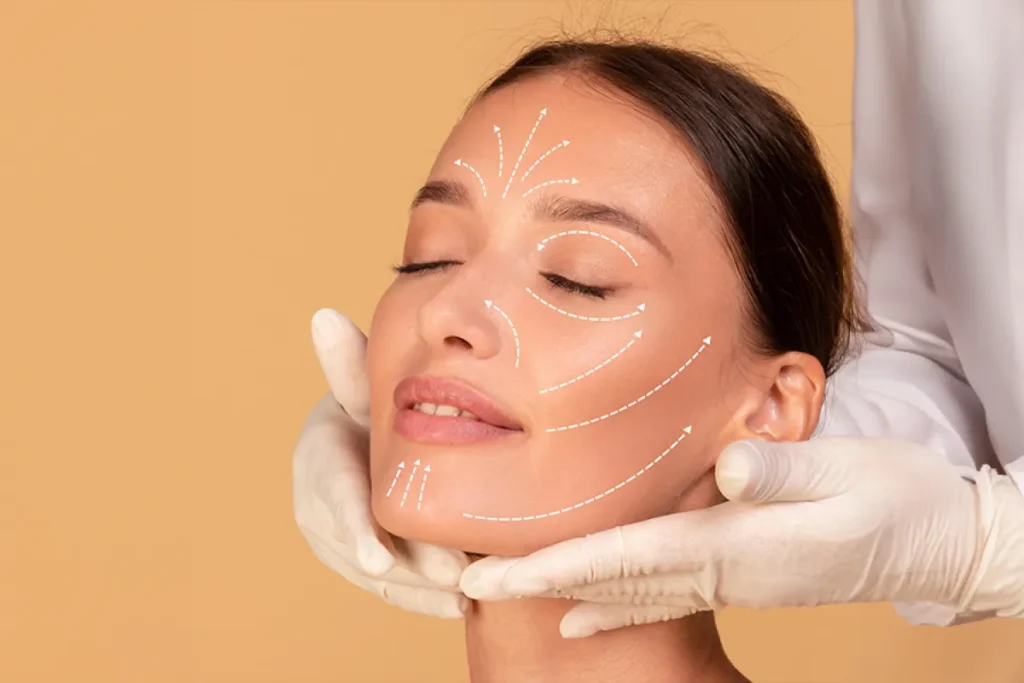
Door voorhoofdsrimpels kun je er ouder uitzien dan je je voelt. Dermale vullers zijn een populaire, niet-chirurgische manier om dit te verhelpen. Ze help je ziet er jonger uit zonder chirurgie.
Vullers op basis van hyaluronzuur zijn de beste keuzes voor het behandelen van voorhoofdrimpels. Ze zijn veilig en geven natuurlijke resultaten. Dit maakt ze favoriet bij mensen die op zoek zijn naar gezichtsbehandelingen.
Leren over dermale vullers en hun soorten helpt je de juiste behandeling te kiezen. Zo krijg je een frisse en jeugdige uitstraling.
Belangrijkste opmerkingen
Dermale vullers zijn een populaire niet-chirurgische cosmetische behandeling om voorhoofdsrimpels aan te pakken.
Vullers op basis van hyaluronzuur worden vaak gebruikt voor gezichtsbehandelingen vanwege hun veiligheidsprofiel.
Dermale vullers kunnen verloren volume herstellen en zorgen voor een jeugdiger uiterlijk.
Inzicht in de verschillende soorten dermale vullers is essentieel om weloverwogen beslissingen te kunnen nemen.
Injecteerbare huidvullers kunnen natuurlijk ogende resultaten geven.
Voorhoofdsrimpels en huidvullers begrijpen
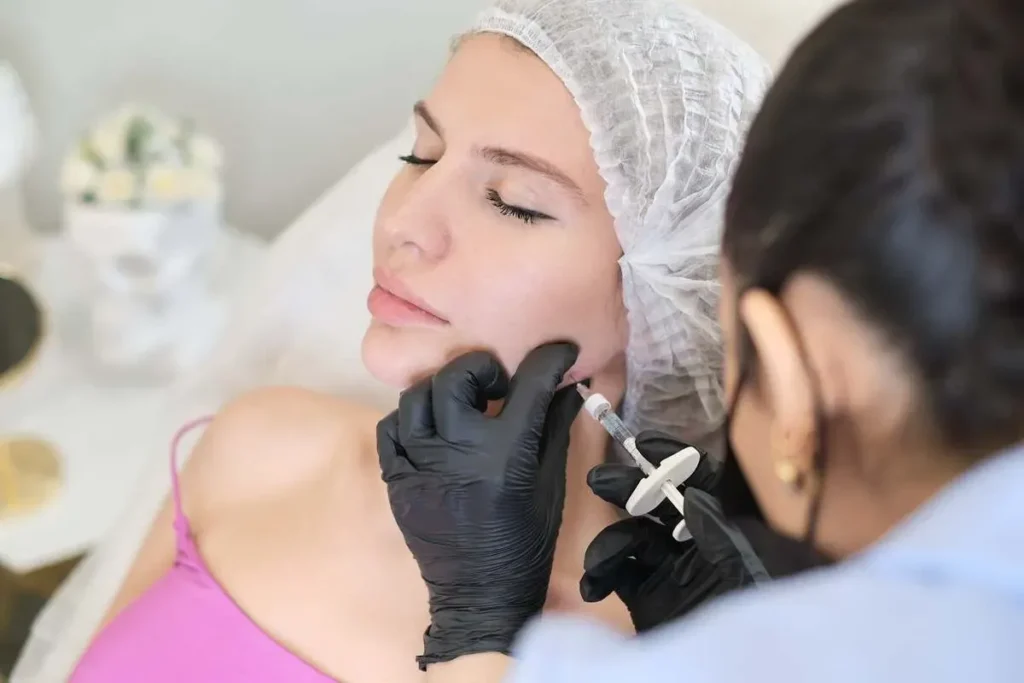
Het verminderen van voorhoofdsrimpels begint met weten waarom ze ontstaan en welke behandelingen er zijn. Voorhoofdsrimpels zijn een teken van veroudering, maar ze kunnen door veel dingen verergeren.
Veelvoorkomende oorzaken van voorhoofdsrimpels en volumeverlies
Lijntjes en volumeverlies op het voorhoofd zijn vooral het gevolg van veroudering. Dit komt doordat de huid collageen en hyaluronzuur verliest. Langdurige blootstelling aan de zon en herhaalde gezichtsuitdrukkingen veroorzaken ook rimpels. Naarmate we ouder worden, kan onze huid minder goed regenereren, wat leidt tot diepere rimpels.
Hoe injecteerbare huidvullers werken
Dermale vullers helpen door verloren volume terug te geven en rimpels glad te strijken. Deze injecteerbare behandelingen vullen de gaten op, liften en strijken rimpels glad. Ze maken gebruik van materialen zoals hyaluronzuur en calciumhydroxylapatiet, die veilig zijn en er natuurlijk uitzien.
Ideale kandidaten voor voorhoofd filler behandelingen
Mensen met matige tot ernstige voorhoofdsrimpels en een goede gezondheid zijn het meest geschikt voor fillers. Het is belangrijk om duidelijke verwachtingen te hebben over de resultaten. Overleg met een professional om te bepalen of fillers geschikt zijn voor jou.
Weten waarom voorhoofdsrimpels ontstaan en hoe fillers werken, helpt om slimme keuzes te maken. Fillers zijn een goede optie voor mensen die er gladder en jonger uit willen zien.
Voorhoofdrimpelvuller voor en na: Soorten en resultaten
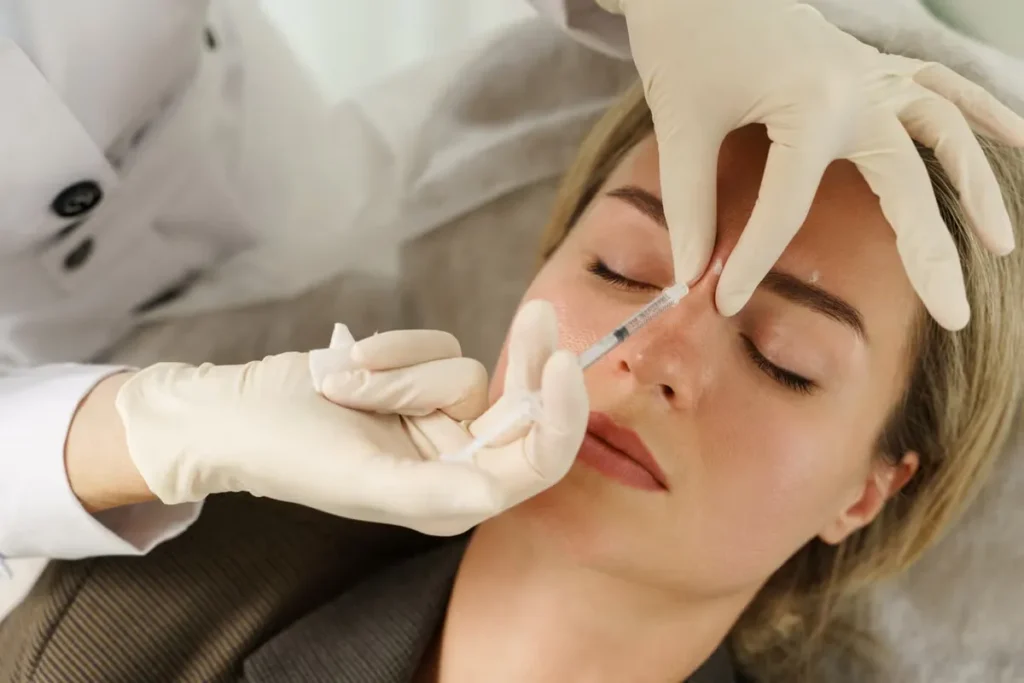
Dermale vullers kunnen voorhoofdrimpels aanzienlijk verbeteren, waardoor de huid er gladder en jonger uitziet. Ze zijn een populaire keuze voor mensen die hun uiterlijk willen opfrissen zonder chirurgie.
Er zijn veel huidvullers op de markt, waardoor het moeilijk is om te kiezen. Voor de beste resultaten is het belangrijk dat je de verschillende soorten kent en weet wat ze doen. De juiste vuller hangt af van je huid, de diepte van de rimpels en wat je voorkeur heeft.
Vullers op basis van hyaluronzuur
Vullers op basis van hyaluronzuur, zoals Restylane en Juvederm, zijn favoriet voor voorhoofdsrimpels. Ze zijn veilig, effectief en tijdelijk, zodat je ze naar behoefte kunt aanpassen. Ze trekken vocht aan, vullen lijntjes op en maken de huid voller.
Calcium Hydroxylapatietvullers voor diepere rimpels
Calcium hydroxylapatietvullers, zoals Radiesse, gaan langer mee, tot wel drie jaar. Ze bevatten microsferen die het collageen stimuleren, waardoor ze langer meegaan dan hyaluronzuurvullers. Ze zijn zeer geschikt voor diepere lijnen en gaan langer mee.
Verschillende deeltjesgroottes voor gerichte behandeling
Dermale vullers zijn er in verschillende maten, waardoor behandelingen op maat mogelijk zijn. Kleinere deeltjes zijn voor oppervlakkige lijntjes, terwijl grotere voor diepere rimpels zijn. Dit betekent dat je een behandeling kunt krijgen die er natuurlijk uitziet en bij je past.
Visuele resultaten: Wat u realistisch kunt verwachten
Het is belangrijk om te weten wat je kunt verwachten van dermale vullers. De meeste mensen zien een groot verschil in hun voorhoofdrimpels. Hoe lang de resultaten aanhouden, hangt af van de vuller, je huid en je levensstijl.
Door de juiste filler en een vakkundige behandelaar te kiezen, kun je een gladder, jonger uitziend voorhoofd krijgen. Dit kan je gezicht echt mooier maken.
De juiste filler voor uw voorhoofd kiezen
Het krijgen van een verfrist uiterlijk is meer dan het kiezen van een dermale vuller. Het gaat erom dat je het behandelproces, de mogelijke bijwerkingen en de onderhoudsbehoeften kent.
Bij het kiezen van een dermale vuller voor voorhoofdsrimpels spelen verschillende dingen een rol. Dit zijn onder andere het type vuller, de vakkundigheid van de arts en je huidtype.
Behandelingsproces en injectietechnieken
De behandeling bestaat uit het injecteren van de filler in het voorhoofd met een fijne naald. Sommige artsen mengen de vuller met een verdovend middel voor minder pijn. Anderen gebruiken eerst een crème om het gebied te verdoven.
De gebruikte injectietechnieken kunnen de resultaten sterk beïnvloeden. Bekwame artsen kunnen de behandeling voor elke persoon op maat maken.
Hersteltijdlijn en mogelijke bijwerkingen
Na de behandeling kun je enkele milde bijwerkingen ervaren. Deze omvatten zwelling, roodheid of blauwe plekken. Deze zijn tijdelijk en gaan meestal snel weg.
Lichte zwelling en roodheid
Blauwe plekken op de injectieplaats
Tijdelijke gevoelloosheid of tintelingen
Deze bijwerkingen zijn meestal mild en duren niet lang. De meeste mensen kunnen na een paar dagen hun gewone activiteiten weer oppakken.
Levensduur en onderhoudsbehoeften
Het is belangrijk om te weten hoe lang de vuller meegaat en wanneer je meer nodig hebt. Dit helpt om realistische doelen te stellen en toekomstige behandelingen te plannen.
De effecten van de filler kunnen verschillen afhankelijk van het type en je lichaam.
Regelmatige behandelingen zorgen ervoor dat de resultaten er goed uit blijven zien.
Door met je arts te praten over je onderhoudsbehoeften, kun je plannen maken voor de toekomst.
Door de juiste dermale vuller te kiezen en het behandelproces te begrijpen, kun je een gladder en jonger uiterlijk krijgen. Dit verbetert je natuurlijke schoonheid.
Conclusie
Dermale vullers hebben de manier veranderd waarop we met voorhoofdsrimpels omgaan. Ze bieden een snelle, gemakkelijke en effectieve manier om er jonger uit te zien. Deze behandelingen voegen volume toe en maken rimpels gladder, met natuurlijk ogende resultaten en weinig uitval.
Het kiezen van de juiste dermale vuller is de sleutel tot een goede behandeling. Het is ook belangrijk om het proces te kennen en te weten wat je kunt verwachten. Met opties zoals hyaluronzuur en calciumhydroxylapatiet kun je een stralende gloed en een verfriste look krijgen.
Met dermale vullers kunnen mensen hun natuurlijke schoonheid laten zien zonder chirurgie. Ze zijn een topkeuze voor mensen die er jonger uit willen zien en zich levendiger willen voelen. Dermale vullers zijn een moderne manier om je uiterlijk en je dagelijkse routine te verbeteren.
FAQ
Waar zijn dermale vullers van gemaakt?
Dermale vullers zijn er in verschillende materialen. Deze omvatten hyaluronzuur, calciumhydroxylapatiet en andere veilige stoffen. Vullers op basis van hyaluronzuur, zoals Restylane en Juvederm, zijn geliefd vanwege hun veiligheid en het vermogen om rimpels glad te strijken.
Hoe werken dermale fillers voor voorhoofdsrimpels?
Met dermale vullers wordt een gelachtige substantie onder de huid geïnjecteerd. Hierdoor worden gaten en plooien opgevuld, wat een jongere uitstraling geeft.
Wat zijn de verschillende soorten dermale vullers die beschikbaar zijn voor gezichtsbehandelingen?
Er zijn veel huidvullers op de markt. Dit zijn onder andere hyaluronzuur en calciumhydroxylapatiet. Elk heeft zijn eigen voordelen en de juiste is afhankelijk van je huid en behoeften.
Hoe lang werken dermale fillers voor voorhoofdsrimpels?
De levensduur van dermale vullers varieert. Hyaluronzuurvullers gaan een paar maanden tot een jaar mee. Calcium hydroxylapatietvullers, zoals Radiesse, kunnen tot drie jaar meegaan.
Wat zijn de mogelijke bijwerkingen van dermale vullerbehandelingen?
Bijwerkingen zijn onder andere zwelling, roodheid, blauwe plekken en lichte pijn. Deze effecten zijn meestal van korte duur en verdwijnen snel.
Kunnen dermale vullers worden gebruikt voor andere gezichtsdelen dan het voorhoofd?
Ja, ze kunnen worden gebruikt op de lippen, wangen en nasolabiale plooien. Ze helpen het volume te herstellen, rimpels glad te strijken en gelaatstrekken te verbeteren.
Hoe kies ik de juiste dermale vuller voor mijn voorhoofdsrimpels?
Bij het kiezen van de juiste vuller spelen verschillende factoren een rol. Houd rekening met het type filler, de vaardigheid van de behandelaar en je huid. Je kunt het beste een gekwalificeerde arts raadplegen voor de juiste behandeling.
Zijn dermale fillers een permanente oplossing voor voorhoofdsrimpels?
Nee, ze zijn niet permanent. Ze hebben regelmatig behandelingen nodig om de gewenste look te behouden.
Kan ik dermale vullers krijgen als ik een gevoelige huid heb?
Ja, fillers kunnen worden gebruikt op een gevoelige huid. Maar het is belangrijk om met een gekwalificeerde arts te praten om de veiligheid en effectiviteit te garanderen.
Referenties
Nationaal Centrum voor Biotechnologie-informatie. Evidence-Based Medisch Inzicht. Opgehaald van https://pmc.ncbi.nlm.nih.gov/articles/PMC2685277/[5





