
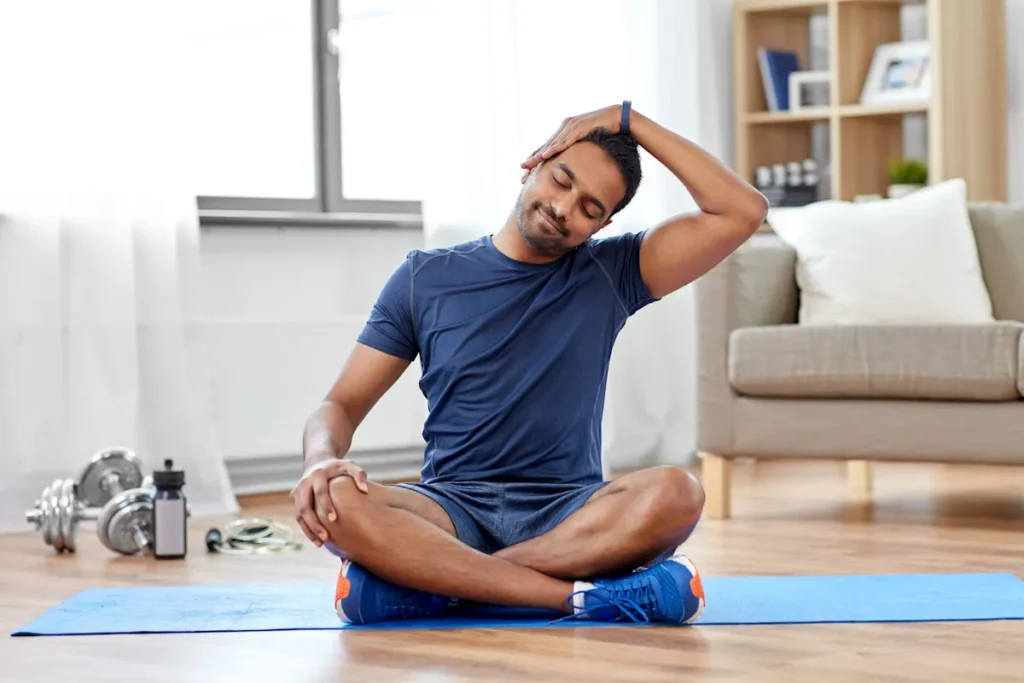
Heb je last van strakke benen die alledaagse taken moeilijk maken? Miljoenen mensen krijgen te maken met strakke beenspieren doordat ze te veel zitten, te weinig water drinken of te veel bewegen.
Er zijn manieren om zich beter voelen. Deze gids laat je zien hoe je spierspanning kunt verlichten en flexibiliteit kunt verbeteren. Als je weet wat de oorzaak is en de juiste methoden gebruikt, kun je weer vrij bewegen.
Belangrijkste opmerkingen
Begrijp de oorzaken van gespannen beenspieren
Ontdek effectieve rekoefeningen voor verlichting
Leer hydratatie- en voedingsstrategieën om spierspanning te voorkomen
Verken massage- en zelfmyofasciale technieken
Pas warmte- en koudetherapie toe voor optimale resultaten
Waarom je last hebt van strakke spieren in je benen
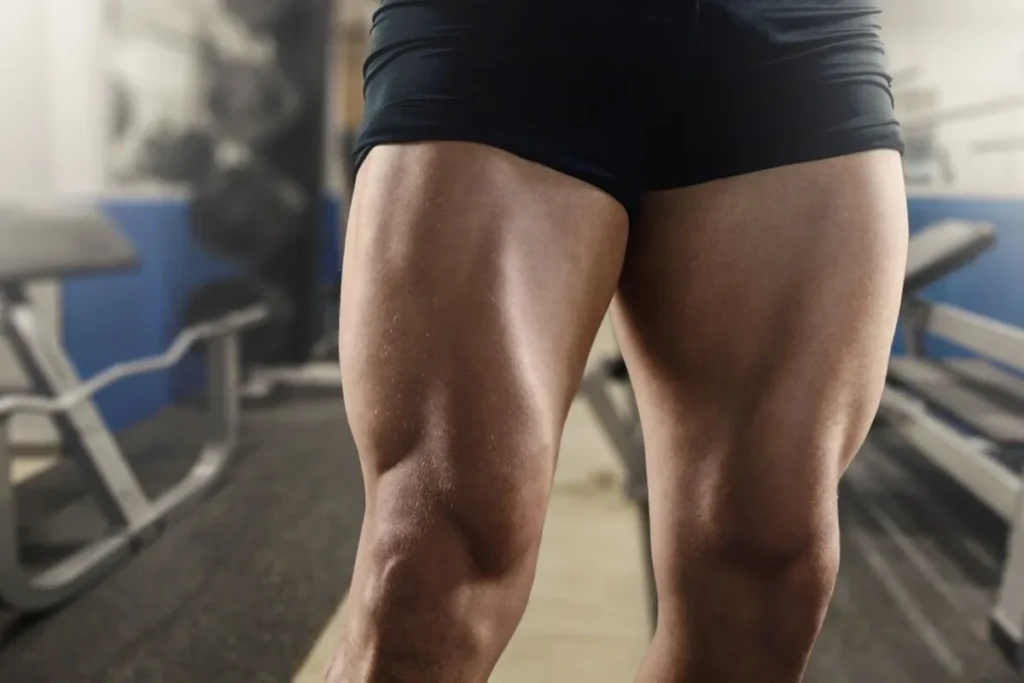
Strakke spieren in de benen komen vaak voor. Ze kunnen het gevolg zijn van keuzes in levensstijl en fysieke activiteiten. Weten waarom is de sleutel tot verlichting en het vermijden van pijn in de toekomst.
Zittende levensstijl en langdurige inactiviteit
Een zittende levensstijl kan je beenspieren strak maken. Als je veel zit of weinig beweegt, kunnen ze korter en stijver worden. Dit kan leiden tot spieronevenwichtigheden die stijfheid en pijn veroorzaken.
Niet genoeg bewegen kan ook de bloeddoorstroming verminderen. Dit verergert de spierspanning. Het is belangrijk om regelmatig te bewegen om je spieren gezond te houden.
Uitdroging en elektrolytenonevenwicht
Uitdroging kan ook strakke beenspieren veroorzaken. Als je niet genoeg vocht binnenkrijgt, kunnen je spieren uitgedroogd raken, wat leidt tot krampen en gespannen spieren. Elektrolyten zoals kalium en natrium zijn belangrijk voor de spierfunctie. Een disbalans in elektrolyten kan spierspanning en ongemak veroorzaken.
Voldoende water drinken en het elektrolytenniveau in balans houden is essentieel. Dit is belangrijk, vooral tijdens en na het sporten. Het eten van voedingsmiddelen of het nemen van supplementen die rijk zijn aan elektrolyten kunnen deze problemen helpen voorkomen.
Overtraining en inspanningsgerelateerde stijfheid
Overtraining of te veel trainen zonder voldoende rust kan spieren strak maken. Spieren te hard belasten kan schade en ontstekingen veroorzaken, wat leidt tot stijfheid en pijn.
Het is belangrijk om naar je lichaam te luisteren en het genoeg tijd te geven om te herstellen. Rek- en strekoefeningen, foamrollen en andere herstelmethoden kunnen helpen bij stijfheid en het voorkomen van vastzittende spieren.
5 effectieve oplossingen om strakke beenspieren te verlichten

Ben je down door gespannen beenspieren? Ontdek de top 5 oplossingen om de spanning te verlichten en je mobiliteit te vergroten. Het verlichten van gespannen benen kan je algehele comfort en flexibiliteit aanzienlijk verbeteren. Hierdoor kun je met meer gemak en vertrouwen bewegen.
Gerichte rekoefeningen
Een van de meest effectieve manieren om gespannen beenspieren te verlichten is door gerichte rekoefeningen. Rekken verbetert niet alleen de flexibiliteit, maar vermindert ook spierstijfheid. Het is een essentieel onderdeel van elke beenverzorging.
Richt je op stretchoefeningen die gericht zijn op de hamstrings, quadriceps en kuitspieren. Dit zijn veelvoorkomende gebieden waar verkramping optreedt. Je kunt bijvoorbeeld de hamstring strekken door met je voeten op schouderbreedte uit elkaar te gaan staan en dan naar voren te buigen bij de heupen om je tenen aan te raken. Als je deze stretch 15-30 seconden vasthoudt, kan dat helpen om de hamstringspieren te ontspannen.
Lunges zijn uitstekend voor het rekken van de quadriceps en de heupflexoren. Ze bevorderen een meer evenwichtige flexibiliteit. Dit helpt bij het voorkomen van verkramping in deze gebieden.
Hydratatie- en voedingsstrategieën
Voldoende hydratatie en goede voeding spelen een belangrijke rol bij het gezond houden van de spieren en het voorkomen van benauwdheid. Uitdroging kan leiden tot spierkrampen en spasmen, wat het gevoel van benauwdheid in de benen verergert. Het is van vitaal belang dat je de hele dag door voldoende water drinkt, zelfs als je niet fysiek actief bent.
Qua voeding is het belangrijk om een uitgebalanceerd dieet te nemen dat rijk is aan elektrolyten. Elektrolyten zoals kalium, magnesium en calcium helpen de spierfunctie in stand te houden. Voedingsmiddelen zoals bananen (kalium), bladgroenten (magnesium) en zuivelproducten (calcium) zijn uitstekende keuzes. Het toevoegen van ontstekingsremmende voedingsmiddelen zoals omega-3 vetzuren uit vis en noten kan verder helpen bij het verminderen van spierspanning.
Massage en technieken voor zelfmyofasciale ontlading
Massagetherapie en self-myofascial release zijn krachtige technieken om gespannen beenspieren te verlichten. Massage helpt de bloedstroom naar de betreffende gebieden te verhogen, waardoor ontspanning wordt bevorderd en spierkrampen worden verminderd. Je kunt kiezen voor professionele massagetherapie of zelf-myofasciale hulpmiddelen zoals foamrollers gebruiken om gespannen plekken aan te pakken.
Het gebruik van een foamroller op de IT-band kan bijvoorbeeld helpen om spanning in het bovenbeen te verlichten. Rol gewoon heen en weer met gematigde druk om de spanning weg te nemen. Deze techniek voelt niet alleen heerlijk aan, maar helpt ook bij een sneller herstel en een verbeterde spierelasticiteit.
Toepassingen voor warmte- en koudetherapie
Het toepassen van warmte- of koudetherapie is een andere effectieve methode om gespannen beenspieren te verlichten. Warmtetherapie, zoals het gebruik van een warm bad of een verwarmingskussen, kan helpen de spieren te ontspannen door de bloeddoorstroming te bevorderen. Koudetherapie, zoals ijspakkingen, kan ontstekingen verminderen en de pijn verdoven, wat verlichting geeft bij gespannen spieren.
Afwisselen tussen warmte en koude kan heilzaam zijn. Begin met warmte om de spieren te ontspannen, gevolgd door koude om ontstekingen te verminderen. Deze contrasttherapie kan een spelbreker zijn voor mensen die last hebben van aanhoudende benauwdheid.
Conclusie: Een duurzame verzorgingsroutine voor de beenspieren creëren
Het verlichten van gespannen beenspieren is een reis, geen snelle oplossing. Je hebt een uitgebalanceerde routine nodig. Doe dagelijks rekoefeningen en mobiliteitsoefeningen om je benen soepel te houden en stijfheid te voorkomen.
Als je strakke beenspieren wilt aanpakken, is een blijvende routine van vitaal belang. Mix stretchen, gehydrateerd blijven, goed eten en self-myofascial release. Deze aanpak helpt om gespannen spieren te beheersen en leidt tot een pijnvrij leven.
Je zoektocht om strakke beenspieren te verlichten is meer dan alleen verlichting. Het gaat om het verbeteren van je algehele gezondheid. Door je routine te verbeteren en je eraan te houden, word je gezonder en vitaler.
FAQ
Waarom zitten mijn benen altijd zo strak?
Een zittende levensstijl, uitdroging en overtraining kunnen strakke beenspieren veroorzaken. Regelmatig rekken en sporten kan de spanning helpen verlichten.
Hoe kan ik strakke beenspieren losmaken?
Gericht rekken, masseren en zelf-myofasciale ontlasting kunnen strakke beenspieren losmaken. Warmte- en koudetherapie bieden ook verlichting.
Wat zijn enkele effectieve manieren om gespannen beenspieren te verlichten?
Effectieve oplossingen zijn stretchen, gehydrateerd blijven en massage en zelf-myofasciale ontlasting toepassen. Warmte- en koudetherapie kunnen ook helpen. Probeer verschillende methoden uit om te ontdekken wat voor jou werkt.
Kan uitdroging gespannen beenspieren veroorzaken?
Ja, uitdroging kan de beenspieren strak maken. Voldoende water drinken en de elektrolyten in balans houden is essentieel voor gezonde spieren.
Hoe vaak moet ik rekken om gespannen beenspieren te verlichten?
2 tot 3 keer per week rekken kan helpen om strakke beenspieren los te maken. Consistentie is belangrijk voor blijvende verlichting.
Zijn er specifieke rekoefeningen voor gespannen beenspieren?
Ja, stretchoefeningen voor de hamstrings, quadriceps en kuiten kunnen helpen. Deze aan je routine toevoegen kan de flexibiliteit en ontspanning verbeteren.
Kan overtraining strakke beenspieren veroorzaken?
Ja, overtraining en intensieve training kunnen spierspanning veroorzaken. Rustdagen inlassen en tijd nemen voor herstel kan helpen.
Hoe kan ik strakke beenspieren in de toekomst voorkomen?
Om gespannen beenspieren te voorkomen, moet je een evenwichtige levensstijl aanhouden. Dit betekent regelmatig bewegen, gehydrateerd blijven en goede voeding. Een consistente verzorgingsroutine voor de beenspieren kan verlichting op de lange termijn garanderen.
Referenties
Nationaal Centrum voor Biotechnologie-informatie. Evidence-Based Medisch Inzicht. Opgehaald van https://pubmed.ncbi.nlm.nih.gov/21735398/





