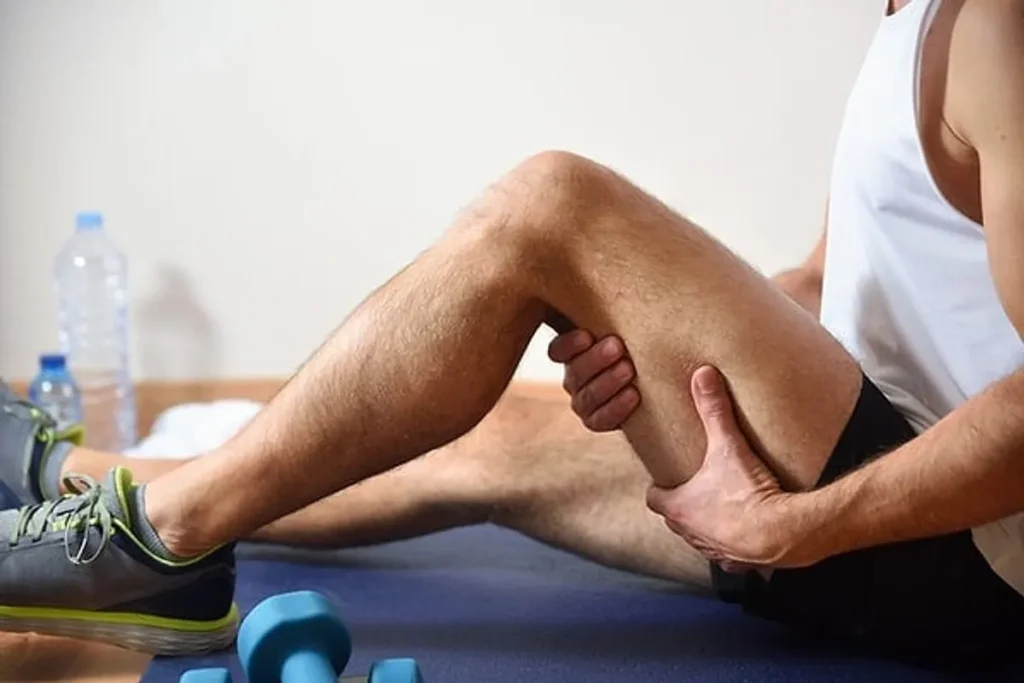
Die bekende spierpijn en stijfheid die de dag na een intensieve training optreedt, is spierpijn met vertraagd begin (delayed onset muscle soreness of DOMS). Het is een normale, maar ongemakkelijke reactie. Iedereen heeft er last van, van beginners tot professionele atleten.
Hoewel de pijn ontmoedigend kan aanvoelen, toont onderzoek aan dat het een signaal is dat je spieren zich aanpassen en sterker worden. Het kan helpen om de wetenschap achter DOMS te kennen en op bewijs gebaseerde herstelstrategieën te gebruiken. Het kan het ongemak aanzienlijk verminderen en de genezing versnellen.
Dit artikel leidt je door 7 effectieve remedies om spierpijn na het sporten te verlichten. Het zal je helpen sneller te herstellen en je fitnessroutine weer op te pakken.
Belangrijkste opmerkingen
Begrijp de oorzaken van DOMS en de relatie tot spiergroei.
Ontdek effectieve remedies om spierpijn te verlichten.
Leer op bewijs gebaseerde herstelstrategieën om ongemak te verminderen.
Versnel je genezingsproces met bewezen technieken.
Ga sneller en sterker terug naar je fitnessroutine.
Vertraagde spierpijn (DOMS) begrijpen

De pijn die je voelt na een zware training is waarschijnlijk DOMS. Het is een natuurlijke reactie op een zware training. DOMS zorgt ervoor dat spieren stijf en pijnlijk aanvoelen na een nieuwe of intensieve training.
Wat veroorzaakt spierpijn na het sporten?
Spierpijn ontstaat door microscopische scheurtjes in spiervezels. Wanneer je nieuwe of zware oefeningen doet, beschadig je je spieren. Deze schade start het herstelproces van het lichaam, dat bestaat uit ontstekingen.
Naarmate je lichaam de spieren herstelt en versterkt, worden ze na verloop van tijd beter.
De tijdlijn van de ontwikkeling van DOMS
DOMS begint 12 tot 24 uur na je training. Het wordt erger tussen 24 en 72 uur en wordt dan beter als de spieren genezen. Als je dit weet, kun je je training en herstel beter plannen.
Inzicht in DOMS helpt je om je training en herstel beter te beheren. Met deze kennis kun je de pijn verlichten en blijven trainen, zodat je je fitnessdoelen kunt bereiken.
Hoe effectief van pijnlijke spieren afkomen
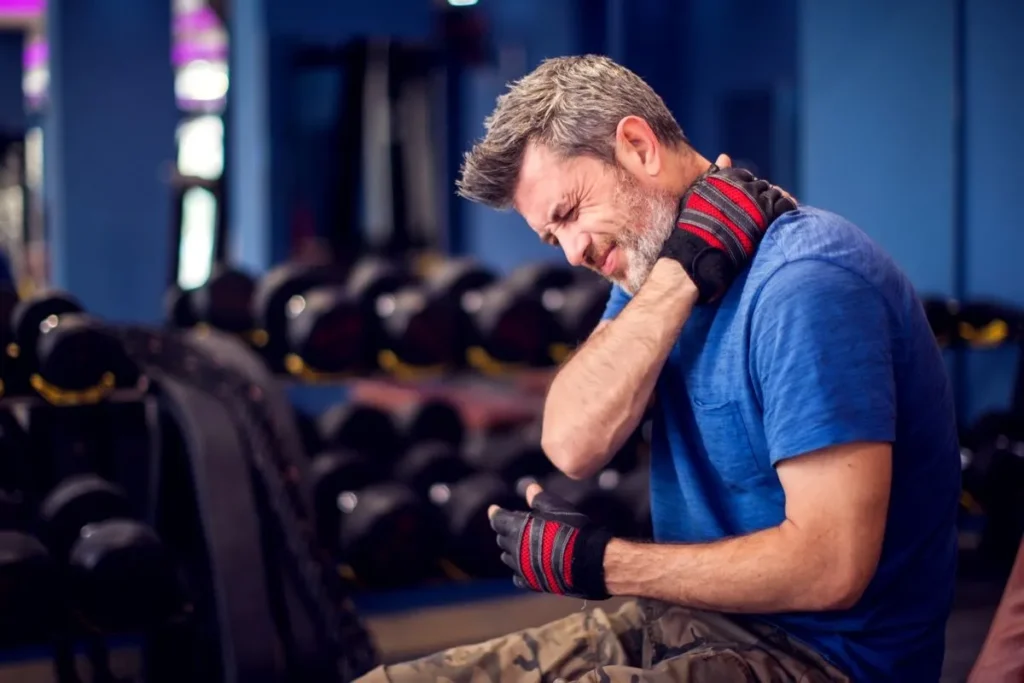
Pijnlijke spieren kunnen je echt afremmen. Maar met de juiste stappen kun je sneller weer opkrabbelen. Spierpijn na een zware training komt vaak voor. Weten hoe je deze pijn kunt verlichten is de sleutel tot het volhouden van je workouts en het bereiken van je fitnessdoelen.
1. Massagetherapie
Massagetherapie is een goede keuze om spierpijn te verlichten. Het stimuleert de doorbloeding van pijnlijke plekken, waardoor afvalstoffen die pijn veroorzaken worden afgevoerd. Diepe weefselmassage en myofasciale massage zijn geweldige opties.
Voordelen van massagetherapie:
Vermindert spierspanning
Verbetert de bloedsomloop
Verbetert het herstel
Bevordert ontspanning
2. Foam Rolling Technieken
Foamrollen is een andere goede manier om pijnlijke spieren te verlichten. Er wordt druk uitgeoefend om littekenweefsel af te breken, waardoor spieren soepeler en minder pijnlijk worden. Regelmatig foamrollen vergroot ook je bewegingsbereik en verlaagt het risico op blessures.
3. Actieve herstelmethoden
Lichte cardio of yoga kan ook helpen bij pijnlijke spieren. Deze activiteiten verbeteren de bloeddoorstroming en rekken de spieren zachtjes op, waardoor afvalstoffen worden verwijderd en stijfheid wordt verminderd. Je kunt deze activiteiten doen op rustdagen of na je belangrijkste workout.
4. Juiste voeding en hydratatie
Goede voeding en hydratatie zijn essentieel voor spierherstel. Het eten van een uitgebalanceerd dieet met eiwitten, complexe koolhydraten en gezonde vetten helpt de spieren te herstellen. Voldoende water drinken helpt ook bij het verwijderen van gifstoffen en zorgt ervoor dat de spieren goed blijven werken.
Voedingstips voor herstel:
Neem eiwitten binnen 30-60 minuten na je training
Neem complexe koolhydraten op om energievoorraden aan te vullen
Blijf gehydrateerd door de hele dag door veel water te drinken
Door deze vier methoden te gebruiken, kun je spierpijn aanzienlijk verminderen en je herstel verbeteren. Of je nu probeert om spierpijn na het sporten te verminderen of gewoon je spiergezondheid wilt verbeteren, deze strategieën kunnen je helpen om je doelen te bereiken.
Drie extra wetenschappelijk onderbouwde remedies
Op zoek naar meer manieren om DOMS te verlichten? Drie remedies zijn veelbelovend gebleken: magnesium, temperatuurtherapie en voldoende slaap. Gebruik deze samen met andere methoden om je herstel te bevorderen.
Magnesiumsupplementen
Magnesium is belangrijk voor de spierfunctie en het herstel. Onderzoeken tonen aan dat het spierkrampen, spasmen en spierpijn kan verminderen. Het toevoegen van magnesiumrijke voedingsmiddelen of supplementen aan je dieet kan je herstel bevorderen.
Uit een onderzoek in het Journal of the International Society of Sports Nutrition bleek dat magnesium atleten helpt. Het vermindert spierkrampen en spierpijn. Voldoende magnesium binnenkrijgen is een eenvoudige manier om DOMS te beheersen.
Warmte- en koudetherapie
Warmte- en koudetherapie worden al jaren gebruikt om spierpijn te verlichten. Koudetherapie, of cryotherapie, vermindert ontstekingen. Warmtetherapie stimuleert de doorbloeding van pijnlijke gebieden. Afwisselen tussen beide kan de beste verlichting bieden.
Voldoende rust en slaap
Rust en slaap zijn essentieel voor spierherstel. Slaap helpt het lichaam om spieren te herstellen en opnieuw op te bouwen. Voldoende slaap is de sleutel tot spierherstel na het sporten.
Maak van slaap- en rustdagen een prioriteit om je lichaam te helpen herstellen van DOMS. Het gaat er niet alleen om hoe hard je traint. Het gaat er ook om dat je je lichaam de tijd geeft om te genezen.
Conclusie
Het is normaal om je pijnlijk te voelen na een zware training. Maar er zijn manieren om deze pijn te verzachten. Door de 7 remedies te gebruiken die we hebben besproken, kun je je beter voelen en weer sporten.
Probeer voor pijnlijke spieren massage, foamrollen en actief herstel. Goed eten en gehydrateerd blijven helpt ook. Magnesium, warmte en kou en voldoende rust en slaap kunnen ook helpen.
Door deze methoden te gebruiken, kun je pijn na het sporten voorkomen. Dus wat doe je als je spieren pijnlijk zijn? Probeer deze bewezen remedies om je beter te voelen en actief te blijven.
FAQ
Waarom doet mijn lichaam pijn na het sporten?
Je lichaam krijgt pijn na het sporten door spierschade. Deze schade veroorzaakt ontstekingen en pijn.
Hoe kan ik pijn door het sporten verlichten?
Probeer massagetherapie, foamrollen en actief herstel om de pijn te verzachten. Eet ook goed, drink veel water en neem magnesium. Gebruik warmte- of koudetherapie en rust goed uit.
Waarom doen mijn benen pijn na een training?
Je benen doen pijn na een training door spierschade. Deze schade leidt tot ontstekingen en pijn.
Wat kan ik doen om mijn pijnlijke spieren te verhelpen?
Gebruik voor pijnlijke spieren warmte- of koudetherapie, laat je masseren en foamrollen. Blijf gehydrateerd en rust goed uit.
Hoe verzacht ik de pijn na het sporten?
Verlicht de pijn met actief herstel zoals lichte cardio of rekoefeningen. Gebruik ook magnesiumsupplementen.
Wat is de beste manier om spierpijn na het sporten te genezen?
Er is geen snelle oplossing, maar een mix van remedies helpt. Goed eten, water drinken, rusten en goed slapen. Massagetherapie en foamrollen helpen ook.
Hoe kan ik spierpijn na een training voorkomen?
Voorkom spierpijn met een goede warming-up en cooling-down. Blijf gehydrateerd en gebruik hersteltechnieken zoals foamrollen en stretchen.
Hoe help je spierpijn na het sporten?
Help pijnlijke spieren met een foamroller, massage en hydratatie. Gebruik ook actieve herstelmethoden.
Wat moet je doen als je pijn hebt van het sporten?
Als je pijn hebt, blijf dan actief met lichte cardio of rekoefeningen. Gebruik warmte- of koudetherapie. Geef prioriteit aan rust en slaap voor herstel.
Referenties
Nationaal Centrum voor Biotechnologie-informatie. Evidence-Based Medisch Inzicht. Opgehaald van https://pubmed.ncbi.nlm.nih.gov/12617692/