
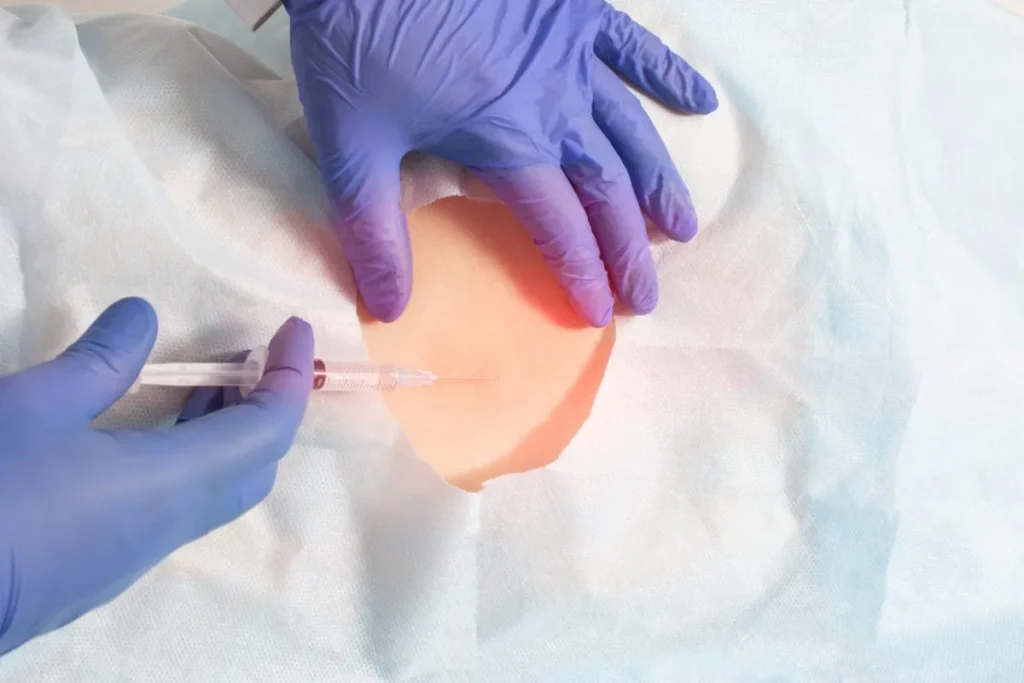
Unlocking relief from myofascial pain is now possible with trigger point injections. This targeted approach helps manage musculoskeletal disorders in the back, shoulders, and neck regions.
These injections treat muscle pain linked to the fascia that covers muscles. They help ease pain in irritated muscle knots. This makes trigger point injections a minimally invasive solution for those seeking relief.
At GoldCity Center, expert teams and advanced medical protocols work together. They provide safe and effective treatments. Knowing how this procedure works is key to managing pain well. It helps you make informed decisions about your care.
Belangrijkste opmerkingen
Trigger point injections offer a targeted therapeutic approach for managing myofascial pain.
This procedure involves injecting medication into irritated muscle tissue.
GoldCity Center provides expert clinical teams and cutting-edge medical protocols.
Understanding trigger point injections is key for effective pain management.
These injections can alleviate pain in the back, shoulders, and neck regions.
Understanding Trigger Point Injections

Trigger point injections are a key treatment for myofascial pain. They involve injecting medicine into muscle areas to ease pain and improve muscle function.
Wat zijn triggerpoints en myofasciale pijn?
Trigger points are small, painful spots in muscles that cause stiffness and limit movement. Myofascial pain syndrome is a long-term condition with these trigger points. Studies show that injections can help reduce pain in these cases.
The exact way trigger point injections work is not fully known. But, it’s thought that the medicine injected reduces inflammation and relaxes the muscle, easing pain.
Benefits and Effectiveness of Trigger Point Therapy
Trigger point therapy, including injections, is very effective for myofascial pain. It offers several benefits:
Significant reduction in pain intensity
Improved range of motion and muscle function
Enhanced quality of life for patients with chronic pain
Research shows that these injections can provide long-term pain relief for many. For more details, visit page on trigger point.
Common Medications Used in Trigger Point Injections
The medicines used in these injections are lidocaine and sometimes cortisone. Lidocaine numbs the area for immediate pain relief. Cortisone reduces inflammation and extends the pain relief of the injection.
Indications and Contraindications
These injections are for those with myofascial pain syndrome who haven’t improved with other treatments. But, there are some things to consider:
Bleeding disorders or anticoagulation therapy
Local or systemic infection
Known allergy to the medications used
It’s important to talk to a healthcare professional to see if these injections are right for you.
Trigger Point Injections Back: Step-by-Step Procedure

The process for trigger point injections is detailed and precise. It’s all about finding and treating trigger points. This method is key for managing pain effectively. It needs a deep understanding of the body’s structure and pain patterns.
Pre-Procedure Preparation and Patient Assessment
First, a detailed patient assessment is done to spot trigger points and rule out other pain causes. This includes looking at the patient’s medical history and doing a physical check. It helps find taut bands and tender spots.
Key steps in pre-procedure preparation include:
Reviewing the patient’s medical history to identify any contraindications for trigger point injections.
Conducting a physical examination to identify trigger points through palpation.
Explaining the procedure and its possible benefits and risks to the patient.
Identifying Trigger Points Through Palpation
Trigger points are found through a careful touch technique. The practitioner feels for tight bands and tender spots. This skill requires a good grasp of anatomy and pinpoint accuracy.
The palpation technique involves:
Using a firm but gentle touch to feel for taut bands.
Identifying areas of tenderness and pain upon palpation.
Correlating the findings with the patient’s reported pain patterns.
Injection Technique and Administration
The injection part involves putting a local anesthetic or corticosteroid into the trigger point. The needles are very small. The procedure is done without using images, relying on the practitioner’s anatomy knowledge and the patient’s pain response.
A study on NCBI shows that the success of trigger point injections comes from accurately placing the injectate in the trigger point.
Common Injection Sites and Approaches
Trigger point injections are given in different muscles, based on the trigger point’s location. Common areas include the lower back, neck, and shoulders. The method used can change based on the muscle and the patient’s body.
Common injection sites include:
The trapezius and rhomboid muscles in the upper back.
The levator scapulae muscle in the neck.
The quadratus lumborum muscle in the lower back.
Conclusion: Post-Procedure Care and Outcomes
Trigger point injections are a proven way to manage myofascial pain. They are very effective for shoulder and pressure point injections. This treatment has a strong track record.
Research shows big improvements in many patients. This makes trigger point injections a good choice for myofascial pain. The recovery is quick, allowing you to drive home and start normal activities right away.
Learning about trigger point injections helps you make a smart choice. With the right care after the procedure, you can live without chronic pain. You can feel confident and radiant, even with myofascial pain.
When thinking about this treatment, remember it’s backed by science. Choosing trigger point injections means you’re on the path to beauty and luxury. Pain won’t hold you back anymore.
FAQ
What is a trigger point injection?
A trigger point injection is a procedure. It involves injecting a medication into a specific muscle area. This helps relieve pain and inflammation.
What are the common medications used in trigger point injections?
Lidocaine and cortisone are the most used medications. Lidocaine is a local anesthetic. Cortisone is a corticosteroid. Both help reduce pain and inflammation.
What is the purpose of trigger point injections?
They treat myofascial pain syndrome. This condition causes pain and inflammation in specific muscle areas. These areas are called trigger points.
How are trigger points identified?
Healthcare providers use palpation to find trigger points. This is a manual examination of the muscle tissue. They feel for areas of tension and tenderness.
What are the common injection sites for trigger point injections?
Common sites include the trapezius, paracervical, and lumbar regions. These areas often have trigger points.
Are there any potentially complications or side effects of trigger point injections?
Yes, there are possible complications or side effects. These include pain, swelling, or bruising at the injection site. Allergic reactions to the medication are also possible.
Hoe lang duurt het om te herstellen van een triggerpointinjectie?
Recovery time is usually short. Most people can go back to normal activities soon after the procedure.
Kunnen triggerpointinjecties samen met andere behandelingen worden gebruikt?
Yes, they can be used with other treatments. This includes physical therapy. It can make them more effective and provide long-term relief.
How often can trigger point injections be administered?
The frequency depends on individual needs. Some people may need repeated injections to keep pain and inflammation at bay.
Are trigger point injections effective for chronic pain management?
Yes, they can be effective for chronic pain. They work best when part of a complete treatment plan.
Referenties
Nationaal Centrum voor Biotechnologie-informatie. Evidence-Based Medisch Inzicht. Opgehaald van https://www.ncbi.nlm.nih.gov/books/NBK542196/





